
Finding the Best Free Dropshipping Tools for beginners can be hard. The dropshipping market hit 351.8 billion dollars in 2024. Furthermore, it grew by nearly 24 percent from the year before. That kind of growth shows how crowded this space is.
Many successful stores started with free tools. Specifically, they handled product research, customer support, and order fulfillment without expensive software. As a result, these tools let them test product ideas and build systems while starting to sell with minimal risk.
However, not every free tool is worth your time. Some offer real value and smooth workflows. In contrast, others slow things down or hide their best features behind paywalls. After looking at dozens of options, a handful stand out. These are the best for beginners building their first online store.
This guide highlights the most reliable free dropshipping tools. Moreover, they can support your early growth and help you move toward long-term profits.
Why Free Tools Matter for Beginners
Many new dropshippers think paid tools bring better results. Unfortunately, this usually wastes money. That money could go to product testing, ads, or inventory. In contrast, free dropshipping tools let beginners learn and experiment without financial risk.
Success in the early stages rarely depends on advanced software. Instead, what matters most is choosing the right products. Additionally, you need to understand your market and build trust with customers. Most free tools offer 80 percent of the features needed to run a working store. Therefore, this makes them a wise choice for anyone still proving their business model.
Experienced entrepreneurs often start with free tools. First, they build a strong foundation. Then, they learn the basics and identify their biggest challenges. Finally, they figure out where upgrades are worth the cost. This way, every dollar spent later solves real problems rather than just following trends.
Essential Product Research Platforms
AliExpress Dropshipping Center
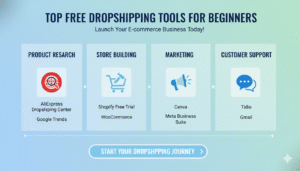
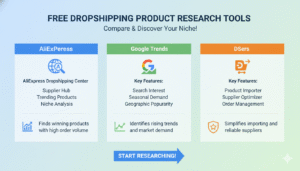
The AliExpress Dropshipping Center is one of the most complete free tools for product research. Additionally, it’s very beginner-friendly. It pulls together trending products, supplier ratings, and key market insights. Everything is in one place. Consequently, you can search and filter by order volume, shipping speed, customer reviews, and region. This helps you find products that already perform well.
What sets this tool apart is its live trend tracking. Specifically, it shows which products are gaining traction across different niches. As a result, you can catch trends early instead of chasing saturated markets. Furthermore, you also get detailed supplier stats. These include response speed, dispute resolution, and shipping efficiency. These details are essential when building a dependable supply chain.
Another helpful feature is pricing analysis. For instance, you can review product costs and estimate profit margins before adding anything to your store. This helps you avoid items that look good but don’t leave much room for profit.
Google Trends: Free Market Intelligence
Google Trends is powerful, yet many new dropshippers overlook it. It gives you a direct look at what people are searching for. Moreover, it shows how interest changes over time and tells you where those searches happen. This geographic insight helps when planning ad campaigns. Similarly, it’s useful when choosing products with international appeal.
Understanding seasonal trends can shape your entire strategy. For example, some products stay in demand all year. In contrast, others spike only during certain months. Knowing this helps you avoid dead inventory while timing your marketing better. Additionally, Google Trends lets you compare several product ideas side by side. As a result, this makes it easier to decide which to test first.
One of its most valuable features is the related queries section. Notably, it often reveals niche product ideas that people search for. These aren’t yet flooded with competition. Therefore, these smaller sub-niches can be a great starting point for new dropshippers to stand out.
Ready to accelerate your e-commerce success? Explore our comprehensive business resources and expert guides. They’re designed to help aspiring entrepreneurs build profitable online stores.
Store Building and Design Solutions
Shopify Free Trial Strategy
Shopify requires a paid subscription eventually. However, its 14-day free trial gives beginners plenty of time to set up and test. In fact, you can even start earning from a fully functioning dropshipping store. Within this trial period, you gain access to valuable tools. These would typically cost a lot if purchased separately. For instance, they include mobile-friendly design themes, secure payment processing, built-in inventory tracking, and professional storefront features.
Many first-time entrepreneurs use this window as a testing ground. Specifically, you can add your products and configure shipping zones. Additionally, you can run test checkouts and even start small ad campaigns. If planned properly, you can make your first sales during the trial. Consequently, you might generate enough income to cover the subscription fee before it kicks in. The trick is to come prepared with solid product choices, clear branding, and a launch plan ready for day one.
Moreover, Shopify’s free trial opens the door to dozens of helpful free apps. These include email marketing tools and abandoned cart recovery. They also include basic customer service chat plugins and social media automation. Many can be installed without spending anything. When combined, these features offer everything required to run a streamlined operation at zero cost during your initial testing phase.
Canva for Visual Content Creation
Good visuals matter when building a dropshipping store that converts. Clean product photos, sharp ad creatives, and scroll-stopping social media posts make a difference. Ultimately, they affect whether someone clicks “buy” or keeps scrolling. However, good design software usually costs money. Most beginners don’t want to spend extra on tools they’re not sure they need yet.
That’s why Canva has become so popular. The free plan offers plenty of flexibility. Specifically, beginners can create solid visual content without any prior design skills. Furthermore, you get access to a big library of templates, icons, and stock photos. It’s all drag and drop. There’s no complicated setup or learning curve. Instead, you open it, start creating, and suddenly you’re making decent-looking visuals within minutes.
People use Canva for everything from product mockups to homepage banners, Instagram stories, and email headers. What makes a real difference, though, is how easy it is to keep your branding consistent. With just a little effort, you can ensure your fonts and colors match across every piece of content. As a result, this helps your store feel more trustworthy. Customers notice that subtle consistency. They might not say it out loud, but it builds confidence and, over time, nudges more people to buy.
GIMP for Advanced Image Editing
If you need something more advanced than Canva, that’s where GIMP comes in. It’s completely free to use. Moreover, many people choose it because of how powerful it is. Users reach for this tool when they want full control over their visuals without paying for expensive software. Essentially, the platform works as a true free alternative to Photoshop while still delivering many of the same advanced capabilities.
Background removal becomes simple here. Additionally, retouching product photos feels smooth once you get the hang of it. Furthermore, you can adjust lighting with precision and create original graphics from scratch whenever your store needs something custom. The interface does feel a bit clunky at first. Although it’s not as user-friendly as Canva, spending a little time learning pays off. Fortunately, there are tons of tutorials online that walk you through exactly what to do, even if you have zero editing experience.
Many dropshippers turn to GIMP when they want to take product presentation to the next level. Whether it’s for social proof photos, bundles, or creative ad variations, GIMP makes it possible to stand out. Importantly, you don’t need to outsource your visuals. And the best part? You’re not tied to any subscription fees. As your store grows, the skills you develop save you money and give you more freedom to test different marketing angles without extra costs.
Marketing and Customer Acquisition Tools
Google Analytics for Data-Driven Growth
You can’t make decisions based on guesses if you want your store to grow. That’s where Google Analytics steps in. It’s entirely free to use and provides incredibly detailed insights about how people interact with your store. Even though it’s free, it works well enough to support most small or medium-sized dropshipping businesses.
Once you set it up, you can track everything. Specifically, where your traffic comes from, which products people look at, how long they stay, and where they drop off. Additionally, it shows you conversion rates, revenue data, and traffic patterns. This helps you make smarter choices. For instance, if customers leave your site at checkout or skip certain pages, you’ll know exactly where to improve.
Moreover, Google Analytics even has real-time reporting. If a campaign goes viral or something on your site breaks, you’ll see it immediately. Furthermore, you can track specific goals like email signups or product purchases to see what’s working and what’s not. Over time, these insights help you adjust and grow your business without any guessing required.
Facebook Business Manager Ecosystem
Even if you’re not ready to spend money on ads, Facebook Business Manager gives you valuable tools. These are incredibly useful for dropshippers. Specifically, you can research audiences, study competitors, and even grow your store organically without running a single paid campaign.
One of the most valuable features is audience insights. It shows you exactly who your potential customers are, including their age groups, interests, location, and online behavior. Consequently, this kind of data helps you write better product descriptions. Similarly, you can create more relevant ads and develop content that speaks to the right people.
Additionally, you can monitor what your competitors are doing. Their top posts are visible, along with their engagement levels and how often they update their pages. By seeing what works for others, you can shape your own marketing strategies without wasting time or money on trial and error.
Mailchimp Email Marketing Platform
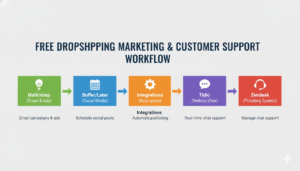
Email marketing has always been one of the most profitable digital marketing channels. Mailchimp makes it accessible for beginners through its free plan. Specifically, you can manage up to 2,000 contacts for free while still using automation to grow your store in the background.
With Mailchimp, you can set up emails that go out automatically. They send when someone signs up, abandons their cart, or places an order. Notably, these small but powerful emails make a big impact. They help recover lost sales and turn one-time buyers into loyal customers. And importantly, you don’t need to hit “send” every time.
Furthermore, Mailchimp includes professional email templates that look polished and on-brand. These help your messages stand out in crowded inboxes. Plus, it connects with most e-commerce platforms, allowing you to trigger emails based on real customer behavior rather than guesswork. For a dropshipping store looking to scale without hiring a whole marketing team, it’s one of the most practical tools out there.
Looking for personalized guidance to support your dropshipping journey? Contact our team today for expert consultation and tailored strategies that address your specific business challenges and opportunities.
Order Management and Automation Systems
Managing orders efficiently is one of the biggest challenges for beginners. As things start to pick up, keeping up with every single order manually becomes increasingly difficult. That’s where free automation tools come in handy. Specifically, they help you stay organized, reduce mistakes, and save time that you can use to focus on marketing and customer service.
DSers Integration Platform
DSers is one of the most beginner-friendly tools for handling AliExpress orders. It connects directly with verified AliExpress suppliers, making the entire fulfillment process smoother. Even the free version lets you process up to 3,000 orders per month, which is more than enough when you’re just getting started.
With DSers, you don’t need to enter each order manually. Instead, it automatically pulls in customer information, forwards the details to the supplier, and updates tracking numbers as they become available. Everything happens in a few clicks, and consequently, that saves hours of work every week.
Moreover, this tool also supports bulk ordering. So when you’re running promotions or your product suddenly goes viral, you won’t be stuck clicking through hundreds of orders one at a time. Rather, you can process everything quickly and move on to other essential tasks.
By using DSers early in your business, you set yourself up with systems that grow with you. Additionally, you avoid the fulfillment headaches that come with manual processing while building trust with your customers by keeping their orders accurate and on time.
Oberlo Shopify Integration
Oberlo was once the go-to tool for importing products from AliExpress directly into Shopify. Although it’s no longer officially supported, many users still look for similar tools that offer the same seamless experience. In its time, Oberlo made it possible to add products, manage inventory, and fulfill orders all from within your Shopify dashboard.
One of its most helpful features was the Chrome extension, which allowed users to import AliExpress products with just a few clicks. Consequently, this saved hours of research and listing time. It was especially helpful for those trying to test multiple items quickly.
Inventory management was also a strong point. Specifically, Oberlo kept product availability synced with your suppliers. If an item went out of stock or the price changed, your store would reflect it instantly. As a result, this helped avoid overselling, which often leads to frustrated buyers and refund requests.
Furthermore, the built-in product tracking and supplier rating tools helped new sellers spot which items were worth selling. Essentially, you could see how well a product was performing and how reliable the supplier had been over time. That kind of data helped store owners focus on what worked while dropping what didn’t.
Social Media Management Solutions
For most dropshipping stores, social media isn’t just an option—it’s a requirement. Regular content builds trust, drives organic traffic, and keeps your brand top-of-mind for potential buyers. However, posting every day by hand can eat up valuable hours that you could spend on things that actually grow your business. This is why social media scheduling tools are so helpful, especially when they come with solid free plans.
Buffer Content Scheduling
Buffer is one of the easiest tools to use when planning and managing your content across different social platforms. With the free version, you can schedule posts for Instagram, Facebook, Twitter, and LinkedIn. This ensures your brand appears consistently without needing to be online all the time.
One of the best things about Buffer is its visual content calendar. Specifically, you can plan out days or even entire months of content in one sitting. This is perfect for keeping a steady stream of posts going, even when you’re focused on other areas of your business like fulfilling orders or answering customer questions.
The interface is clean and helps you organize your content mix. For instance, you can space out your promotions and mix in useful or fun content. Additionally, you can keep your audience engaged without looking too salesy. This kind of balance matters, especially if you want people to stick around and keep interacting with your posts.
Furthermore, Buffer gives you some basic analytics. You can see which posts got the most likes, shares, or clicks and use that insight to figure out what kind of content your audience actually enjoys. Over time, this data helps you improve your approach while generating more traffic from your social channels without spending money on ads.
Later Instagram Optimization
If your niche leans heavily into visuals, Instagram can easily become your most important platform. Fashion, skincare, or home decor stores especially benefit. That’s where Later comes in. The free plan lets you schedule posts, plan your feed, and research hashtags all in one place.
Later focuses specifically on helping brands look good on Instagram. Its drag-and-drop calendar lets you map out your feed visually, ensuring every post fits your overall theme and aesthetic. When your profile looks professional and cohesive, new visitors are more likely to hit the follow button and stick around.
Moreover, the tool offers hashtag research features. You can find trending tags in your niche while getting insights into which ones are actually helping you reach more people. This is especially useful for getting organic visibility since, on Instagram, timing and tagging can make or break a post.
Additionally, tracking how each hashtag performs over time allows you to refine your strategy. Consequently, you keep reaching people who are genuinely interested in what you’re selling. As your account grows, these minor adjustments make a noticeable difference in traffic and engagement.
Customer Service and Communication Platforms
Being available to answer questions and solve issues in real time makes a big difference. It affects how many visitors actually convert into paying customers. Good customer service also boosts long-term satisfaction. It encourages repeat purchases. But for most beginners in dropshipping, hiring a dedicated support team isn’t possible early on. That’s where free tools for live chat and help desk support come in.
Tidio Live Chat Implementation
Tidio is one of the most beginner-friendly live chat tools available. Its free plan is surprisingly robust. You get access to live chat features, a basic chatbot, and simple integrations with top e-commerce platforms. This setup makes it easy for store owners to offer real-time support. You don’t need to stay glued to a screen all day.
The chatbot responds instantly to common questions. Shipping timelines, return policies, and product specifications. You can set up pre-written replies. These keep the tone of your brand. They make sure every customer gets a helpful answer. Even if you’re away from the keyboard.
Another feature worth highlighting is Tidio’s visitor tracking. When someone starts a chat, you can see exactly which page they’re browsing. This gives you more context when responding. It helps you tailor your reply to their concerns. Over time, you’ll start noticing patterns in customer questions. This kind of insight enables you to improve product descriptions and FAQs. That means fewer support questions down the line.
Zendesk Communication Management
Zendesk is a widely respected customer service platform. Most of its advanced features require a paid subscription. But the free chat functionality is still helpful for smaller stores. With Zendesk, you get access to a basic ticketing system. You get a log of all previous conversations with each customer.
This makes it easier to provide personalized service. When you can see a customer’s past orders, earlier concerns, and preferences, you’re better equipped to offer real solutions quickly. It also builds loyalty. People appreciate not having to explain things twice. A smooth support experience can turn one-time buyers into repeat customers.
Zendesk also connects with your e-commerce data if you decide to expand your setup. This connection allows you to see customer interactions alongside sales figures. You get a clearer picture of their overall experience with your store. Understanding who your most valuable customers are helps. Understanding what issues they face helps. This shapes long-term retention strategies. It optimizes customer lifetime value.
Financial Tracking and Business Intelligence
As your dropshipping business begins to generate consistent revenue, financial clarity becomes essential. You need to track income. You need to manage expenses. Having the right tools in place helps you understand where your money is going. It shows how much you’re truly making. Without a solid accounting system, it’s easy to lose track of your actual profits. You can overlook critical tax requirements. That’s why using free financial tools early on can save both time and stress down the road.
Wave Accounting System
Wave is a completely free accounting platform designed for small businesses. It offers all the core features needed to keep your financial records organized. No subscription required. With Wave, you can track income, categorize expenses, scan receipts, and generate simple reports. These give you a clear view of your business health.
One of the most valuable features is automatic transaction categorization. This helps cut down on manual data entry. It keeps your records consistent. This is especially helpful when tax season rolls around. You can also snap pictures of your receipts through the mobile app. This turns paper documents into organized digital records. These support your expense tracking.
Wave also provides basic reports. These show profit margins, cash flow, and overall spending trends. These insights help you make better business decisions. For example, if you notice that a particular product line consistently delivers strong margins, you might decide to invest more in advertising it. On the flip side, poor performance in specific areas becomes easier to spot. You can fix problems before they drain your budget.
PayPal Business Account Benefits
A PayPal Business account gives you access to essential features. Fraud protection, transaction insights, and buyer safety measures. All without monthly fees. It’s beneficial for dropshipping stores selling internationally. Or managing large volumes of small transactions. The platform’s reputation helps build trust with customers. Its internal tools simplify your own payment management.
Using the PayPal mobile app, you can track orders. You can respond to disputes. You can monitor sales in real time from anywhere. You’ll get instant alerts for new payments, refund requests, or any unusual activity. This helps you react quickly. It helps you maintain good customer relationships.
PayPal also works well with most e-commerce platforms. It syncs transactions automatically. This helps reduce the time spent on bookkeeping. These real-time records support clean financial data. This makes it easier to prepare reports and tax documents.
Content Creation and Search Engine Optimization
Getting your store seen by the right people starts with understanding how potential customers search for products. Without that insight, even great products can go unnoticed. That’s where free SEO tools come in. They help you understand your customers’ search habits. This enables you to tailor your product listings, blogs, and ad strategy to meet actual demand.
Google Keyword Planner Insights
Google Keyword Planner is a powerful tool. It provides a clear window into what people are actively searching for online. Whether you’re testing a new niche or fine-tuning an existing store, it offers valuable data. Search volumes, competition levels, and keyword suggestions related to your products.
This tool is handy when optimizing product titles and descriptions. By using terms that people are already typing into Google, you increase the chances of your listings showing up in search results over time. Paid advertising can deliver fast traffic. But organic search becomes more important as your store builds content and authority. Ranking for the right keywords brings in steady, free traffic. That compounds over time.
What makes this even more valuable is the ability to uncover long-tail keywords. These are longer, more specific phrases. They may have lower competition, but often reveal exactly what a customer is looking for. They tend to convert well because they reflect real intent. For example, instead of targeting just “phone cases,” you might discover that people are searching for “matte black silicone phone case for iPhone 14.” That level of detail can guide both product selection and blog topics. It results in less competition and more precise traffic.
Yoast SEO WordPress Plugin
If your dropshipping site includes a blog, Yoast SEO is a must-have plugin. Or if you’re using WordPress to build content around your brand. The free version alone gives you keyword suggestions. It checks how readable your writing is. It makes sure your posts meet technical SEO standards.
Publishing blog posts around niche-specific keywords helps your site grow organically. This takes time and consistency. But the benefits are long-term. Unlike paid traffic, which stops the moment your budget runs out, blog content can keep attracting visitors for months or even years. And the best part? This traffic usually converts better. It comes from people already looking for what you offer.
Yoast also improves the technical side of your SEO. It makes sure search engines can properly index and understand your content. These tweaks might not be visible to customers. But they make a big difference in how well your site performs in rankings.
Transform your dropshipping business with our advanced e-commerce services and scaling solutions. Discover how our premium tools and expert guidance can accelerate your path to consistent profitability.
Advanced Strategies for Tool Optimization
Integration and Workflow Development
Connect your dropshipping tools to reduce manual work. This improves data accuracy. Link Google Analytics with email marketing tools. Sync social media schedulers with content creators. Integrate customer service platforms with your store system.
Integrated tools allow data to move automatically between systems. This creates a clear view of the customer journey. It improves decision-making across marketing, support, and sales.
Most free dropshipping tools include automation features. Triggers and scheduled tasks, for example. Set them up early to lower the daily workload. This maintains consistency as your business scales.
Performance Monitoring and Improvement
Review your key metrics weekly. Traffic, email open rates, social engagement, and support response times. Small changes often signal areas for improvement.
Use built-in A/B testing tools. Compare subject lines, call-to-actions, or post timing. These tests help identify what performs best.
Document both results and mistakes. Tracking what works makes it easier to repeat successful strategies. It helps you avoid past errors.
Common Pitfalls and How to Avoid Them
Tool Overload and Feature Creep
New dropshipping entrepreneurs often feel the urge to use every free tool they can find. But using too many tools too soon leads to clutter, confusion, and poor performance. Instead, focus on a core set of tools. These should directly support your goals. Learning a few platforms in depth usually brings better results. Better than trying to juggle too many at once.
Each tool in your setup should have a clear purpose. Whether it helps with product research, customer communication, or marketing. Make sure it contributes to real business needs. If a tool isn’t improving efficiency or helping drive revenue, it likely doesn’t belong in your process.
As your business grows, some free tools may start hitting usage limits. If a tool proves helpful but starts holding you back, plan for a smooth transition. Upgrading before reaching those limits keeps your operations steady. It avoids problems during high-volume periods.
Neglecting Learning and Development
Most top free dropshipping tools come with built-in tutorials, training guides, and community support. These resources go beyond surface features. They help you get more value from what you already have. Using them regularly makes a big difference in how well your systems work.
Online user communities often share tips and shortcuts. You won’t find these in standard instructions. Spending time in those spaces can lead to better ways of using your tools. You can find hidden features that improve results.
Schedule short sessions to explore your tools even when nothing is wrong. Learning in advance prepares you to act fast when it counts. It keeps your business moving without interruptions.
Final Thoughts
Free dropshipping tools are more than just a starting point. They help you launch, test, and grow without spending upfront. Additionally, you don’t need every tool right away. Instead, focus on a few that solve real problems and take time to learn them well.
Your store can still look professional using free tools. However, what matters more is how you use them. Consistency, clear goals, and wise choices will take you further than jumping into paid tools too soon.
Start simple, grow with purpose, and upgrade only when your store is ready. That’s how you build a strong, sustainable business from day one.
Frequently Asked Questions (FAQs)
1. Can I grow a dropshipping store with only free tools?
Yes, you definitely can. Most beginners do exactly that. Free tools help with research, marketing, order fulfillment, and customer service. As your store starts growing, you can upgrade only when necessary.
2. Should I invest in paid tools early or focus on free ones?
Stick to free tools until you see what your store needs. For example, if you struggle with product research, invest in that area first. But when you’re just starting, free tools usually offer more than enough value.
3. Are free dropshipping tools reliable for long-term use?
Many of them are. Thousands of store owners have trusted tools like Google Analytics or Oberlo for years. Just make sure you’re downloading from official websites or verified Chrome extensions.
4. How many tools should I use as a beginner?
Start with three to five tools. One for research, one for marketing, one for automation, and one for customer support. Focus on learning them well.
5. What do I do when the free plan no longer covers my needs?
When that happens, it usually means your store is growing. That’s a good thing. Most tools offer reasonably priced plans. So upgrade only what you need. It’s better to scale slowly than to overpay too early.
