
Amazon PPC in 2026: Complete Guide for Sellers
Amazon PPC continues to dominate as the primary advertising method for sellers aiming to increase visibility and drive conversions. According to Statista, advertising spending on Amazon surpassed 54.5 billion dollars in 2025, and projections show continued growth throughout 2026. Sellers who implement strategic Amazon PPC campaigns often see immediate traffic spikes and improved organic rankings. However, success requires understanding the latest strategies, tools, and optimization techniques that work specifically in today’s competitive marketplace.
This guide breaks down everything from campaign setup to advanced bidding strategies. Whether launching first sponsored products ads or scaling existing campaigns, there are actionable steps that maximize profitability while minimizing wasted spend.
Why Amazon Advertising in 2026 Matters More Than Ever
The e-commerce landscape has grown increasingly competitive over the past two years. Organic rankings alone rarely deliver the sales volume most businesses need to thrive. As a result, Amazon advertising in 2026 has shifted from optional to essential for maintaining market share.
Amazon’s algorithm now favors products with strong sales velocity and high conversion rates. Running effective Amazon PPC campaigns helps boost organic rankings while generating immediate revenue. Many successful sellers treat their advertising budget as an investment rather than a cost.
Moreover, Amazon rolled out several new ad formats in 2025 that continue into 2026. These tools allow precise targeting at different stages of the customer journey. Amazon sponsored ads now offer advanced audience segmentation based on shopping behavior and interests.
However, simply spending on campaigns without a clear Amazon PPC strategy often leads to disappointing results. Understanding how to structure campaigns, select the right keywords, and optimize bids is what separates profitable sellers from those who struggle.
Understanding How Amazon PPC Works in 2026
The Pay-Per-Click Auction System
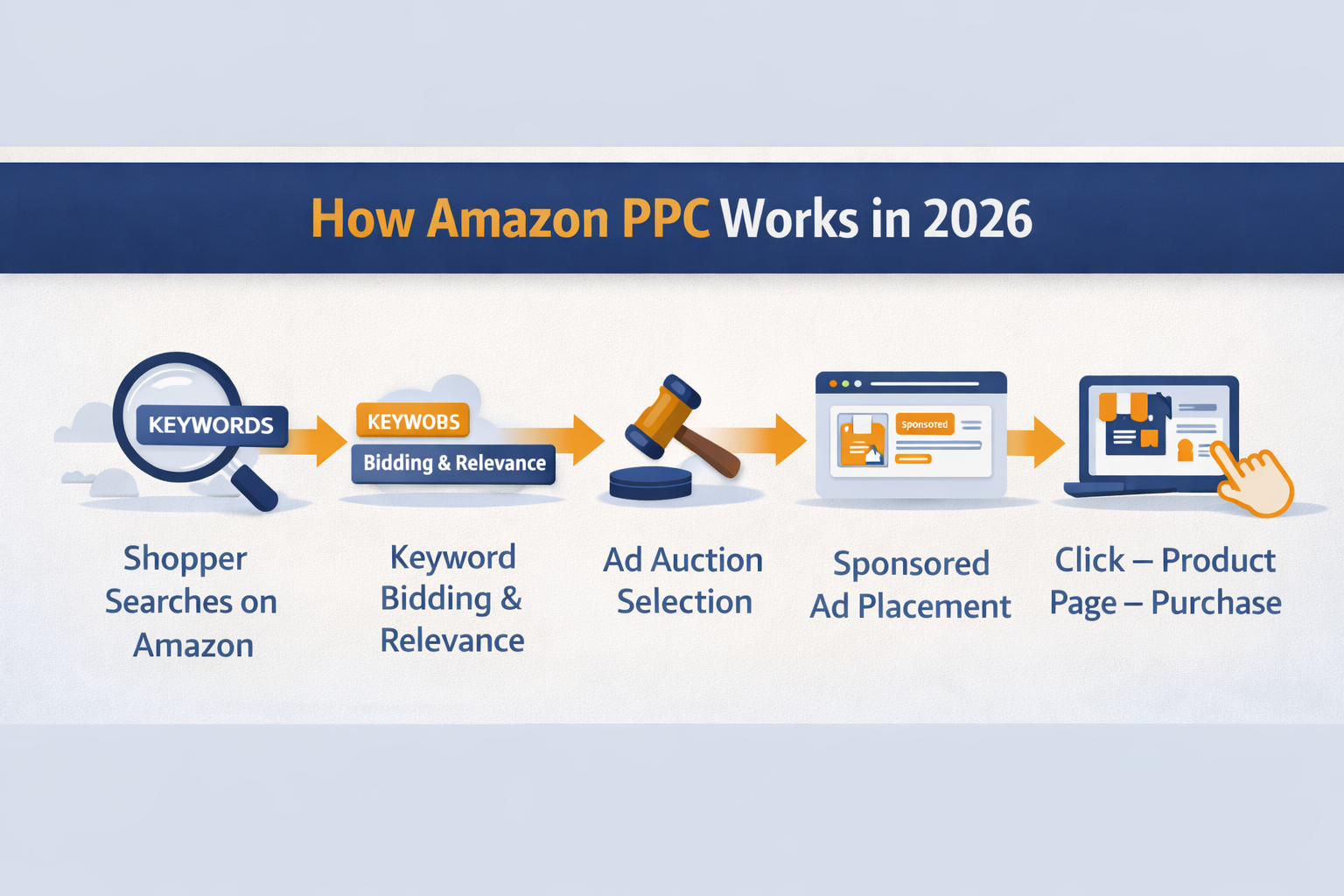
Amazon PPC in 2026 runs on a pay-per-click auction system where sellers bid on relevant keywords. When shoppers search for products, Amazon’s algorithm decides which ads to show based on bid amount, relevance, and past performance. Sellers only pay when someone clicks their ad.
The platform uses advanced machine learning to predict which ads are likely to perform best. The quality of product listings and historical campaign results significantly affects ad placement. Better listings often secure higher positions at lower costs.
Three Core Campaign Types Explained
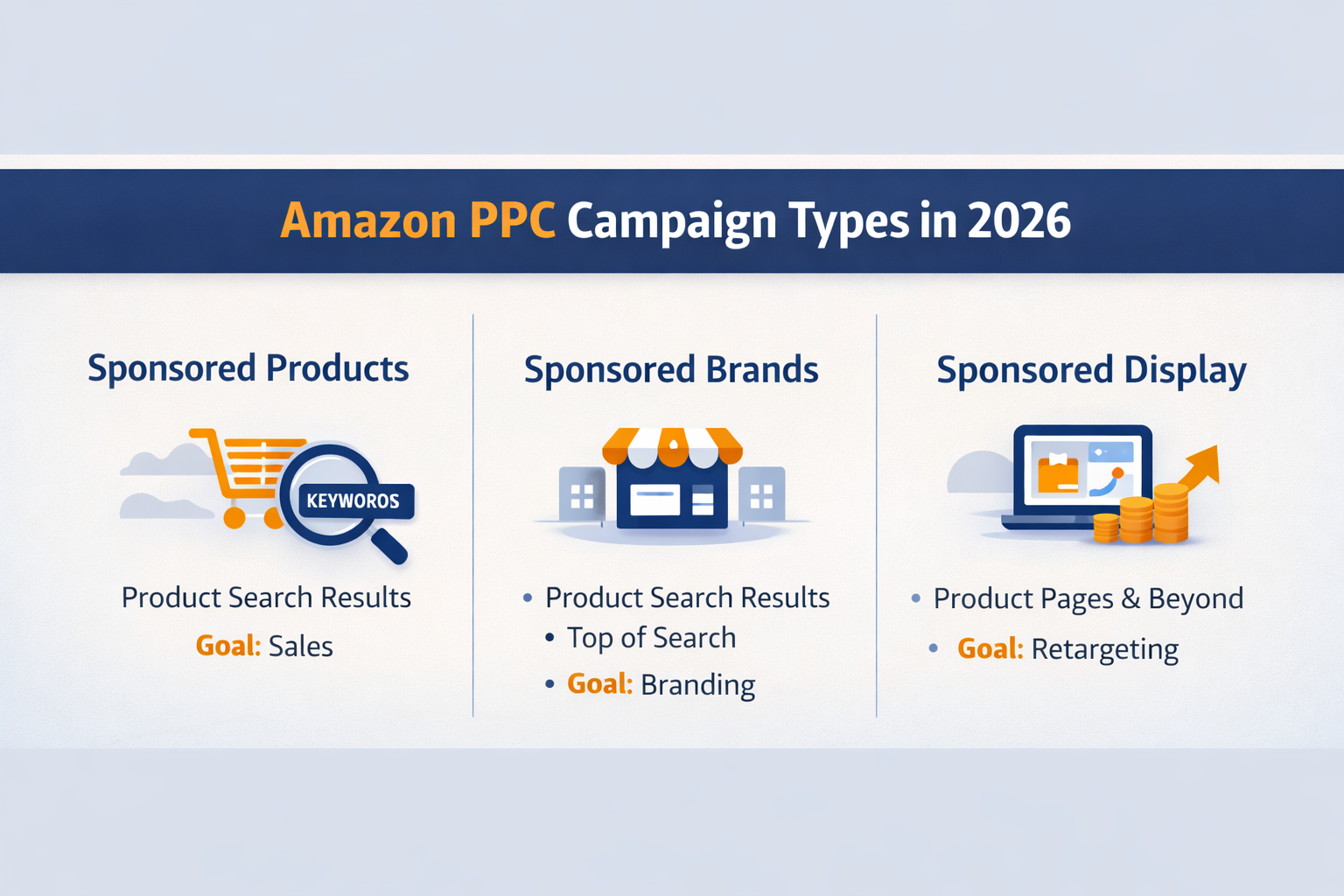
Amazon offers three main campaign types, each serving a specific purpose.
Sponsored products ads appear in search results and on product detail pages. They are highly effective for driving immediate sales because shoppers see them while actively searching.
Sponsored brand ads display multiple products along with brand logos and custom messaging. These appear at the top of search results and help increase brand awareness while directing traffic to storefronts.
Sponsored display ads reach shoppers both on and off Amazon using audience targeting. These campaigns show ads to customers who viewed similar products or fit specific interest groups. They are especially effective for retargeting and expanding reach.
Choosing the right campaign type depends on goals. New product launches benefit from aggressive sponsored products campaigns, while established brands often combine all three types for maximum impact.
Amazon PPC Campaign Setup: Building a Strong Foundation
Conducting Keyword Research First
Starting with a proper Amazon PPC campaign setup helps prevent costly mistakes later. First, conduct thorough keyword research before launching any campaign. Tools like Helium 10 and Jungle Scout can help identify high-volume, relevant keywords that match products perfectly.
Focus on keywords with strong buyer intent rather than just search volume. “Best wireless earbuds for running” shows clear purchase intent compared to just “earbuds.” These more specific phrases usually convert at higher rates.
Organizing Campaigns for Success
Next, organize Amazon PPC campaigns by product category or seasonal theme. This structure makes management simpler and improves performance tracking. Keeping summer products separate from winter items helps control budgets effectively.
Create separate campaigns for different match types to maintain better control. Run one campaign for exact match keywords and another for phrase match. Clear naming conventions make it easier to navigate campaigns quickly.
Setting Realistic Budgets and Targeting
Set daily budgets based on profit margins and testing goals. Many sellers begin with $25 to $50 per day for initial testing. This approach allows gathering valuable data without risking excessive capital upfront.
Choose manual targeting for more precise control over ad placement. While automatic campaigns are useful for discovery, manual campaigns let sellers adjust bids more effectively. Running both types simultaneously often provides broader market coverage.
Finally, create compelling product listings before launching ads. Conversion rates rely heavily on high-quality images, clear titles, and persuasive bullet points. Optimizing listings first is essential to maximize advertising return on investment.
For sellers seeking professional guidance on campaign setup and Amazon FBA optimization, experts can help structure campaigns for maximum performance.
Amazon PPC Bidding Strategies 2026 That Drive Results
Dynamic Bidding Options
Effective Amazon PPC strategy helps separate profitable campaigns from those that drain budgets. Start with Amazon’s suggested bid as a baseline, then adjust based on performance data collected over seven to ten days.
Use dynamic bidding strategies that automatically adjust bids based on conversion likelihood. Amazon offers three options: down only, up-and-down, and fixed bids. Most sellers find that the up-and-down strategy delivers the best results in 2026.
Adjusting Bids Based on Performance
Increase bids on high-performing keywords that generate sales profitably. If a keyword delivers a 15 percent Amazon PPC ACoS while the target is 25 percent, raising the bid can capture additional volume.
Lower bids on keywords with high ACoS that exceed target thresholds. However, avoid pausing them immediately without testing. Sometimes reducing bids by 15 to 20 percent brings them back into profitability.
Placement Multipliers and Top-of-Search
Test placement multipliers to boost visibility in top-of-search positions. According to eMarketer, these placements often achieve significantly better conversion rates. Bidding more aggressively for these spots can increase overall sales volume.
Monitor total advertising cost of sales (Amazon PPC TACoS strategy) regularly. This metric indicates what percentage of total sales goes toward advertising. Most profitable sellers aim for TACoS between 10 and 20 percent, depending on their business model.
For guidance on implementing these bidding strategies effectively, sellers can refer to tools like Helium 10 or Jungle Scout for data-driven bid adjustments.
Keyword Targeting Strategy for Maximum Performance
Choosing the Right Match Types
Successful Amazon PPC campaigns begin with thoughtful keyword selection and organization. Focus on relevance rather than just search volume. A highly specific long-tail keyword with lower volume often converts better than a broad, highly competitive term.
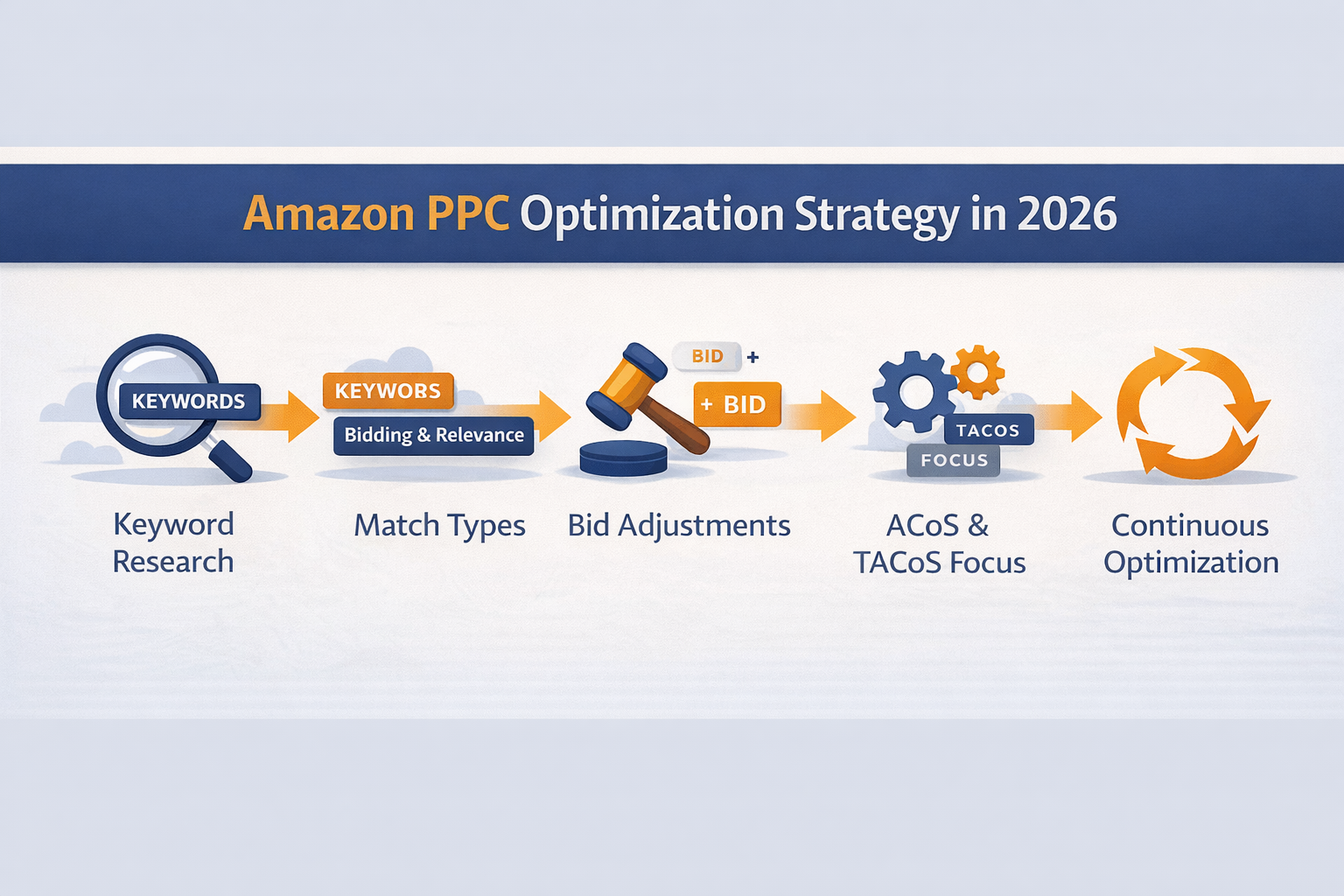
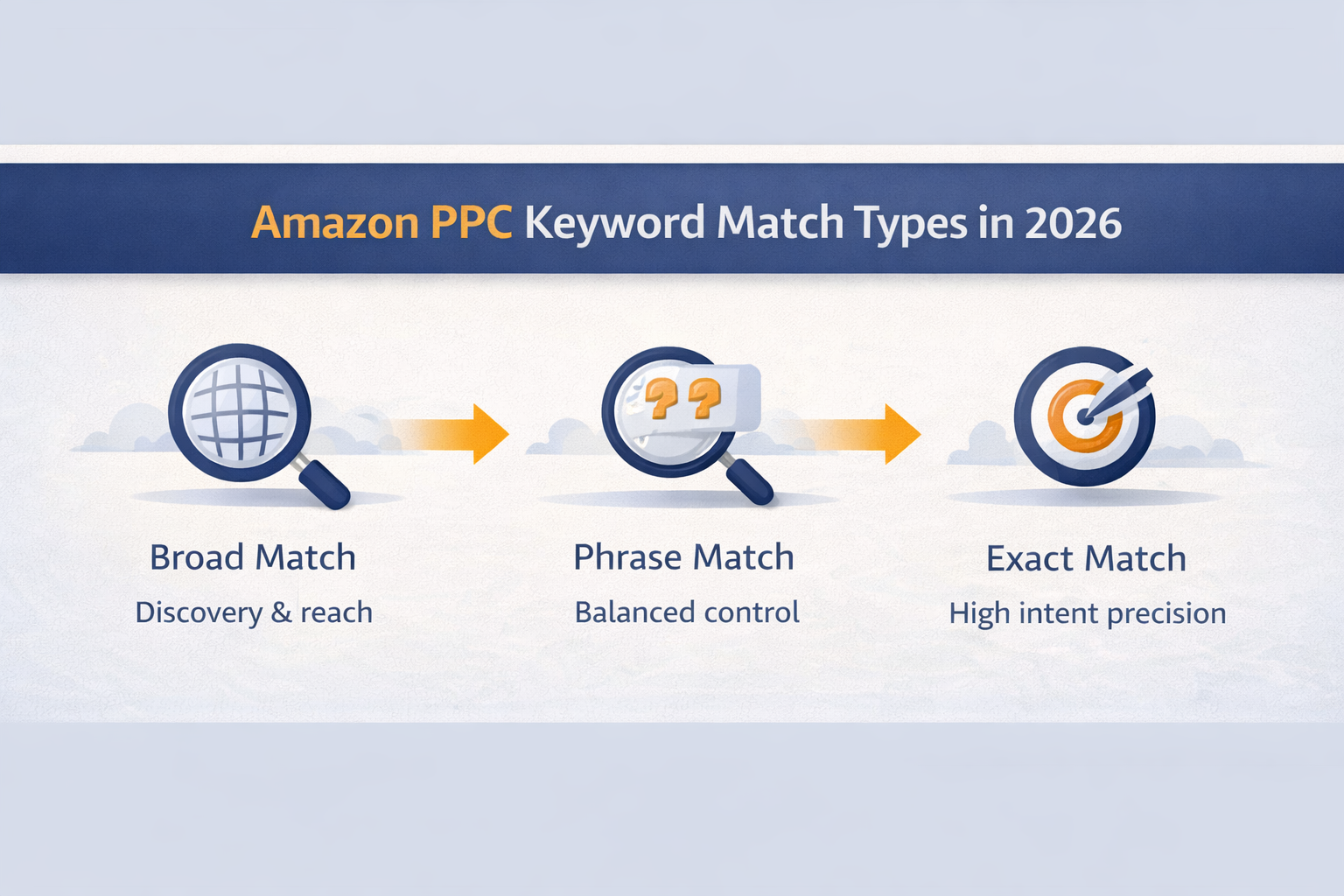
Divide keywords into three match types: broad, phrase, and exact. Each serves a different purpose in the Amazon PPC strategy. Broad match helps with discovery, while exact match gives precise control over spending. Phrase match falls in between, allowing moderate flexibility while maintaining relevance.
Mining Search Term Reports
Check search term reports weekly to uncover new opportunities and cut waste. These reports show exactly what shoppers typed before clicking ads. They also highlight irrelevant terms that drain budgets.
Regularly add negative keywords to prevent ads from showing for unrelated searches. As a result, Amazon ads optimization improves over time, and campaigns become more profitable.
Leveraging Long-Tail Keywords
Long-tail keywords often deliver better returns for smaller sellers in competitive categories. These specific phrases face less competition and attract shoppers with clear purchase intent. However, identifying and implementing them requires careful research.
Build lists of 20 to 30 long-tail variations for each main product. Test them in phrase and exact match campaigns to see which converts best. “Waterproof bluetooth speaker for shower” targets a very specific use case, improving conversion rates and maximizing ROI.
Amazon Ads Optimization: Common Mistakes to Avoid
Neglecting Regular Campaign Reviews
Many sellers unknowingly hurt their Amazon PPC performance by setting campaigns and then forgetting them. Amazon’s marketplace evolves constantly, so regular optimization is crucial.
Schedule weekly sessions to review all active campaigns. Check search terms, adjust bids, and add negative keywords systematically. Monitor budget pacing to ensure campaigns run smoothly throughout the day.
Ignoring Search Term Data
Overlooking search term reports can lead to wasted spend over time. These reports reveal how customers are searching, highlight emerging trends, and uncover new keyword opportunities that might otherwise be missed.
Running out of budget mid-day can cause significant lost sales. If ads stop showing at 2 PM, afternoon and evening shoppers get missed entirely. Adjust daily budgets to cover peak shopping hours.
Poor Listing Quality
Even the most strategic Amazon PPC campaign setup fails when product listings are weak. Shoppers who click ads but find unclear information or low-quality images often do not convert. Continuously refine listings based on customer questions and feedback.
Avoid competing against yourself, which happens when multiple campaigns target the same keywords for identical products. This wastes money and drives up costs because ads bid against one another instead of competitors.
Finally, neglecting mobile optimization hurts performance, as most Amazon shoppers browse on mobile devices. Ensure titles, images, and bullet points display correctly on smaller screens to improve conversion rates. Understanding common Amazon FBA automation mistakes helps sellers avoid these pitfalls.
Amazon PPC Tips for Beginners 2026
Starting with Automatic Campaigns
Launching a first campaign can feel overwhelming without guidance. These tips help avoid common mistakes and reach profitability faster.
Begin with automatic campaigns to identify which keywords convert best for products. Let these campaigns run for about two weeks to gather data, then use that insight to create more targeted manual campaigns.
Conservative Bidding Approach
Start with lower bids and gradually increase them based on performance. This approach protects budgets while learning the platform. Bidding 50 cents initially is safer than starting at $2 and losing money quickly.
Focus on a small set of products first rather than advertising entire catalogs. Master the fundamentals with three to five products before expanding. This gains expertise without spreading budgets too thin.
Tracking Conversion Rates Separately
Track conversion rates on product detail pages separately from ad metrics. Low conversion rates often indicate listing issues that need to be fixed before increasing ad spend. However, strong conversion rates signal it’s time to scale budgets.
Joining seller communities and forums can provide invaluable tips from experienced advertisers. Platforms like Reddit and Facebook have active groups sharing strategies. Amazon’s Seller Central forums offer direct insights from fellow sellers.
If personalized advice specific to the business is needed, reach out to specialists for tailored insights and hands-on support.
Amazon PPC Automation Tools 2026 That Save Time
Comprehensive Research Platforms
Managing campaigns manually becomes overwhelming once scaling beyond a few products. Automation tools reduce daily workload while improving results through smarter data usage.
Helium 10 helps sellers handle keyword research, tracking, and performance monitoring in one place. Their Chrome extension pulls real-time data directly inside Amazon. As a result, sellers can make faster decisions without jumping between platforms. Learn more directly from Helium 10 on their official site.
Analytics and Intelligence Tools
Jungle Scout supports product research and keyword discovery during campaign planning. Their advertising analytics help track spend, sales, and trends over time. However, it performs best when used alongside Amazon’s native reporting tools.
Perpetua focuses heavily on automated bid management using machine learning. The platform adjusts bids throughout the day based on performance signals. As a result, many sellers report improved ACoS optimization within the first month.
Competitive Intelligence Solutions
DataHawk offers deep analytics and competitive insights that go beyond standard reporting. Sellers can track performance against competitors within the same category. Its reporting tools help identify seasonal patterns and growth opportunities.
According to Forbes, sellers who adopt advertising automation often see a 20-30% improvement in efficiency within the first quarter. This reinforces why automation is becoming essential for PPC on Amazon. For additional tools that enhance efficiency, explore the best Amazon Chrome extensions.
Amazon PPC Best Practices 2026 for Advanced Sellers
Once sellers move beyond the basics, applying advanced practices becomes critical for scaling profitably. In Amazon advertising in 2026, competition is higher, costs fluctuate faster, and optimization needs to be intentional rather than reactive. This is where experienced sellers gain an edge.
Dayparting and Schedule Optimization
Dayparting allows sellers to adjust bids based on when conversions are most likely to happen. Buyer behavior varies significantly by time of day. Some products convert best during evenings, while others perform better during work hours. Reviewing hourly performance data helps sellers increase bids during high-converting periods and reduce wasted spend during low activity windows.
This approach improves Amazon ads optimization by focusing the budget where returns are strongest rather than spreading spend evenly across the day.
Defensive and Competitor Targeting
The advanced Amazon PPC strategy includes defensive keyword targeting. Bidding on brand terms prevents competitors from capturing high-intent traffic. This protects conversion rates and keeps acquisition costs predictable.
Product targeting on competitor listings is another powerful tactic. Showing Amazon sponsored ads on competitor product pages works well when the offer has a pricing advantage, better reviews, or bundled value. This tactic is most effective when paired with strong listing optimization.
Sequential Campaign Strategies
Top sellers use layered campaigns instead of isolated ads. Sponsored display ads are often used first to build awareness, followed by sponsored products ads to capture conversions. This structure aligns with how modern advertising works, where multiple touchpoints influence buying decisions.
Seasonal adjustments also matter. Prime Day, holiday periods, and category-specific peaks require budget increases and bid adjustments. Sellers who plan these changes ahead of time maintain stronger visibility while controlling Amazon PPC cost.
When applied correctly, these advanced techniques help sellers turn Amazon PPC campaigns into a predictable growth engine rather than a variable expense.
Understanding Amazon PPC Cost in 2026
Average Cost Expectations
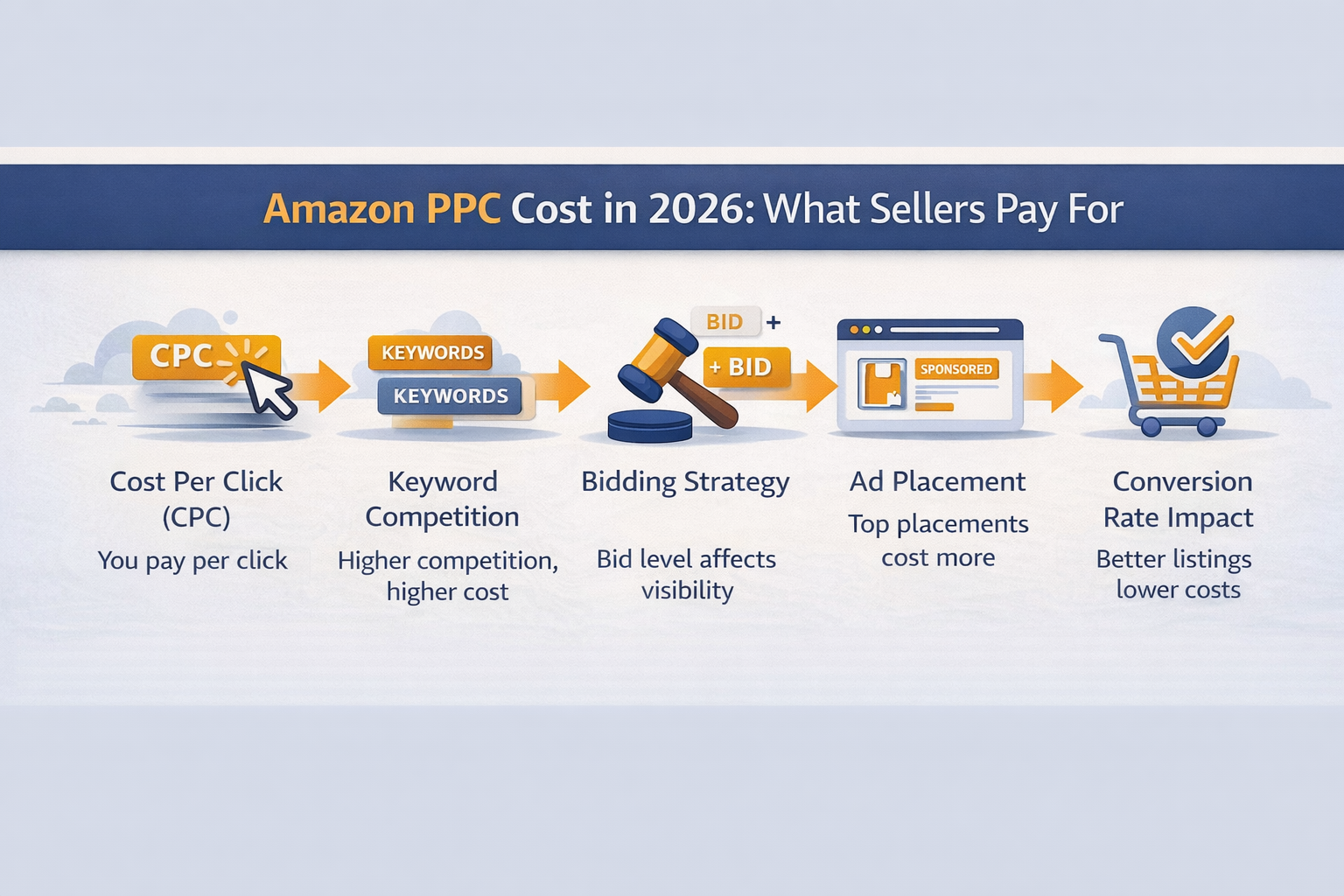
Understanding Amazon PPC cost in 2026 is essential before launching or scaling campaigns. Advertising costs vary widely based on product category, competition, and keyword targeting choices. Sellers in saturated niches face higher costs, while focused targeting in less competitive categories often delivers better efficiency.
On average, the cost per click ranges between $0.30 and $3.00. Categories like electronics, supplements, and beauty tend to sit at the higher end due to aggressive competition. Meanwhile, niche products with strong differentiation usually maintain lower CPCs and more stable returns.
Budget Planning Guidelines
Monthly spend depends on how aggressively sellers approach their advertising. Smaller accounts often begin between $500 and $2,000 per month, while established brands scale to $10,000 or more once campaigns prove profitable. The key is starting with controlled budgets and increasing spend only after performance data confirms consistency.
Before launching any Amazon PPC campaign setup, calculate break-even Amazon PPC ACoS. This ensures bids align with profit margins instead of chasing volume blindly. A 30 percent profit margin means the maximum sustainable ACoS is 30 percent.
Understanding TACoS for the Complete Picture
Evaluating only ACoS gives an incomplete view. Amazon PPC TACoS measures advertising spend against total revenue, including organic sales influenced by ads. This metric shows how campaigns contribute to long-term brand growth, not just immediate conversions.
Sellers who track TACoS alongside ACoS gain clearer insight into whether advertising is driving sustainable business growth or short-term spikes only.
Measuring Success Beyond Basic Metrics
Return on Ad Spend Analysis
Advertising cost of sales alone does not fully explain performance. Return on ad spend shows how much revenue each advertising dollar generates, which helps sellers judge efficiency more clearly. A ROAS of 4.0 means every dollar spent returns four dollars in revenue.
Track ROAS alongside Amazon PPC ACoS to evaluate campaigns from multiple angles. Some campaigns may show a higher ACoS while still producing strong ROAS. However, profit margins must always guide decisions when scaling spend.
Impression Share and Visibility
Impression share measures how often ads appear compared to the total available impressions. Low impression share usually signals budget limits or bids that are too conservative. As a result, increasing bids or daily budgets can unlock additional traffic within categories.
Click-through rate shows how relevant ads appear to shoppers. Higher CTR often reflects strong keyword targeting and aligned listings. Strong CTR typically supports better placement and improved conversion performance.
Conversion Rate Optimization Focus
Conversion rate optimization plays a critical role in Amazon PPC strategy. This metric reflects how many clicks turn into actual purchases. Improving listings, pricing, and trust signals often raises conversion rates without increasing ad spend.
Doubling the conversion rate mathematically reduces ACoS by half when traffic quality stays consistent. Therefore, optimization should always focus on improving conversions alongside bid and budget adjustments.
The Future of Amazon Advertising in 2026
Emerging Ad Formats and Features
Amazon advertising in 2026 continues to evolve as the platform rolls out more advanced ad formats. Video ads gained strong momentum in late 2025 and remain a major focus this year. These formats allow sellers to explain product benefits visually, which often improves engagement compared to static images.
Meanwhile, voice shopping through Alexa introduces new opportunities. Optimizing for voice search requires more conversational keyword targeting and natural phrasing. However, this channel is still maturing, which gives early adopters a clear advantage before competition intensifies.
AI-Driven Campaign Management
AI-driven Amazon sponsored ads now influence nearly every part of campaign performance. Amazon’s advertising algorithm has become more accurate at predicting buyer intent and conversion probability. As a result, automated bidding often outperforms fully manual management for many sellers.
Recent changes to attribution windows also reshape how advertising is measured. These updates assign more value to early touchpoints in the buyer journey. Therefore, awareness-focused campaigns now show a clearer impact on overall revenue, not just last-click sales.
Cross-Device Tracking Improvements
Cross-device tracking improvements allow decisions to be more precise. Sellers can now see how shoppers interact across mobile, tablet, and desktop devices. This insight supports better budget allocation and bid adjustments throughout the day.
Understanding device behavior helps refine optimization efforts. Sellers can tailor creatives and bids to match how customers browse and purchase, which leads to more consistent performance across campaigns. For comprehensive guidance on scaling businesses, visit the homepage for seller resources.
Frequently Asked Questions
Q. What is Amazon PPC in 2026?
Amazon PPC in 2026 is a pay-per-click advertising model in which sellers bid on keywords to display products in Amazon search results. Sellers only pay when a shopper clicks the ad, keeping spend under control. As a result, sellers gain predictable traffic with clear performance tracking across campaigns.
Q. Is Amazon PPC still profitable in 2026?
Amazon PPC remains profitable when campaigns follow proven optimization practices. Many sellers reach profitability within two to three months after launch. However, success depends on consistent testing, smart keyword targeting, and ongoing listing improvements to stay competitive.
Q. How much does Amazon PPC cost in 2026?
Amazon PPC cost varies by niche, competition, and bidding strategy. Average cost per click usually falls between $0.30 and $3.00. Most sellers begin with daily budgets around $25 to $50, then scale once campaigns deliver stable returns.
Q. Should sellers use Amazon PPC automation?
Automation tools help sellers save time and improve efficiency through AI-driven optimization. These tools continuously manage bids, budgets, and performance data. However, experienced sellers still review results manually to guide long-term strategy decisions.
Q. How do I optimize ACoS for my Amazon PPC campaigns?
Lower ACoS by reviewing search term reports regularly, adding negative keywords, and adjusting bids on profitable terms. Improving listings also raises conversion rates, which directly reduces costs. Tracking both ACoS and TACoS gives sellers a clearer picture of true profitability.
For help building campaigns that align with goals and maximize return on ad spend, explore Amazon FBA services for expert guidance and campaign support.
