
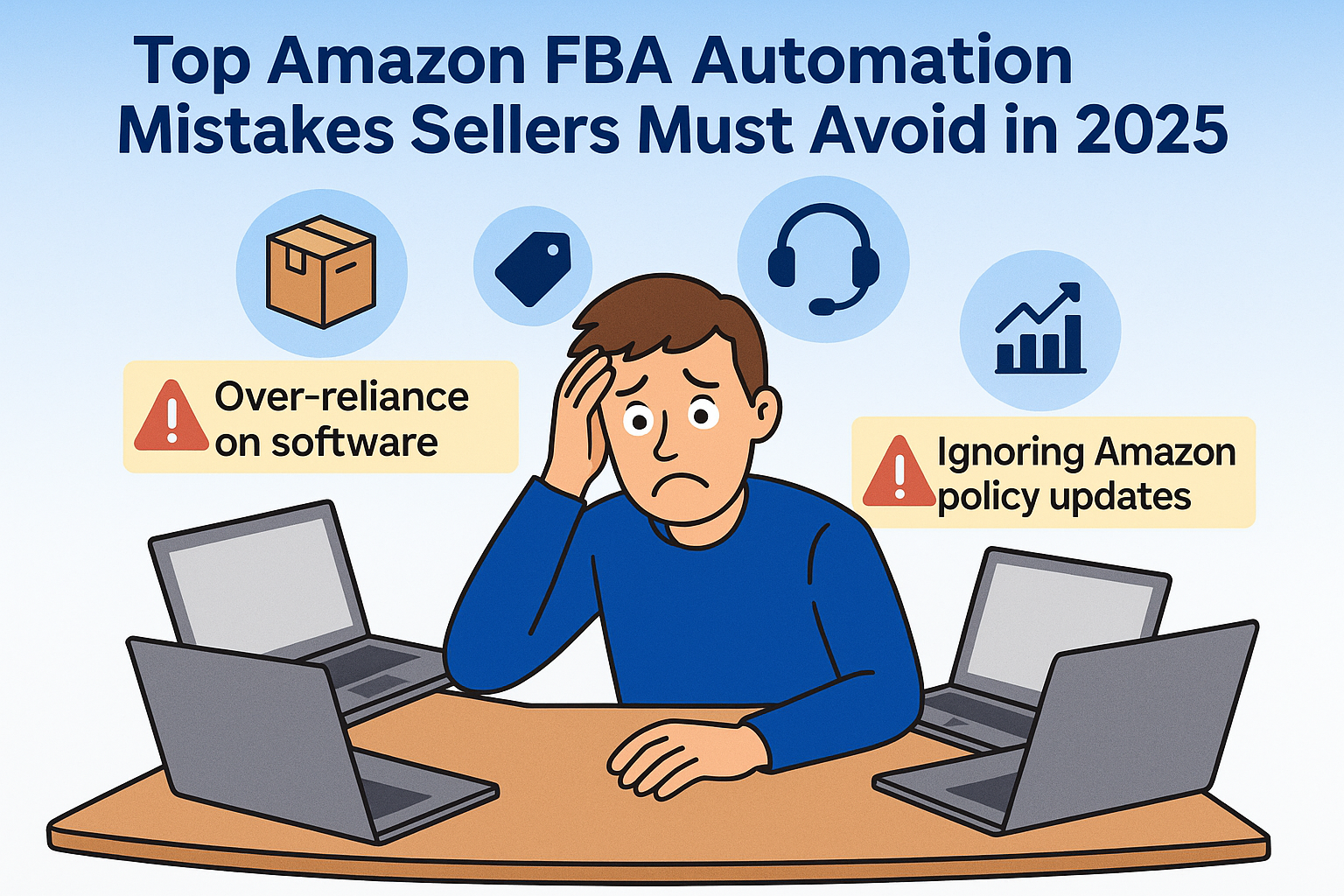
Amazon FBA Automation Mistakes: Complete Guide to Avoiding Costly Errors in 2025
Amazon FBA automation mistakes cost sellers thousands of dollars every year. Moreover, many business owners continue making the same critical errors. Recent data from Statista shows the global e-commerce automation market reached $6.9 billion in 2024. As a result, more sellers now rely on automated tools to manage their stores. However, understanding common Amazon FBA automation mistakes helps you build a stronger business. Furthermore, it helps you avoid costly pitfalls that can damage long-term growth.
Automation promises smoother operations and better efficiency for online businesses. Nevertheless, jumping into Amazon automation services without proper research creates serious problems. In addition, these problems affect profitability. Success with FBA automation for sellers requires careful strategy, the right tools, and consistent attention. Therefore, this comprehensive guide explains the biggest automation mistakes Amazon sellers make. Plus, it shows how to prevent them safely using proven methods.
Why Amazon FBA Automation Fails: Understanding the Core Issues
Many sellers wonder why Amazon automation fails for new sellers despite significant investment. In fact, the answer lies in understanding that automation enhances good business practices. However, it doesn’t replace fundamental skills. Common Amazon seller mistakes 2025 include over-reliance on technology. Additionally, they include inadequate monitoring and poor provider selection.
Before diving into specific Amazon FBA automation mistakes, you need to recognize something important. Specifically, safe Amazon FBA automation methods combine technology with human expertise. Sellers who achieve sustainable Amazon FBA business growth understand this balance perfectly. Consequently, they use automation to handle repetitive tasks. At the same time, they maintain strategic oversight of critical decisions.
According to Forbes, businesses that balance technology with human oversight see better results. In particular, they see 40% better operational efficiency. In comparison, those relying solely on automated systems struggle more.
Common Amazon FBA Automation Mistakes That Kill Profitability
Choosing the Wrong Automation Service Provider
Selecting the wrong provider ranks among the most damaging Amazon FBA automation mistakes. In reality, not all automation companies deliver the same quality. Moreover, not all provide the same reliability in their services. Some promise incredible results but provide mediocre performance instead. Meanwhile, others charge high fees without offering real value to your business.
Before committing to any provider, research their track record thoroughly. First, look for verified reviews from actual clients. Then, check how long they’ve been in business. Additionally, ask about their team’s expertise in Amazon selling. A good provider understands FBA rules completely. Furthermore, they understand pricing strategies and inventory management requirements.
Many sellers are attracted to cheap services that seem like bargains at first. However, low prices often mean limited support. Similarly, they may mean outdated tools. In contrast, quality automation services consistently invest in technology and skilled staff. As a result, they stay updated on Amazon’s changing policies. Likewise, they stay updated on algorithm shifts that affect seller performance.
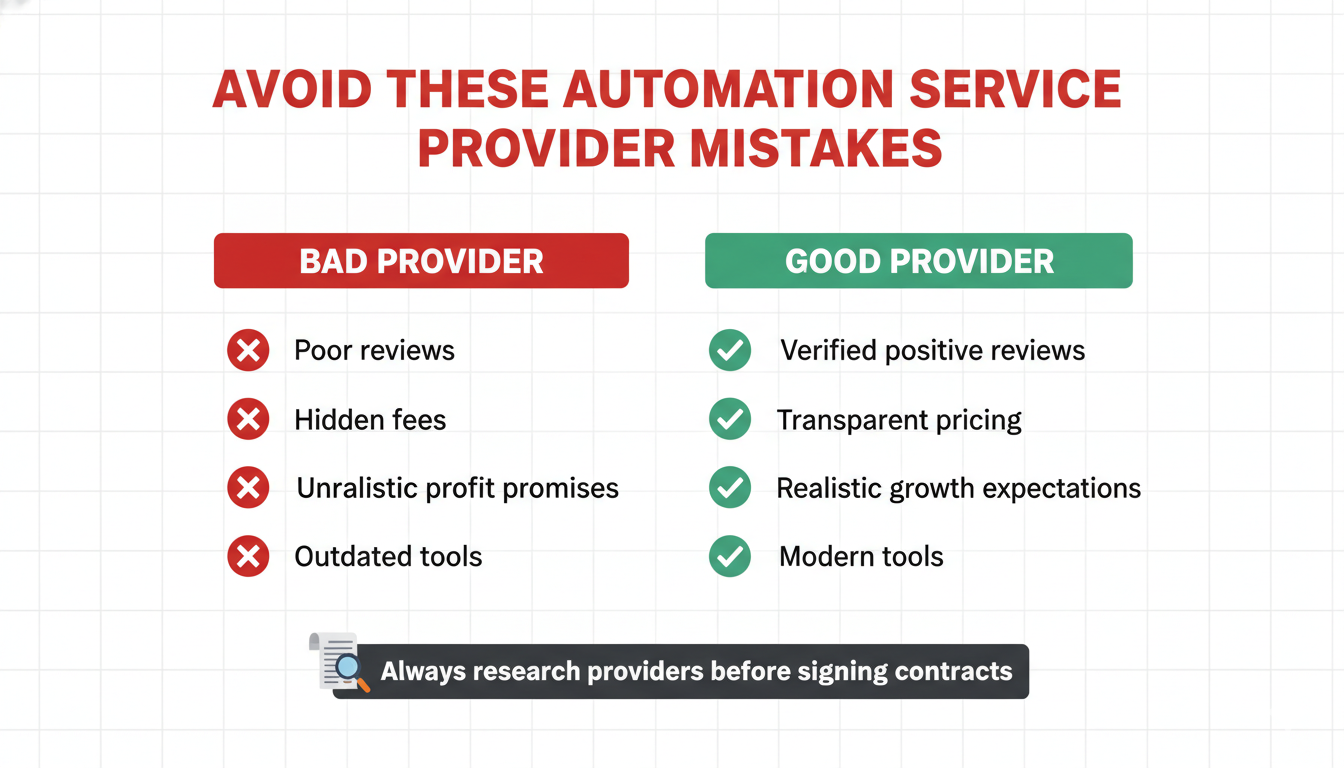
Red Flags When Choosing Amazon FBA Automation Companies
When evaluating the best Amazon automation services for 2025, ask specific questions about their processes. For example, how do they handle inventory replenishment decisions? What metrics do they track for performance optimization? Moreover, how quickly do they respond to urgent issues? Ultimately, the answers reveal whether they’re truly professional.
Another red flag involves providers who guarantee unrealistic profits without evidence. In truth, no legitimate company can promise specific revenue numbers upfront. Amazon selling involves many variables beyond anyone’s control. These include market conditions and competition. Therefore, be wary of anyone claiming they can guarantee specific outcomes.
For sellers seeking professional guidance, Amzart Solutions offers comprehensive Amazon FBA managed services. In particular, they balance automation with human expertise. Their team combines advanced technology with hands-on management. As a result, they help sellers achieve sustainable growth. Meanwhile, they maintain full compliance with Amazon’s evolving policies.
Automating Everything Without Human Oversight
Amazon FBA automation mistakes often stem from automating every aspect entirely. In reality, Amazon FBA automation works best when combined with careful human judgment. However, assuming systems can run independently often causes serious problems. Over time, this leads to inventory issues and customer dissatisfaction.
Why Complete Automation Fails Amazon Sellers
Inventory management still requires regular attention from sellers. First of all, automated systems can reorder products using algorithms. However, they cannot accurately anticipate seasonal trends. Similarly, they cannot predict sudden demand shifts. On the other hand, a human seller can spot products gaining popularity early. Consequently, they can adjust strategies before competitors respond. This proactive approach helps prevent FBA inventory stockouts. In addition, it reduces costly errors in workflows.
Customer service represents another area where full automation falls short. Initially, automated responses handle simple questions efficiently. Nevertheless, complex issues need personal attention. In fact, customers value real interactions. These build loyalty and trust in ways that automated messages cannot. Similarly, pricing automation requires monitoring. Otherwise, you risk automated repricing problems that harm profit margins.
Safe Amazon FBA automation methods combine technology with expert oversight. As a result, sellers who maintain this balance achieve sustainable Amazon FBA business growth. Furthermore, they do this without sacrificing quality. Professional Amazon automation providers help you prevent automation mistakes that hurt Amazon profits. At the same time, they maintain compliance with platform policies.
According to Forbes, businesses using data-driven decision-making perform better. Specifically, they are 23 times more likely to acquire customers. This statistic applies perfectly to Amazon sellers. Particularly, it applies to those who blend automation with human insight effectively.
Neglecting Data Analysis and Performance Metrics
Amazon FBA automation mistakes multiply when sellers ignore critical data. In particular, Amazon FBA automation generates massive amounts of data every day. Sales numbers, conversion rates, advertising costs, and customer feedback all tell stories. Unfortunately, many sellers ignore this valuable information completely. Instead, they treat automation as a “set and forget” solution.
Essential Metrics to Track for Amazon FBA Success
Data analysis reveals what works and what needs improvement. For instance, maybe certain products sell better during specific months. Perhaps some advertising campaigns waste money. Meanwhile, others perform excellently in terms of conversions. However, you cannot discover these patterns without regularly reviewing your Amazon FBA dashboard metrics.
Start by identifying the most critical KPIs for your business. First, total revenue matters. However, profit margin matters even more for long-term sustainability. Additionally, customer acquisition cost affects your bottom line over time. Moreover, return rates indicate product quality and customer satisfaction levels.
Set aside time each week to review these numbers carefully. Then, look for trends and anomalies that require attention. For example, when sales suddenly drop for a product, investigate immediately. Perhaps a competitor recently lowered their price. Alternatively, negative reviews may have appeared suddenly. Quick responses prevent small issues from becoming major problems.
Many automation tools provide dashboards with visual reports. Nevertheless, you should review them regularly to make confident, data-driven Amazon decisions. Therefore, set calendar reminders if necessary. Make data review a non-negotiable part of your weekly routine.
Modern Amazon FBA automation tools in 2025 focus on profitability and compliance. In addition, they focus on advanced analytics. Leveraging these tools effectively separates successful sellers from those who struggle. Learn more about comprehensive analytics at Amzart’s Amazon FBA services.
Amazon FBA Listing Optimization Mistakes to Avoid
Failing to Optimize Product Listings Continuously
Creating listings once and never updating them represents a common Amazon FBA automation mistake. As a result, this approach reduces visibility in Amazon search results. Furthermore, it dramatically limits sales potential. The Amazon algorithm evolves constantly. Therefore, continuous optimization is essential for success.
How to Optimize Amazon Listings for Maximum Visibility
Keywords that drove traffic months ago may be less relevant today. In fact, search patterns change constantly. Meanwhile, competitor listings improve over time. Consequently, they raise the bar for everyone in the marketplace. To maintain performance, regularly review your product titles. Then, incorporate primary keywords that customers are actively searching for. Use tools like Helium 10 or Jungle Scout. These help you find trending search terms.
Product descriptions also need continuous refreshment. Specifically, base updates on customer feedback. Highlight new benefits that customers mention frequently. In addition, emphasize the features mentioned positively. Answer common questions directly in descriptions. This approach reduces the limitations of customer service automation. Moreover, it naturally builds buyer confidence over time.
Images play a critical role in product conversion rates. Therefore, use high-quality photos from multiple angles. Additionally, include lifestyle images showing products in use. These increase engagement significantly. Update images whenever packaging changes. Similarly, update them when new product features are added.
Many sellers overlook backend keywords completely. However, these hidden keywords help Amazon understand product relevance. Therefore, review and update them quarterly. Use market research and search term reports. Following Amazon listing optimization strategies 2025 ensures your automation works effectively. As a result, you get better growth and visibility.
Mobile listing optimization also deserves attention. After all, most shoppers browse on phones today. Listings that look perfect on computers can appear cluttered on mobile devices. Therefore, regularly check your listings on a phone. This shows you exactly what customers experience.
Amazon FBA Policy Compliance and Automation Risks
Ignoring Amazon Policy Changes and Updates
Overlooking Amazon’s frequent policy updates ranks among the most critical Amazon FBA automation mistakes. Often, sellers assume automated systems will adapt automatically. However, this assumption can lead to serious consequences. These include account restrictions or suspended listings.
Staying Compliant with Amazon FBA Automation
Subscribe to Amazon Seller Central announcements. Then, review updates carefully each week. Many changes affect product listings directly. In addition, they affect advertising rules and pricing automation strategies. Missing these updates can put your entire business at risk. For instance, rules around customer reviews have tightened significantly. As a result, automated systems that worked before may now violate policies.
Restricted products and categories also evolve. Specifically, they evolve based on regulatory changes. Items previously sellable may now require special approval. Therefore, regular policy reviews help ensure your methods remain compliant. Understanding FBA automation compliance risks protects your business. In particular, it protects you from unexpected suspensions that damage revenue.
Joining Amazon seller communities provides additional insight. In fact, other sellers often share experiences and discuss policy shifts. Learning from these discussions can prevent costly errors. Moreover, it can improve your strategies significantly.
Amazon seller policy violations can result in permanent account closure. Therefore, staying informed ensures you avoid these devastating outcomes. If navigating these policies feels overwhelming, contact Amzart Solutions for help. They employ experienced automation specialists. These specialists monitor policy changes continuously. Furthermore, they provide guidance on maintaining compliance while optimizing performance.
Amazon FBA Inventory Management Mistakes and Solutions
Underestimating the Importance of Inventory Management
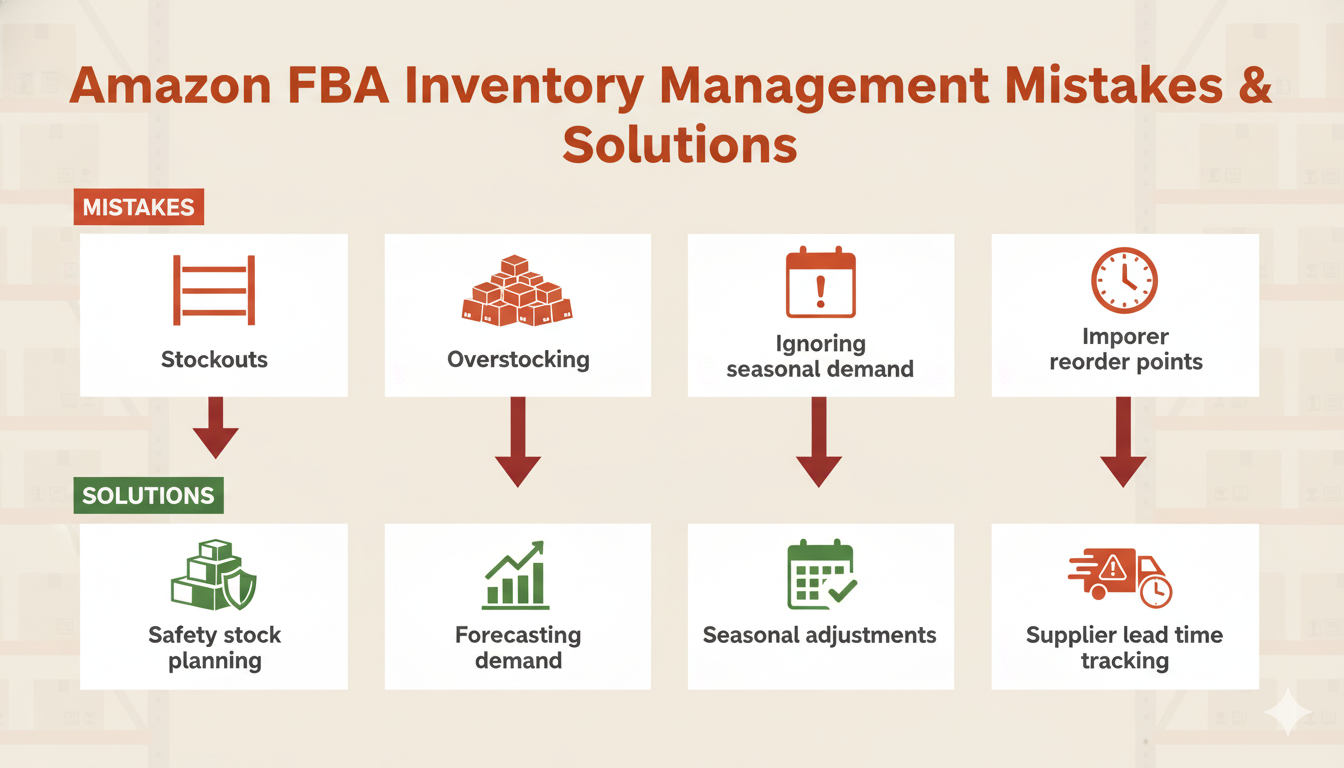
Relying entirely on automated inventory systems creates serious Amazon FBA automation mistakes. In fact, this approach often leads to stockouts or overstock situations. Both scenarios harm profitability significantly. Additionally, they damage your Amazon FBA business growth and competitive position.
Preventing FBA Inventory Stockouts and Overstock Issues
Stockouts occur when products run out before new inventory arrives. Unfortunately, Amazon penalizes sellers by suppressing listings. Moreover, they deny Buy Box eligibility immediately. As a result, customers turn to competitors instead. This disrupts your sales history and rankings permanently. Conversely, overstock ties up capital in products that sit idle. Amazon charges long-term storage fees. Consequently, these reduce cash flow and cut profits.
Effective inventory management balances these risks carefully. First, it requires planning and forecasting. Automated reordering helps. However, it requires proper configuration and ongoing monitoring. Consider supplier lead times when setting reorder points. For instance, if a manufacturer takes four weeks to deliver, your automation must account for this.
Adding safety stock for fast-selling items prevents missed opportunities. This works especially well during peak periods. Additionally, seasonal products demand extra attention. After all, demand fluctuates throughout the year predictably. Therefore, adjust automation settings accordingly. Increase inventory before peak seasons strategically. Then, scale back during slower periods to optimize cash flow.
According to Shopify’s research, well-managed inventory can improve profit margins. Specifically, it can improve them by up to 15 percent. Using Amazon inventory automation tools 2025 effectively prevents FBA automation failures. Moreover, it ensures growth. Modern FBA inventory forecasting tools help predict demand more accurately.
Many sellers search for safe Amazon automation for sellers. In particular, they want robust inventory features. Choosing systems with real-time tracking prevents inventory automation errors effectively. Similarly, automated alerts help prevent problems.
Communication and Team Management in Amazon FBA Automation
Poor Communication With Your Automation Team
Many Amazon FBA automation mistakes occur when sellers fail to communicate effectively. After initial setup, some business owners make assumptions. Specifically, they assume the company knows all their goals. However, this lack of input limits the effectiveness of automation. Over time, it reduces results significantly.
Building Strong Partnerships with Amazon Automation Providers
Regular communication remains essential for success. First, share your objectives clearly. Then, specify which products are most important to your strategy. Additionally, discuss your risk tolerance for pricing experiments. Similarly, discuss promotional tactics openly and honestly. Providing this information enables your team to make better decisions. As a result, they can align better with your goals.
Scheduling monthly check-ins ensures alignment between both parties. Use these meetings to review performance metrics. In addition, discuss concerns and plan upcoming strategies. Transparent feedback helps your provider understand what works. Moreover, it shows them what doesn’t work.
Do not hesitate to ask questions about processes or decisions. In fact, professional Amazon automation providers welcome inquiries. Furthermore, they explain their reasoning clearly. If your provider reacts defensively to questions, it may indicate a poor fit. Your on-the-ground perspective complements their technical expertise. Therefore, together you can achieve stronger outcomes.
Choosing done-for-you Amazon automation requires trust. Additionally, it requires open dialogue between parties. Companies focused on client relationships respond promptly. Moreover, they offer ongoing support consistently. Maintaining open lines of communication ensures your setup is optimized.
When sellers ask how to avoid Amazon automation failures, the answer often involves communication. Building a strong partnership creates better results than technology alone. Visit Amzart Solutions to learn about collaborative automation approaches.
Setting Realistic Expectations for Amazon FBA Automation
Setting Unrealistic Expectations for Automation Results
Automation improves efficiency and saves time. However, it’s not magic for instant success. Many sellers make the Amazon FBA automation mistake of expecting immediate results. Specifically, they believe automation will triple their sales within weeks. When reality doesn’t match these expectations, they become disappointed. Consequently, they blame the tools.
What to Expect from Amazon FBA Automation in 2025
Building a successful Amazon FBA business takes time. After all, you’re competing against thousands of other sellers. Product reviews accumulate gradually over months. Similarly, brand recognition develops slowly through consistent effort.
Set realistic timeline expectations from the start. In general, most improvements show results within three to six months. Initial setup and optimization take time to configure properly. Moreover, the systems need data to learn your business patterns. In addition, they need to learn customer behavior accurately.
Understand that automation enhances good fundamentals. However, it doesn’t replace them entirely. It cannot fix poor product selection alone. Similarly, it cannot fix weak marketing strategies. If your products don’t meet customer needs, automation won’t create success.
Profit margins matter more than gross sales numbers. Unfortunately, some sellers focus obsessively on revenue growth. Meanwhile, they ignore profitability completely. Amazon FBA automation should help you earn more money. Therefore, evaluate success based on net profit after expenses.
Celebrate small wins along the way. For example, maybe your automation reduced manual work by ten hours per week. Perhaps it improved your inventory turnover rate by 20 percent. These improvements add up to significant benefits over time.
Many sellers fall victim to Amazon FBA automation myths spread online. Understanding what automation can and cannot do prevents disappointment. Furthermore, it builds realistic strategies.
Adapting to Amazon Market Changes and Competition
Failing to Adapt to Market and Competition Changes
The Amazon marketplace constantly evolves. In fact, new sellers enter niches regularly. Meanwhile, customer preferences shift over time based on trends. Many sellers relying on Amazon FBA automation make mistakes. Specifically, they use static approaches unchanged. This rigidity hurts long-term growth. In addition, it hurts competitive positioning significantly.
Staying Competitive in the Amazon Marketplace
Regularly monitor your competition to stay ahead. Track when competitors launch new products. Similarly, track when they update their listings. Observe their pricing strategies and promotional tactics. This intelligence allows you to respond effectively. As a result, you can maintain your competitive position.
Customer reviews provide valuable market intelligence. Reading reviews for your products shows what buyers want currently. Moreover, reading competitor reviews reveals what frustrates buyers. Use this feedback to refine listings. Additionally, use it to improve customer experience and implement better strategies.
Seasonal trends also affect demand in predictable patterns. For instance, summer items sell differently from winter products. Similarly, back-to-school or holiday seasons create unique opportunities. Therefore, adjust your automation settings to reflect these variations. Do this strategically.
Broader economic conditions can impact spending patterns. According to McKinsey research, customers become more price-conscious during uncertain times. Furthermore, they research purchases more carefully. Adapting your Amazon pricing automation strategy 2025 ensures your business remains competitive.
Finally, Amazon regularly introduces new features and tools. Early adopters gain advantages by testing programs like Amazon Live or Posts. Therefore, staying informed helps you leverage opportunities. In particular, it helps before they become saturated with competition.
Understanding Amazon FBA business scaling requires flexibility. In addition, it requires constant adaptation. Sellers who remain rigid struggle more. In contrast, those who adapt succeed.
Best Practices for Amazon FBA Automation in 2025
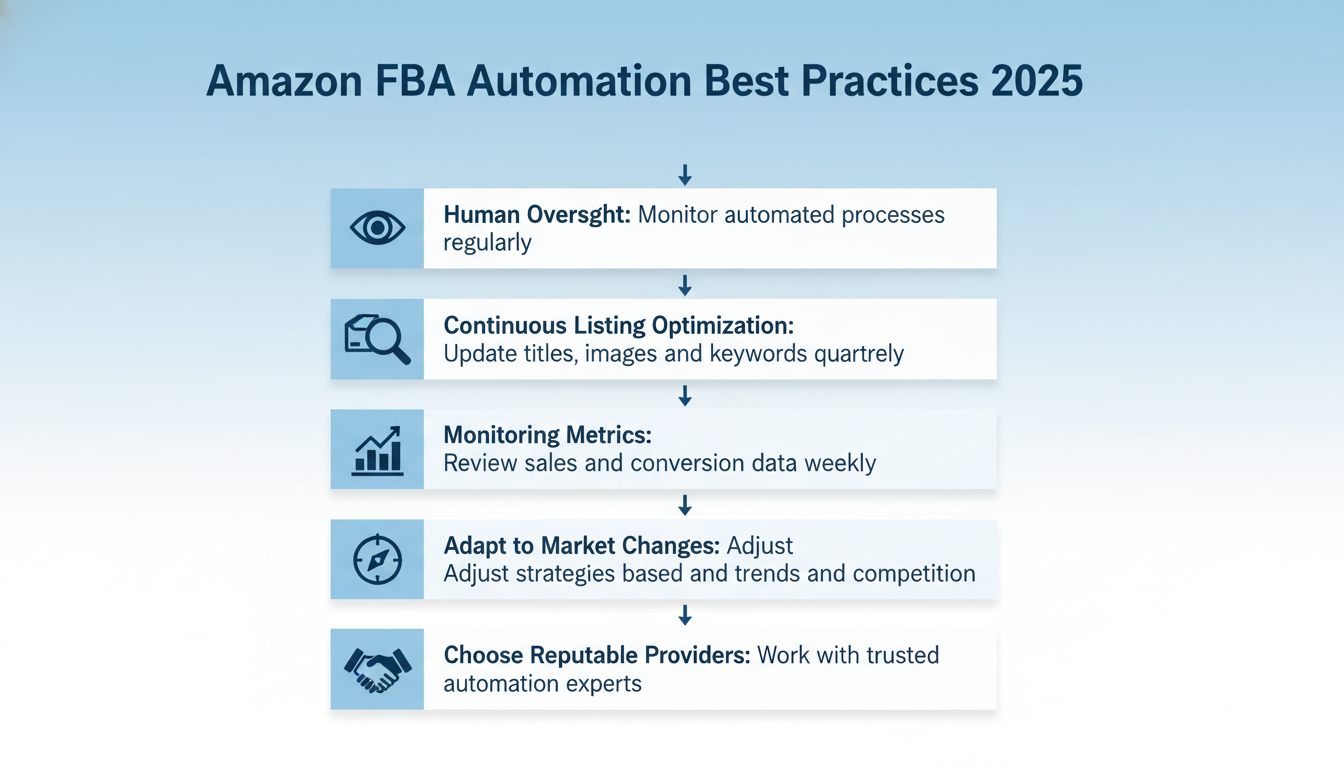
Avoiding common Amazon FBA automation mistakes requires following proven practices. First, start by choosing reputable providers. Then, research thoroughly before committing to any service. Following best practices for Amazon automation in 2025 creates better results.
Implementing Safe Amazon FBA Automation Methods
Maintain human oversight over all automated processes. Do this regularly for quality control. Review performance metrics weekly. Additionally, adjust strategies based on data patterns. Stay informed about Amazon policy changes. Check official announcements and seller communities.
Optimize product listings continuously. Don’t create them once and forget them. Instead, update titles, descriptions, images, and backend keywords quarterly. Test different approaches to see what improves conversion rates.
Communicate openly with your automation team. Schedule check-ins to review progress. Similarly, plan future strategies together. Ask questions when you don’t understand decisions.
Set realistic expectations for automation results. Understand that success takes months, not weeks. Furthermore, focus on profit margins rather than just revenue growth.
Adapt to market changes proactively. Monitor trends regularly. In addition, read customer feedback. Adjust your approach continuously. Stay flexible in your strategies.
For sellers ready to implement these strategies, explore comprehensive Amazon FBA services. These combine automation technology with strategic human oversight. As a result, they can accelerate your path to profitability. Moreover, they help you avoid common Amazon FBA automation mistakes effectively.
By following these best practices for Amazon automation in 2025, you avoid common pitfalls. Consequently, sellers who implement these strategies experience sustainable growth.
How to Choose the Best Amazon Automation Company in 2025
Choosing the best Amazon FBA automation company in 2025 requires careful evaluation. First, look for providers with proven experience in your niche. Then, check their client testimonials and case studies. These show real results achieved.
Evaluating Amazon FBA Automation Service Providers
Evaluate their technology stack. Specifically, check the tools they use for automation processes. Modern providers should use advanced software. This includes tools for inventory management, pricing, and analytics. Additionally, ask about their approach to compliance and policy monitoring.
Consider the level of human support they provide. The best providers combine technology with expert oversight. Therefore, they should offer responsive customer service. Moreover, they should provide regular performance reviews.
Review their pricing structure to ensure it aligns with your budget. Some charge flat monthly fees. Meanwhile, others take percentage cuts of sales. Understand all costs upfront before signing contracts.
Ask about their approach to scaling businesses. A good provider should support your growth. Specifically, they should offer scalable solutions and strategies. Furthermore, they should adapt their services as your needs evolve.
Many sellers in 2025 search for safe Amazon automation services. In particular, they want services that follow policies. Choosing the right provider protects your account. Additionally, it maximizes growth potential. Understanding why Amazon automation fails for new sellers helps you avoid problems. Often failures result from choosing inexperienced providers. Similarly, they result from setting unrealistic expectations.
According to TechCrunch, businesses that partner with experienced providers see better results. Specifically, they see 60% fewer operational errors. In addition, they see 35% faster growth rates. In comparison, those using DIY automation approaches struggle more.
Conclusion: Avoiding Amazon FBA Automation Mistakes in 2025
Avoiding Amazon FBA automation mistakes requires knowledge and strategy. In addition, it requires consistent attention to details. By understanding these common errors, you can build a more profitable business. Choose reputable providers and maintain human oversight. Moreover, stay informed about policy changes.
Focus on continuous optimization of listings. Similarly, focus on inventory management for the best results. Communicate openly with your automation team. Additionally, set realistic expectations for outcomes. Adapt to market changes proactively. Don’t wait for problems to emerge.
Following best practices for Amazon automation in 2025 creates sustainable growth. Whether you’re a beginner or an experienced seller, these strategies help. Start implementing these improvements today. As a result, you can avoid costly Amazon FBA automation mistakes. Furthermore, you can maximize your potential.
Remember that safe Amazon FBA automation methods combine technology with human expertise. The most successful sellers understand this balance. They know that automation enhances their business. However, it doesn’t replace strategic thinking. By avoiding these common Amazon FBA automation mistakes, you position your business for success. In particular, you position it for long-term success in the competitive Amazon marketplace.
Ready to implement Amazon FBA automation without the costly mistakes? Contact Amzart Solutions today for expert guidance. They offer proven automation strategies that deliver results.
FAQ: Amazon FBA Automation Mistakes
Q. What is Amazon FBA automation in e-commerce?
Amazon FBA automation uses software and services to handle repetitive tasks automatically. This includes inventory management and pricing adjustments. In addition, it includes order processing and basic customer service responses. As a result, it frees sellers from manual work. Therefore, they can focus on strategy and growth. Avoiding Amazon FBA automation mistakes ensures these systems work effectively.
Q. How much does it cost to start Amazon FBA automation in 2025?
Starting costs vary widely based on your approach. First, basic automation software subscriptions range from $50 to $500 monthly. Meanwhile, full-service automation providers charge between $500 and $2,500 monthly. Additionally, they charge percentage fees. Initial product inventory represents the most significant investment. Typically, this ranges between $3,000 and $10,000. Understanding Amazon FBA automation mistakes helps you avoid wasting money.
Q. Is Amazon FBA automation profitable for beginners?
Yes, Amazon FBA automation can be profitable for beginners. However, it must be implemented correctly with guidance. Success requires choosing quality products. In addition, it requires understanding Amazon’s system and monitoring regularly. Many beginners see positive results within six to twelve months. Avoid common Amazon seller mistakes 2025 by researching thoroughly. Moreover, learn from experienced sellers before starting.
Q. What tools automate Amazon FBA automation?
Popular tools include Jungle Scout for product research. Similarly, Helium 10 helps with optimization. RestockPro handles inventory management. Meanwhile, RepricerExpress adjusts prices automatically. Full-service providers like Amzart offer comprehensive solutions. These combine multiple functions effectively. These Amazon inventory automation tools 2025 help sellers manage operations efficiently. Furthermore, they help avoid Amazon FBA automation mistakes.
Q. How does Amazon FBA automation help small business owners?
Amazon FBA automation helps small business owners compete against larger sellers. Specifically, it handles time-consuming tasks efficiently. As a result, one person can manage hundreds of products. Automation reduces errors in ordering and pricing. Therefore, it protects profit margins. FBA cost-saving automation prevents costly mistakes. However, you must avoid common Amazon FBA automation mistakes that undermine these benefits.
Q. What are the most common Amazon FBA automation mistakes?
The most common Amazon FBA automation mistakes include several key errors. First, choosing the wrong provider. Second, automating everything without human oversight. Third, neglecting data analysis. Additionally, failing to optimize listings continuously. Moreover, ignoring policy changes and poor inventory management. Furthermore, inadequate communication with automation teams. Also, setting unrealistic expectations. Finally, failing to adapt to market changes. Each of these Amazon FBA automation mistakes can significantly impact profitability.
Q. How can I avoid Amazon FBA automation failures?
To avoid Amazon automation failures, maintain human oversight of automated processes. Additionally, review performance metrics regularly. Stay informed about Amazon policy changes. Moreover, optimize listings continuously. Communicate effectively with your automation provider. Furthermore, set realistic expectations. Finally, adapt to market changes proactively. Following safe Amazon FBA automation methods protects your business. In addition, learning from common Amazon FBA automation mistakes maximizes growth potential.
