
So, you’re thinking about how to start selling on Etsy in 2025. It might sound simple at first, but once you realize the size of the platform, it becomes clear why so many creative entrepreneurs are diving in. This step-by-step guide to selling on Etsy will walk you through everything you need to know.
Etsy has grown into a giant marketplace, with over 95 million active buyers who show up every month searching for something meaningful, something different. Furthermore, they are not slowing down. Etsy brought in around $2.8 billion in revenue in 2024. That says a lot, especially in a time when many businesses are still trying to bounce back from uncertain conditions.
The thing is, this handmade marketplace has done more than just survive. It has adapted. A lot changed in the world of online selling after the pandemic hit. Shopping habits shifted. Buyer expectations changed.
But Etsy? It found a way to stay grounded in what made it special, mainly the focus on handmade products, vintage finds, and creative supplies. At the same time, it evolved. It became easier to search, more seller-friendly, and, honestly, more competitive.
That is precisely why understanding how to sell on Etsy right now can make a real difference. What used to be a fun side project for some has now become a consistent income source for thousands of sellers. Consequently, it is not just about listing pretty things anymore. It is about knowing how to show up, stand out, and build something that lasts.
Why Choose Etsy for Your Online Business?
The appeal of becoming an Etsy seller from the USA goes way beyond just impressive buyer stats. Unlike most e-commerce platforms that focus on mass-market products, Etsy stands out with its niche for artisans, crafters, and vintage collectors. That difference matters, especially if you are starting an Etsy shop as a beginner.
The built-in audience already comes looking for handmade and unique items. That means less time convincing people why your product matters. Shoppers on Etsy usually arrive with a clear idea of what they want. Moreover, they are not just browsing for fun. They are searching with intent, and that alone makes selling feel a lot easier.
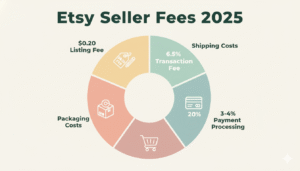
On top of that, Etsy’s fee structure is one of the most beginner-friendly out there. Listing fees are only $0.20 per item, and transaction fees sit at 6.5%. This pricing strategy Etsy uses makes it accessible compared to running your site, with added costs like hosting, payment processing, and marketing. Therefore, Etsy offers a more affordable way to get started with your handmade business on Etsy.
According to Etsy’s official seller handbook, new shops that focus on quality listings and strong customer service see better long-term results than those rushing through the setup process.
How to Set Up an Etsy Shop for Beginners: Step-by-Step Guide
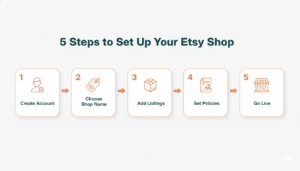
Setting up your Etsy seller account goes way beyond just filling out a signup form. When learning how to sell on Etsy as a beginner, it might look simple at first glance, but every little detail matters.
The way you present your Etsy shop setup influences whether people trust your brand and whether Etsy’s search system even shows your products to potential buyers. Think of your setup like your foundation. If you get this part right, everything else becomes easier to build on.
Choosing Your Shop Name
Your shop name is not just a label. Instead, it becomes your identity and your link on Etsy. And let’s be honest, it’s the first thing buyers notice. The best names feel intentional. They sound memorable, and ideally, they give a clue about what you sell without being too obvious or forced.
If you’re selling handmade jewelry, something like “SilverMoonStudio” paints a picture. It feels personal and has a hint of artistry. Now compare that to a name like “JewelryStore123.” One sounds like an authentic brand. The other sounds like someone rushed the setup. Clearly, you want a name that stands out but still fits your vibe.
Essential Etsy Shop Policies for New Sellers
This part gets skipped too often, but it’s actually where trust starts. Your shop policies set the tone for what customers can expect. It’s not just about protecting your business, though that matters. Rather, it’s about showing buyers that you’re professional, prepared, and upfront.
Be clear about how long your items take to ship. If you offer returns, explain the steps. If you accept custom orders, outline what’s possible and what costs extra.
When busy seasons roll in, let shoppers know there might be slight delays. Setting the right expectations now avoids future frustration on both sides. Many sellers learn the hard way that being too flexible often leads to unprofitable or confusing orders.
Writing Your Shop Story
The “About” section is your chance to show the person behind the product. Buyers come to Etsy looking for something human, something real. This is where you can share why you started creating, what inspires you, and how your process is different from mass-produced items.
Skip the generic stuff. Phrases like “I love making pretty things” blend in with thousands of other shops. Instead, think about what shaped your style.
Perhaps you work with reclaimed wood from local barns. Your metalwork may be inspired by techniques your grandfather taught you. Those little details? They stick. That’s what makes a browser become a buyer.
Etsy Seller Fees and Costs Breakdown for 2025
Understanding the whole cost structure helps you price your items correctly from day one. This pricing strategy for Etsy sellers extends beyond the $0.20 listing fee and 6.5% transaction fee.
Factor in payment processing fees (around 3-4%), packaging materials, and shipping costs. Many new Etsy sellers underestimate these additional expenses, which can eat into profits if not calculated upfront.
How to Create Etsy Product Listings That Convert in 2025
Creating a high-converting Etsy listing is not just about having a great product. Rather, it is about how that product is presented, described, and positioned. Every listing has to compete with thousands of others, so if yours does not catch attention right away, it might get overlooked.
That is why your photos, your title, and the way you talk about the product all need to work together.
Best Etsy Product Photography Tips for Higher Sales
Photos matter more than most new sellers expect. Since shoppers cannot touch or hold anything before buying, your images are all they have. That first photo especially carries weight. It is what shows up in search results. If that image doesn’t pop, your listing might never get seen.
Use clean, soft lighting. Natural light usually works best. Set up near a window and avoid harsh artificial lights.
Try using something white to bounce extra light into the darker areas. A simple white poster board can make a big difference. The goal is to show your item clearly without strange shadows or weird reflections.
But don’t stop at one angle. Add a few lifestyle photos too. Show your product in a real setting. If you’re selling handmade mugs, let buyers see them on a wooden table next to a warm drink.
If it’s jewelry, show it being worn. These moments help customers picture the product in their own lives, which builds a connection and boosts conversions.
How to Write Etsy Product Titles That Convert
The product title is one of the first things Etsy looks at when matching your listing to a shopper’s search. However, that does not mean you should only write for the algorithm. Your title still has to make sense to people. It needs to include the right words, but also sound natural.
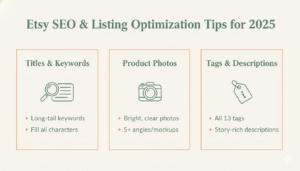
A good approach is to start your title with the most searched keywords. Those first few words carry the most weight in search and also show up first on mobile.
So instead of writing something awkward like “leather wallet custom gift men engraved handmade,” go with something smoother. Consider a personalized leather wallet for men, a custom-engraved bifold wallet, a handmade gift for your husband, or a Father’s Day present. This version includes multiple phrases someone might type while still being easy to understand.
Just remember, clarity wins. Several keywords jammed together can backfire. Shoppers read fast, and if your title feels like noise, they will move on. Think of your title like a headline. It needs to tell the story quickly but also leave a good impression.
How to Write Etsy Product Descriptions That Sell
Your product description works hand-in-hand with your photos to tell the complete story. Focus on benefits, not just features. Instead of just saying “made from sterling silver,” explain how it won’t tarnish or turn skin green.
Additionally, help buyers visualize how your product can enhance their daily lives.
Include relevant keywords naturally throughout your description, but prioritize readability. Mention materials, dimensions, care instructions, and any customization options. This comprehensive approach improves both Etsy SEO optimization and customer satisfaction.
Etsy SEO Tips for 2025: Tags, Keywords, and Ranking Strategies
Understanding how Etsy’s search algorithm works can make a big difference in how your listings perform. The platform takes several things into account when deciding which products show up first.
If you know what factors matter, you can shape your listings to show up more often without relying on outdated tricks that hurt more than help.
Strategic Keyword Research
Your Etsy SEO begins with the words your shoppers use. These Etsy SEO tips start with matching their language. You need to match their language. Some tools help with this, of course, but one of the best starting points is Etsy itself.
Just go to the search bar, type in a few related words, and watch what pops up. Those suggestions come from real user behavior. They reflect what people are typing when they shop.
It also helps to focus on long-tail keywords. These are longer, more specific phrases that often lead to higher conversion rates. Someone looking for a vintage brass compass necklace already knows what they want. That kind of search is more likely to result in a sale than someone just typing in “necklace.”
The more specific the phrase, the more likely your listing is to be the exact match they are looking for.
Seasonal keywords are another powerful piece of the puzzle. Holidays, gift-giving seasons, and yearly trends all change how people search. You can plan by adjusting your listings or even launching new products during those seasonal moments.
If your items are gift-worthy, there is a real opportunity in targeting those calendar peaks.
Shopify’s guide to keyword research offers valuable insights that apply equally well to Etsy sellers looking to improve their search visibility.
Maximizing Your 13 Tags
Etsy gives you 13 tag slots for every listing. Use every one of them. Leaving any blank is leaving potential traffic behind. However, it is not just about filling them. It is about balance.
Mix in broad category terms, then add more specific ones, and sprinkle in possible occasions or use scenarios.
Say you are selling a handmade baby blanket. For example, your tag list might include terms such as “baby blanket,” “handmade,” “personalized,” “cotton,” “baby shower gift,” “custom embroidery,” and “nursery decor.” Each of these tags attracts a slightly different type of shopper, but they all remain relevant to the product’s nature.
Also, avoid repeating nearly identical words. Etsy already understands the difference between singular and plural, so using “baby blanket” and “baby blankets” wastes a valuable spot. Consider utilizing that space for a new term instead.
Try to vary your tags based on what people might search for. That might mean including a material tag like “wool,” a style tag like “boho,” or an occasion tag like “new mom gift.”
Different shoppers have different ways of finding the same item. A well-rounded tag strategy helps you appear in more of those paths.
How to Price Handmade Products on Etsy in 2025
Pricing handmade products requires balancing fair compensation for your time and materials with market competitiveness. Many new Etsy sellers undervalue their work, leading to unsustainable businesses that can’t scale or provide adequate income.
Calculating True Costs
Start with material costs, including not just primary supplies but also smaller items like threads, glues, and finishing materials. Then, add packaging costs, since attractive packaging contributes to customer satisfaction and repeat business.
Calculate your time investment realistically, including design, creation, photography, listing, and customer service time. Many crafters overlook the value of non-creation activities that contribute to the final product.
Include a profit margin that allows for business growth, equipment replacement, and personal compensation beyond just covering immediate costs. Without adequate profit margins, you’re essentially paying customers to take your products.
Competitive Analysis
Research similar products from established Etsy sellers to understand market pricing ranges. Look for items with similar quality levels, materials, and complexity rather than simply matching the lowest prices you find.
Pay attention to what higher-priced competitors offer that justifies their premium pricing. This might include superior materials, more detailed craftsmanship, faster shipping, or better customer service.
Subsequently, consider which of these value-adds you can incorporate into your offerings.
Remember that competing solely on price rarely leads to sustainable success on Etsy. The platform’s buyers often prioritize uniqueness and quality over rock-bottom pricing, giving skilled artisans room to charge fair prices for their work.
According to Forbes’ small business pricing strategies, understanding your true costs and market position is essential for long-term profitability.
Etsy Order Management and Customer Service Best Practices
On Etsy, good customer service is not just a bonus. Instead, it becomes the backbone of your entire shop. Buyers can feel when a seller cares, and that is what makes them stay.
One helpful reply or a small, thoughtful gesture often leads to a positive review. It leads to a second order. Maybe even a third. People talk, and a happy customer tells others. Similarly, the same goes for the opposite. A late reply or a missing update can hurt your shop faster than you expect.
Order Processing Workflow
Start by building a workflow that is easy for you to stick with. Nothing complicated, just something you can manage daily without stress.
Perhaps you could check your Etsy dashboard every morning, right after coffee. Alternatively, you might prefer every evening before wrapping up for the day. What matters is that it becomes a habit.
Try to reply to messages within 24 hours. Even if you are not ready to give the full answer yet, a quick message saying you saw their question helps a lot. Buyers feel more relaxed when they know they are not being ignored.
If you sell custom products, double-check everything before you start working. Go over the details the customer sent. Repeat them back. Ask for confirmation.
That one extra message can prevent hours of wasted time, and it also shows the customer you take their request seriously.
When the item is ready and shipped, always send an update. If there is tracking, include that too. Most buyers appreciate these minor updates. It helps them trust the process and eases the wait.
Handling Difficult Situations
Sometimes, a buyer will be upset, and the issue will be out of your hands. That is just part of running a shop. Nevertheless, how you handle it makes a big difference.
First, stay calm. It is easy to feel frustrated, especially when you know you’ve done everything right. However, getting defensive will not help.
Try listening. Acknowledge the problem. Use clear and straightforward language. Let them know you want to find a fix.
If you feel stuck, offer a small solution. That could be a partial refund, or we could adjust the item if possible. Even if the order followed all instructions, a small compromise can save you from a bad review.
Most customers do not expect perfection. They just want to know that you care enough to help.
Customer service does not mean saying yes to everything. Rather, it means building trust through how you handle things. Over time, this approach shapes the reputation of your shop, and that reputation is what keeps you growing.
How to Grow Your Etsy Business: Scaling Strategies for 2025
Making good products matters. That part is prominent. However, if you look at the shops that keep growing year after year, it’s not just the product. It’s the mindset.
The best Etsy sellers treat their shop like a real business, not just a creative outlet. They keep showing up with real consistency, even on days when it feels tough. You can see how they adjust things along the way instead of staying stuck. Over time, they continue learning and trying new ideas because that is what helps them grow. That’s what separates steady growth from random bursts of sales.
Expanding Your Product Line
At some point, as you start understanding what your customers love, expanding your product line is the natural next step. But you don’t need to guess. Just look at the numbers.
Which products sell the most? What do they have in common? It could be the color palette, the price range, or something about the theme.
Take that insight and use it to guide your next idea. You don’t need a full launch. Test one or two things that naturally fit what you already offer.
For example, someone selling handmade soap could easily add gift sets or simple accessories like soap trays or exfoliating sponges. These small additions turn your shop into a more complete experience for buyers.
Another thing that works well is seasonal planning. Whether it’s spring cleaning, back-to-school, or the holiday rush, seasonal collections give you a good excuse to promote harder. The key is starting early enough, so you’re not stuck rushing. Think one or two months ahead.
Building Repeat Customers
One-time sales are nice. Repeat buyers are better. They cost less to win back, and they’re already familiar with your brand. However, loyalty doesn’t just happen on its own. You have to create little moments that make people want to return.
Start with the basics. A handwritten note, or even just a thank-you card, can change how someone remembers your shop. If your product needs care instructions, include them too. It adds value without much effort.
Later on, you can layer in more advanced stuff. Consider offering returning customers something simple, such as early access to new items or a small discount. It doesn’t have to be flashy. Just enough to make them feel seen.
Even following up once in a while can help. You can send a message through Etsy with updates or let them know a new version of a popular item is back in stock.
As long as you keep it casual and helpful, it won’t feel like spam. It will just feel like good customer service.
Common Mistakes to Avoid When Selling on Etsy in 2025
Learning from mistakes that other sellers have already made is one of the fastest ways to save time and avoid frustration on Etsy. Many of those mistakes stem from treating Etsy as a side hobby rather than recognizing its potential to become a thriving business.
When you take it seriously from the start, you avoid the pitfalls that quietly hold back so many shops.
Inventory Management Issues
Running out of a popular item just when customers want it most can hurt your momentum. Shoppers get disappointed. Sales drop off. Even worse, you might lose out on repeat buyers.
Keep track of which items sell fast and always try to have a little extra stock ready for them. To avoid overselling, mark listings as almost sold out when there are only one or two left.
At the same time, be careful not to overstock slow sellers. Having too much money tied up in products that are not selling can limit your ability to grow.
Look at the patterns. Which items move quickly, and which tend to collect dust? Use that info to decide what to restock, what to drop, and where your energy should go next.
Neglecting Shop Maintenance
The best shops on Etsy do not run on autopilot. They evolve. They get better over time. Make it a habit to review your product photos every few weeks.
If you have improved your photography, update older listings. Also, look at your descriptions. New keywords have gained traction, or you’re seeing the same customer questions repeatedly. Add those answers directly into your listings.
Do not ignore the data either. Etsy gives you a complete dashboard packed with insights. Things like traffic, how often people buy after clicking, and what items get the most attention can tell you a lot.
Use it. Let that information guide how you price, what you promote, or even what products to retire.
And one more thing. Your shop policies need to grow with your business. If your shipping or return handling changes, or if you encounter an unplanned situation, update your policy section accordingly.
Clear policies make everything smoother for both you and your customers.
Conclusion: Your Etsy Journey Starts Now
Starting an Etsy shop in 2025 is more than just opening an online store. Rather, it is a real chance to turn your creative work into income while connecting with people who genuinely value handmade products. You are not just selling items; you are building something meaningful.
This comprehensive guide on starting a successful Etsy business in 2025 provides you with a solid foundation. However, real growth comes from consistency and applying these Etsy success tips daily.
Most successful sellers did not see results overnight. They stuck with it, made changes along the way, and learned what worked through trial and error.
If you want long-term success, treat your shop like a business from day one. That means strong photos, honest descriptions, fair pricing, and good customer service. These basics matter more than you think.
Stay focused on making what you enjoy. Don’t just follow trends if they do not match your skills or passion. Shoppers can tell when your heart is in it.
That first listing is just the beginning. What matters most is how you adapt, improve, and grow from there. There is still space for creative sellers who stay consistent and bring strategy to the table with their handmade business on Etsy.
These Etsy success tips will serve as your roadmap to building a profitable, sustainable shop.
Take the first step, pace yourself, and stick with it. You’ve got everything you need to build something real.
Frequently Asked Questions
Costs of Starting on Etsy
Q. How much does it cost to start selling on Etsy?
Selling on Etsy stays affordable for most beginners. Each product listing costs $0.20 and remains active for up to 4 months. Etsy also applies a 6.5 percent transaction fee and around 3 to 4 percent for payment processing. You may set aside a small budget for packaging and photography, although many new sellers begin comfortably under 200.
Hidden Fees and Overlooked Expenses
Q. What are the hidden costs of selling on Etsy?
Beyond the basic Etsy seller fees, you should plan for packaging materials, shipping supplies, photography equipment, and the time required for customer service. Many sellers also put money into Etsy Ads for more visibility, and some may need business licenses depending on their location and sales growth.
Best Products to Sell on Etsy in 2025
Q. What are the best products to sell on Etsy in 2025?
Top Etsy products in 2025 include personalized gifts, handmade jewelry, home decor, wedding items, and digital downloads such as printable art. The best products to sell on Etsy in 2025 are usually the ones that bring together uniqueness and strong demand.
What truly makes a difference is quality, clear photos, and helpful service. Creating products you enjoy also adds a natural charm that customers feel.
Timeline for First Sales
Q. How long does it take to make your first sale on Etsy?
Some sellers see a sale within a few days, while others might wait a couple of weeks. Most new Etsy shops receive their first sale within the first month, especially when they use strong SEO, clear product photos, and competitive pricing. Sharing your shop on social media often helps speed up early traction.
Is Selling on Etsy Worth It in 2025
Q. Is selling on Etsy worth it in 2025?
Yes, selling on Etsy remains worthwhile, although it works best when you treat your Etsy shop for beginners like a real business. The marketplace continues to grow as millions of active buyers look for unique handmade and digital products. Competition has increased as well, which makes high-quality photos, strong Etsy SEO optimization, and excellent customer care more important than ever.
Earning Full-Time Income on Etsy
Q. Is it possible to earn a full-time income by selling on Etsy?
Yes, it is possible, but it takes long-term consistency. Full-time Etsy sellers usually build a brand, update listings regularly, answer buyers promptly, and develop efficient systems. Some sellers focus on higher ticket items, while others succeed through volume. Many eventually expand beyond Etsy to grow their customer base even further.
Learning How to Sell on Etsy for Beginners
Q. How do I learn how to sell on Etsy as a beginner, step by step?
Start by perfecting your shop setup. Then create 5 to 10 high-quality listings with professional photos and strong SEO. You can learn how to sell on Etsy as a beginner by studying top competitors, joining seller communities, and improving your listings based on performance data.
Shipping and International Orders
Q. How do I handle shipping and international orders?
Etsy provides built-in shipping tools that make fulfillment easier. If you are starting from the USA, get comfortable with domestic orders first. Later, expand slowly to international shipping. Beginning with nearby countries such as Canada or the UK helps simplify your learning curve. Make sure you understand customs forms, delivery times, and keep your customers informed with clear expectations.
