
Getting your dropshipping pricing strategy right is one of those things that seems simple in theory but carries real weight when it comes to your store’s success. It’s not just about picking a number and hoping for the best. There’s more at play. According to industry research, about 73 percent of dropshipping stores that perform well use dynamic pricing models. These are not fixed systems; they change based on customer behavior, competitor trends, and other shifting variables. And the payoff is clear. Stores that work with optimized pricing often see an average profit bump of 47 percent, especially when compared to those using nothing more than basic markup strategies.
Such a margin significantly impacts the success of a store. It can mean the difference between a store that grows and one that doesn’t. Whether someone is starting from scratch or already managing a live store, getting the pricing part right is a key factor. It goes beyond simple numbers. It’s also about how the product is positioned, how much value it appears to offer, and how the customer reacts when they see the price.
Understanding Dropshipping Pricing Fundamentals
The Psychology Behind Effective Pricing
There is more to pricing than just marking up a product and collecting profit. Smart dropshipping entrepreneurs understand that the numbers on a price tag actually influence how people feel about what they are buying. And that has everything to do with how the human brain reacts to pricing. For example, when a product is listed at 19.99 instead of 20, it is not just a coincidence. That tiny adjustment plays into something called left-digit bias, where the brain sees the first number and instantly thinks it is cheaper, even when the difference is only a cent.
This kind of strategy might seem small, but the effect can be surprisingly powerful. Research suggests that prices ending in the number nine can lead to a significant increase in conversions. In some product categories, the difference can be as much as 60 percent. This is especially useful in dropshipping, where many items fall into the impulse-buy or low-ticket range. Pricing decisions like these do not just make a product appear affordable. They quietly guide customer behavior in ways that help improve sales without drawing attention to the tactic itself.
Competitive Analysis for Dropshipping Success
Before deciding where to set your pricing, take time to really understand what the rest of the market is doing. It is important to go deeper than just looking at similar products. Try to analyze how competitors are positioning themselves. Look at the structure of their pricing, the way they present product value, and what kind of customers they seem to attract. But avoid falling into the trap of simply copying what others are doing.
Tools like SEMrush or Ahrefs can be useful here. They help break down competitor pricing patterns and show where gaps exist in the market. Still, just offering the lowest price does not guarantee success. In some cases, setting your price a bit higher can actually create the impression of higher value. That is especially true when the rest of your brand supports the idea of premium quality. Customers often believe that higher-priced items offer more reliability, even if the product itself is similar. So, pricing is not just a financial decision; it is part of your store’s overall positioning strategy.
Advanced Dropshipping Pricing Strategies
Value-Based Pricing for Higher Margins
Pricing plays a major role in the profitability of your dropshipping business. Rather than relying solely on cost-plus pricing, many successful store owners use value-based pricing. This approach focuses on what customers are willing to pay for the benefits your product provides, rather than just the wholesale cost plus a markup.
For example, if you are selling phone accessories, do not just consider the supplier price. Think about the value to the customer: protection for a $1,000 device, added convenience, improved style, or peace of mind. When you position your product based on the problems it solves, you can justify higher selling prices and stronger profit margins.
Dynamic Pricing Models
Another powerful approach is using dynamic pricing models. This strategy involves adjusting prices based on multiple factors, including:
- Market demand fluctuations
- Competitor pricing changes
- Seasonal buying trends
- Supplier inventory levels
- Customer purchasing behavior
Tools like RepricerExpress or Wiser can automate this process, allowing you to stay competitive while maximizing profits. Adopting these pricing strategies ensures your dropshipping business remains both competitive and profitable in 2025.
Bundle Pricing Strategies
Creating product bundles has become one of the more dependable ways to raise average order value in a dropshipping setup. Instead of listing products individually, grouping complementary items into one package can shift the way customers evaluate the offer. The idea is simple: combine related products and offer them at a slightly reduced price compared to what they would cost if bought separately.
The reason the strategy works often comes down to how people perceive value. When multiple items are packaged together, it does not just look like a better deal. It feels like one, too. Customers start comparing the total bundle price with what they think the separate items would add up to. Even a slight discount can significantly influence the decision.
For instance, someone might hesitate before spending thirty dollars on a single phone case. But if that same customer sees a forty-five-dollar bundle that includes the case, a screen protector, and even a phone stand, the decision becomes easier. It appears to offer greater value for just a slightly higher price. This kind of offer not only increases transaction size, but it also often helps customers justify the purchase more confidently.
Top 7 Pricing Formulas That Work for Dropshipping Success
The Real Cost Breakdown
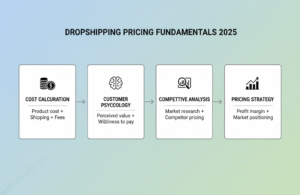
Many new dropshippers often make a common mistake early on. They focus only on the product cost from their supplier, without considering everything else that quietly adds up behind the scenes. The truth is, your actual costs go far beyond just what you pay for the product itself.
Here is what should be factored in:
- The base product cost from your supplier
- Shipping fees, which can include costs from the supplier to the warehouse, and then from you to the customer if applicable
- Payment processing fees, which are usually around 2.9 percent plus thirty cents per transaction
- Platform-related expenses, such as your Shopify plan and any app subscriptions you use regularly
- Costs for marketing and advertising, whether through paid ads, influencers, or email campaigns
- Any losses due to returns and refunds that come through
- The time and effort spent handling customer service, which often goes unaccounted for, still matter.
Once all of this is accounted for, what you are left with is your actual profit margin. A healthy dropshipping margin typically falls somewhere between 15 and 45 percent. This range can shift based on the niche and the overall strategy being used. For example, electronics tend to offer lower margins, usually between 15 and 25 percent, but make up for it through higher sales volume. On the other hand, fashion accessories and similar lifestyle items often support stronger margins, sometimes reaching 35 to 45 percent, especially when branding and perceived value are used effectively.
Best Pricing Formula for Shopify Dropshipping
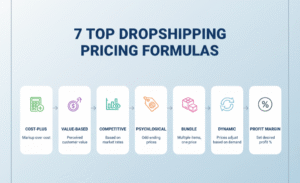
There is no single perfect method for setting prices in a dropshipping store, but over time, certain pricing formulas have proven to work consistently well. Many top-performing Shopify dropshipping businesses rely on a mix of these strategies, depending on their niche, competition, and target audience. Below are seven of the most effective pricing formulas that continue to deliver results in the dropshipping space.
1. Cost-Plus Pricing Formula
This is one of the most commonly used approaches in e-commerce. You take your base product cost, include all related fees, and multiply that by a markup factor.
Formula: Final Price = (Product Cost + All Fees) multiplied by 2.5 to 3.5
2. Value-Based Pricing Formula
Instead of focusing only on cost, this method is based on how much value the customer places on the product. It requires understanding both the perceived value and how price-sensitive your audience tends to be.
Formula: Price = Perceived Customer Value minus Customer’s Price Sensitivity
3. Competitive Pricing Formula
This approach is ideal for niches with lots of competitors. It starts with analyzing average prices in the market and then adjusting based on the unique value you provide.
Formula: Your Price = Competitor Average Price multiplied by 0.95, plus Unique Value Add
4. Psychological Pricing Formula
A strategy rooted in consumer behavior, this involves using pricing that appears more attractive at a glance. The most common example is dropping the price just below a round number.
Formula: Optimal Price = Round Number minus 0.01.
Example: 19.99 dollars instead of 20
5. Bundle Pricing Formula
This formula is ideal when selling related items together. You combine the prices of individual products, apply a discount, and include savings on shipping where applicable.
Formula: Bundle Price = Individual Prices multiplied by 0.85, plus Shipping Savings
6. Dynamic Pricing Formula
Dynamic pricing is more flexible and takes into account both market demand and competitive pressure. It adjusts automatically based on changing factors.
Formula: New Price = Base Price multiplied by (1 plus Demand Factor) multiplied by (1 minus Competition Factor)
7. Profit Margin Calculation Formula
This is used when your goal is to hit a specific profit margin. You start by adding up all your costs and then calculating what the final price needs to be to meet that target.
Formula: Required Selling Price = Total Costs divided by (1 minus Desired Profit Margin Percentage)
How to Calculate Profit Margin in Dropshipping
Understanding your true profit margin is crucial for sustainable dropshipping success. Here’s the step-by-step process:
Step 1: Calculate Total Product Costs
- Supplier cost: $10
- Shipping to customer: $5
- Payment processing (3%): $0.60
- Shopify fees: $0.30
- App subscriptions (monthly): $0.50
- Total Costs: $16.40
Step 2: Apply the Profit Margin Formula If you want a 35% profit margin: Selling Price = $16.40 ÷ (1 – 0.35) = $16.40 ÷ 0.65 = $25.23
Step 3: Round for Psychological Pricing Final Price: $24.99
Actual Profit Margin Check: ($24.99 – $16.40) ÷ $24.99 = 34.4% margin
Seasonal Pricing Strategies for Dropshipping
Leveraging Holiday and Seasonal Trends
Smart dropshippers understand that pricing should shift throughout the year. Leaving prices the same month after month can lead to missed opportunities. Seasonal demand patterns have a real influence on how and when people buy, and pricing strategies need to reflect that. During busy shopping periods like Black Friday, the holiday season, or back-to-school weeks, customer behavior changes. Purchase intent increases, and while many expect deals, they are also more motivated to buy.
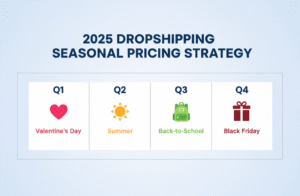
One of the best ways to plan for this is by building a seasonal pricing calendar. This allows you to stay ahead of demand cycles and make pricing decisions based on what customers are already expecting. Below are a few examples that most dropshipping stores can use:
Q4 Holiday Season: This period brings higher website traffic and a clear expectation of discounts. While margins may shrink slightly on individual items, increased volume often leads to stronger overall profit.
Valentine’s Day: Products marketed as gifts often perform better when priced at a premium. The emotional value attached to certain items allows room for higher pricing without hurting conversion.
Summer Months: Demand tends to rise for items related to travel, outdoor activities, and seasonal convenience. Timed promotions and small pricing tweaks help move inventory without deep discounts.
Back-to-School Season: This is a key time for educational tools, organizational supplies, and personal accessories. Customers are actively shopping with a purpose, which creates an ideal setting for well-structured pricing.
What many sellers miss is that during these high-demand windows, prices do not always need to drop. In some cases, pricing can even stay the same or increase slightly because higher conversion rates make up the difference. The goal is not just to react but to prepare. By aligning your pricing strategy with seasonal shopping behavior, your store is positioned to perform at its highest potential when it matters most.
Advanced Conversion Optimization Techniques
A/B Testing Your Pricing
Never assume your initial pricing is optimal. Implement A/B testing to compare different price points and presentation methods. Test:
- Different price endings (.99 vs .95 vs .00)
- Price positioning on product pages
- Bundle vs individual pricing
- Sale price presentations
Even small improvements in conversion rates can significantly impact your profitability. A 2% increase in conversions for a store doing $10,000/month equals an extra $2,400 annually.
Trust-Building Elements
Since dropshipping often involves longer shipping times, building trust is crucial for supporting your pricing strategy. Implement:
- Customer reviews and ratings
- Trust badges and security seals
- Clear shipping and return policies
- Live chat support
- Money-back guarantees
These elements help customers feel confident about purchasing at your prices, even if they’re higher than competitors’.
Regional Pricing Considerations
Different markets have varying price sensitivities and purchasing power. What works in the US market might not work in emerging markets. Consider these factors:
- Local competition pricing
- Average income levels
- Currency strength
- Shipping costs and delivery times
- Local payment preferences
Use geo-targeting to show region-appropriate pricing and payment options.
Mobile-First Pricing Display
With over 60% of e-commerce traffic coming from mobile devices, how you display prices on mobile is crucial. Ensure your pricing is:
- Visible without zooming
- Prominently placed above the fold
- Easy to compare for bundle options
- Accessible with large, tappable buttons
8 Critical Dropshipping Pricing Mistakes to Avoid
The 8 Most Costly Pricing Errors
- The Race to the Bottom: Many dropshippers think competing on price alone is the path to success. This approach typically leads to unsustainable margins and business failure. Instead of always being the cheapest, focus on providing unique value that justifies your prices.
- Ignoring Market Positioning: Your pricing should align with your brand positioning. If you’re trying to build a premium brand, rock-bottom prices will confuse customers and damage your credibility. Conversely, premium pricing won’t work if your entire store screams “budget option.”
- Not Accounting for Hidden Costs: Failing to properly calculate all costs leads to unsustainable pricing. Always factor in returns, customer service time, marketing costs, and platform fees when setting your prices.
- Static Pricing in Dynamic Markets: Markets change rapidly, especially in dropshipping. Regularly review and adjust your pricing based on:
- Supplier cost changes
- Market demand shifts
- Seasonal variations
- Competitor movements
- Currency fluctuations
- Copying Competitor Prices Blindly: While competitor research is important, simply matching their prices without understanding your own costs and value proposition is dangerous. Your cost structure might be different.
- Ignoring Customer Lifetime Value: Focusing only on individual transaction profits instead of long-term customer value leads to short-sighted pricing decisions. Sometimes, accepting lower margins initially pays off through repeat purchases.
- Inconsistent Pricing Across Channels: If you sell on multiple platforms, inconsistent pricing confuses customers and damages trust. Maintain pricing consistency or have clear reasons for differences.
- Not Testing Price Points: Assuming your first pricing attempt is optimal without A/B testing different price points costs money. Small pricing improvements can significantly impact profitability.
Free Dropshipping Product Price Calculator Tool
Simple Pricing Calculator
Use this quick calculator to determine your optimal selling price:
Input Your Costs:
- Product Cost: $______
- Shipping Cost: $______
- Payment Processing (3%): $______
- Platform Fees: $______
- Desired Profit Margin: _____%
Quick Calculation:
- Total Costs = Product + Shipping + Processing + Platform Fees
- Selling Price = Total Costs ÷ (1 – Profit Margin %)
- Final Price = Round to .99 or .95 for psychological pricing
Example Calculation:
- Product Cost: $8.00
- Shipping: $4.00
- Processing (3%): $0.48
- Platform Fees: $0.30
- Total Costs: $12.78
- Desired Margin: 40%
- Selling Price: $12.78 ÷ 0.60 = $21.30
- Final Price: $21.99
Implementing Your Pricing Strategy
Case Study: From $2K to $50K Monthly Revenue
Background: Kylie started a dropshipping store selling phone accessories in January 2024. Initially, the monthly revenue was only $2,000, accompanied by a conversion rate of 2%.
Initial Pricing Strategy Problems:
- Competed purely on price (lowest in the market)
- 15% profit margins are unsustainable
- No pricing differentiation strategy
- Single product focus
Pricing Strategy Overhaul:
- Shifted to value-based pricing – increased prices by 35%
- Created product bundles – phone case + screen protector + stand
- Implemented psychological pricing – moved from $15.00 to $19.99
- Added premium options – introduced “Pro” versions at 60% higher prices
- Seasonal pricing calendar – 20% premium during gift seasons
Results After 6 Months:
- Monthly revenue: $50,000 (2,400% increase)
- Conversion rate: 4.8% (140% improvement)
- Average order value: $43 (from $22)
- Profit margin: 38% (from 15%)
- Customer lifetime value: $127 (from $31)
Key Success Factors:
- Focused on value communication, not just price
- Used bundle pricing to increase transaction size
- Implemented proper cost calculations, including all fees
- Regular A/B testing of price points
- Seasonal pricing adjustments
This case study demonstrates how strategic pricing changes can dramatically impact dropshipping profitability without necessarily increasing traffic.
Tools and Resources
Several tools can help streamline your dropshipping pricing strategy:
- Google Trends for demand forecasting
- SEMrush for competitor analysis
- Shopify Analytics for performance tracking
- Hotjar for user behavior analysis
- Privy for conversion optimization
Monitoring and Optimization
It is a smart move to set up regular pricing check-ins, whether that means doing them monthly or every few months. The goal here is not to overhaul everything constantly, but to keep your pricing aligned with how your store is performing.
Start by tracking the right data points. Some of the most useful ones include:
- How do your conversion rates shift based on different price levels
- The average order value across your store
- What does it cost to bring in a new customer
- How much a customer spends with you over time
- How often do items get returned or refunded
Once you have this data, take some time to look it over with fresh eyes. Patterns start to emerge. Maybe one product converts better at a lower price, while another holds steady even if you raise it a bit. These are the kinds of insights that let you adjust with confidence.
You do not need to make major changes every time you review. Sometimes, a small tweak can lead to better margins or higher cart totals. The key is to keep the process ongoing. When you treat pricing as something flexible and responsive, it becomes much easier to build lasting profitability.
Conclusion
Getting pricing right in dropshipping is not as simple as plugging numbers into a formula. It takes a careful look at more than just your costs. You need to factor in what competitors are doing, how customers react to certain prices, and what kind of value your product actually communicates. All of this works together, and when it does, pricing becomes much more than a number on a screen. It becomes a tool that supports long-term business growth.
But here is the thing. Pricing is not something you set once and forget about. In most cases, what worked last quarter might not hold up next month. Competitor pricing might shift. Customer expectations change. Your best move is to keep testing. Keep adjusting. Stay aware of how people respond. It is not about constantly changing for the sake of it. It is about staying sharp.
The best dropshipping sellers understand that pricing is only one piece of what makes a store work. Good customer service, fast delivery, easy navigation, and a clean design all matter too. Without that foundation, even the best pricing strategy falls flat.
If the goal is to build something stable, something that lasts, then the right combination of smart pricing, consistent value, and technical setup will carry the business forward. That is what separates short-term wins from real, steady growth.
So if pricing has been an afterthought until now, maybe it is time to bring it to the front. Try a few of the strategies. Monitor how things change. Refine where it makes sense. Results will follow.
Frequently Asked Questions
Q1: What’s the ideal profit margin for dropshipping products?
Profit margins in dropshipping often vary depending on the type of product you are selling. A healthy range typically falls between 15 percent and 45 percent. For example, electronics and other high-volume items usually operate on slimmer margins, often between 15 percent and 25 percent. On the other hand, fashion, beauty, and niche or specialty items tend to support higher profit margins, often ranging from 30 percent to 45 percent. The key is to find that balance where your pricing remains competitive but also leaves room for sustainable profit.
Q2: How often should I adjust my dropshipping prices?
Please review your prices on a monthly basis and consider making adjustments quarterly or in response to significant market changes. Try to avoid frequent pricing changes that might confuse your customers. The best approach is to rely on actual performance data. Look at how your products are selling, monitor your competitors, and track seasonal or demand-related trends to make informed pricing decisions.
Q3: Should I always price lower than my competitors?
Not necessarily. While offering the lowest price may seem like a quick way to win customers, it is not always a smart long-term strategy. Dropshipping success often comes from delivering value in other ways. Consider improving your product descriptions, offering better shipping options, or creating helpful product bundles. In many cases, pricing your items slightly higher can actually create the impression of higher quality, especially if you pair it with strong branding and customer service.
Q4: How do I price products when suppliers change their costs?
When supplier prices go up, it is best to make adjustments gradually rather than all at once. Consider spreading the increase over two or three weeks so customers are not caught off guard. It also helps to work with multiple suppliers for the same product. This gives you more flexibility and lets you keep your prices stable for longer periods. When prices do need to rise, focus on communicating the added value your store brings, such as faster processing times or more responsive support.
Q5: What’s the best way to handle returns and refunds in my pricing?
Returns and refunds are a part of doing business, especially in dropshipping. One way to manage this is by including a return buffer in your pricing. Depending on your niche, you might want to plan for a return rate between 5 percent and 10 percent. Electronics often come with return rates between 8 percent and 15 percent, while clothing can reach 20 percent or even higher. Build these percentages into your profit margins from the start. To reduce the number of returns, invest time in writing accurate product descriptions and providing detailed sizing guides.
