
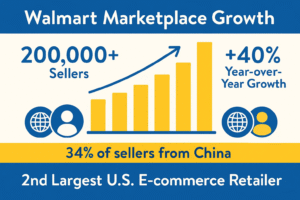
Starting your journey to sell on Walmart Marketplace in 2025 is no longer as complicated as it once seemed. The platform has been growing at an impressive pace, now reaching over 200,000 active sellers for the very first time. Moreover, Walmart’s third-party seller program continues to expand rapidly. It has quickly become one of the most appealing options for sellers seeking a strong alternative to other major e-commerce platforms.
The growth numbers make it hard to ignore. More than 160,000 active third-party sellers represent a 40% year-over-year increase. This solidifies Walmart’s position as the second-largest online retailer in the United States. For entrepreneurs and established brands seeking to develop another profitable sales channel, understanding how to navigate Walmart seller eligibility criteria and the Walmart Marketplace application process can be crucial to unlocking steady, long-term revenue.
Understanding Walmart Marketplace’s Current Landscape in 2025
Walmart’s marketplace ecosystem has experienced remarkable growth recently. Today, it connects millions of shoppers with products every month. Additionally, the company shows no signs of slowing down. The retail giant is investing resources in enhanced seller tools and a more robust fulfillment network. This makes it easier for small businesses and large brands alike to thrive on the platform.
One of the most significant upgrades has been Walmart Fulfillment Services (WFS). Since 2023, warehouse capacity has more than doubled. This provides sellers with a logistics backbone that can compete with other foremost e-commerce leaders. For sellers, this means faster shipping, more reliable order handling, and an overall smoother customer experience. All of which can directly boost sales performance and improve your Walmart seller performance metrics.
If you need expert guidance on setting up your fulfillment infrastructure, our professional e-commerce management services can help you navigate these requirements efficiently.
Walmart Marketplace vs Amazon: Key Differences
The competitive environment on Walmart Marketplace offers some distinct advantages for new sellers. Unlike Amazon, where competition can often feel overwhelming, Walmart adopts a more curated approach when onboarding new businesses. Understanding the differences between Walmart and Amazon Marketplace is essential for making informed decisions about where to invest your resources.
Several factors set it apart from other platforms. First, seller density is lower, meaning there are fewer competitors in many categories. Second, approval standards are higher, as the Walmart Marketplace approval process is more selective. Third, customer demographics also differ, with Walmart attracting a large number of value-conscious shoppers. Finally, advertising opportunities are also expanding, with ad space still far less saturated compared to other major marketplaces.
For sellers who meet Walmart’s standards, these conditions provide an opportunity to establish a strong foothold in their chosen product categories. Recent data also highlights some interesting demographic changes. Nearly 60% of new sellers in 2025 are international sellers, and Chinese merchants now make up 34% of all active Walmart sellers. This highlights the platform’s expanding global reach through programs like the Walmart cross-border trade program, while still leaving substantial room for domestic businesses to grow.
Essential Walmart Marketplace Seller Requirements in 2025
Before you proceed with the application process, it is essential to confirm that your business meets Walmart’s key criteria. These core requirements are fixed and serve as the foundation for your seller application. To understand how to get approved on Walmart Marketplace, the first step is ensuring you meet these basic Walmart Marketplace seller requirements.
Business Documentation Requirements
To sell on Walmart Marketplace, you will need a business tax ID or an active business license number. A Social Security Number on its own will not meet the requirement. In other words, running as a sole proprietorship with only an SSN will not qualify you for the program. Walmart expects sellers to have verified business credentials. These must show they are operating as a legitimate commercial entity.
Required Walmart seller documentation requirements include:
- Business registration certificates
- Tax identification numbers (EIN)
- Utility bills for address verification
- Official correspondence confirming business address
Supporting documentation plays a crucial role in the approval process. These documents must verify your business name and address as mandatory components of your application. According to Shopify’s guide on marketplace selling, proper documentation is critical for success across all major e-commerce platforms.
Operational Infrastructure Requirements
Walmart expects every seller to meet strict professional standards regarding fulfillment. You will need a B2C U.S. warehouse that can handle returns and consistently meet Walmart’s Seller Performance Standards. Alternatively, you can choose to use Walmart Fulfillment Services (WFS). This requirement means you must either have your reliable fulfillment setup in place or be ready to work with Walmart’s fulfillment network.
Many new sellers find it easier to start with WFS since it reduces upfront infrastructure costs. It also allows them to focus on learning how the platform works and what Walmart customers expect. The benefits of Walmart Fulfillment Services for new sellers include professional warehousing, reliable shipping, and simplified logistics management.
Experience and Performance Standards
Walmart prioritizes sellers with demonstrated e-commerce experience. Walmart has strict requirements, including having a registered business and a U.S. tax ID. Additionally, you must demonstrate eCommerce experience and strong customer service capabilities. This doesn’t mean new companies can’t succeed on the platform. However, having a track record of online sales, positive customer feedback, and reliable order fulfillment significantly strengthens your application.
The platform’s emphasis on customer service excellence means your business should have established processes. These include handling inquiries, processing returns efficiently, and maintaining high satisfaction ratings. These operational capabilities will be evaluated during the Walmart Marketplace onboarding checklist review process.
Walmart Marketplace Seller Application Tips: Step-by-Step Process
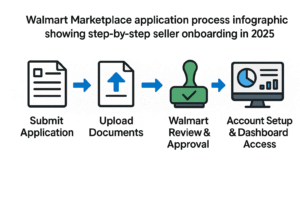
Getting approved to sell on Walmart Marketplace is not something that happens instantly. The process progresses through several distinct phases. Each one requires careful attention to avoid delays. Although the Walmart Marketplace approval process for 2025 is more streamlined than in previous years, it still requires thorough preparation and patience as each step is reviewed.
Initial Application Submission
The application process starts directly on Walmart Marketplace’s online portal. There, you will set up your initial seller account. At this stage, you will need to submit all the required business documentation. Include accurate contact details and information about how your operations will run. For most U.S.-based sellers, the onboarding process takes less than two weeks. However, more complex applications may take a little longer to review and approve.
Critical Walmart seller application guide tips:
- Ensure exact matches between documentation and application data
- Double-check all business names and addresses
- Provide clear, legible document scans
- Complete all required fields thoroughly
During this stage, accuracy is critical. Even a slight mismatch between the details in your documentation and the information provided in your application can cause unnecessary delays. In some cases, it may even result in rejection. Understanding why Walmart Marketplace rejects applications can help you avoid common beginner mistakes to avoid on Walmart Marketplace.
Best Products to Sell on Walmart Marketplace: Catalog Preparation
While your application is in review, it is a smart move to start working on your product catalog. This involves studying Walmart’s product categories, understanding their Walmart category listing guidelines, and creating clear, high-quality product images. Pair these with well-written descriptions that meet Walmart product image requirements.
Top-performing Walmart top-selling categories 2025 include:
- Home and garden supplies
- Health and beauty products
- Electronics and accessories
- Sports and outdoor equipment
- Baby and children’s items
Walmart’s guidelines require product descriptions to be at least 150 words. However, the exact length can vary depending on the category. They also encourage sellers to keep descriptions free from fluff. In other words, your copy should be thorough yet concise. Provide shoppers with all the essential details without adding unnecessary marketing filler. For more insights on optimizing product content, BigCommerce’s marketplace guide offers valuable tips applicable across platforms.
For sellers exploring alternative fulfillment models, consider learning about Walmart dropshipping strategies that can minimize upfront inventory investments while maintaining competitive shipping standards.
Account Setup and Integration
Once your application is approved, Walmart will give you access to the Walmart seller dashboard features. This is where you finish setting up your account. Add your payment methods and adjust your Walmart Marketplace shipping requirements. You can also connect any third-party tools you plan to use for Walmart inventory management tools or order processing. This saves time in the long run and supports multichannel eCommerce growth.
Inside the dashboard, you will find a complete set of analytics and reporting features. These offer straightforward information about performance metrics that directly impact your seller standing. Getting familiar with these numbers early can make a significant difference. It helps you spot trends and establish a strong performance foundation from the outset.
Walmart Marketplace Success Tips for 2025
Success on Walmart Marketplace goes far beyond just securing approval and uploading product listings. The platform actively rewards sellers who maintain strong performance metrics, fulfill orders promptly, and consistently deliver a smooth and reliable shopping experience. Meeting Walmart’s standards is not a one-time task but an ongoing commitment that can significantly improve your visibility, boost conversions, and help you stand out in a competitive marketplace.
Performance Metrics and Standards You Must Track
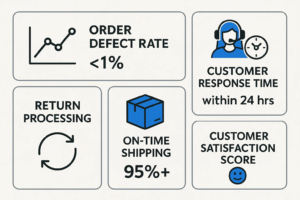
Walmart tracks multiple performance indicators that influence your account health and visibility.
Key metrics include:
- Order defect rates (keep below 1%)
- On-time shipping performance (95%+ target)
- Customer response times (24-hour standard)
- Return processing efficiency
- Customer satisfaction scores
Each of these factors influences your product rankings and eligibility for promotional placements. Recognizing how these metrics work together can help guide operational improvements. For instance, improving shipping speed often boosts customer satisfaction. This, in turn, can raise your overall seller rating and enhance product visibility.
Selling on Walmart vs Amazon: Inventory Management Strategies
As your Walmart Marketplace presence expands, effective inventory management becomes increasingly important. The platform’s algorithms tend to reward products that remain consistently available. This means stockouts can hurt you in two ways. Not only do they lead to missed sales in the moment, but they can also lower your product’s long-term ranking. Keeping inventory levels steady ensures you maintain both sales momentum and search performance.
Inventory best practices for maintaining a healthy Walmart seller account:
- Implement automated inventory management systems
- Synchronize stock levels across multiple sales channels
- Maintain 30-day forward inventory coverage
- Use demand forecasting tools for seasonal planning
Many successful sellers implement automated inventory management systems. These synchronize stock levels across multiple sales channels. This prevents overselling while ensuring maximum product availability during periods of peak demand. Walmart inventory syncing for multichannel sellers is especially critical if you’re also selling on Amazon or other platforms.
Competitive Pricing Strategies
Walmart’s customer base tends to place a strong emphasis on value. This makes competitive pricing a key factor in driving sales. That said, success does not come from getting caught in price wars that erode profitability. Instead, it is more effective to streamline your cost structure while showcasing the unique value your products offer. This approach helps you remain competitive without sacrificing long-term margins.
Walmart Marketplace pricing strategy optimization tips:
- Monitor competitor pricing daily
- Use dynamic pricing for Walmart Marketplace tools when possible
- Focus on total value proposition, not just price
- Consider bundling strategies for higher margins
Regular competitive analysis helps identify opportunities for pricing adjustments while maintaining healthy profit margins. Learning how to price products on Walmart Marketplace effectively and avoiding price wars on Walmart Marketplace requires strategic thinking and data-driven decisions.
Advanced Strategies for Marketplace Growth
As your Walmart eCommerce business matures, several advanced strategies can help accelerate growth and improve profitability. These Walmart Marketplace tips for new sellers can evolve into powerful revenue drivers over time.
Leveraging Walmart’s Advertising Platform
Walmart now offers advanced advertising options through its Walmart Advertising Guide resources. These include Walmart Sponsored Products, video ads, retargeting campaigns, and enhanced keyword reporting. These features enable sellers to exert more precise control over how their products are promoted to specific customer groups. This directly improves both visibility and conversion rates.
Video ads on Walmart Marketplace stand out as one of the most impactful additions. They allow you to showcase your product in action and highlight its key benefits. Additionally, they build stronger customer trust compared to static images alone. Sellers who adopt these newer ad formats early often enjoy higher click-through rates. They also experience a stronger overall sales performance by capturing shopper attention more dynamically and engagingly. Following a solid Walmart PPC strategy can significantly boost your return on ad spend.
Expanding Product Categories
Many successful Walmart Marketplace sellers start by keeping their product range tight and focused. Instead of trying to sell everything at once, they first build a solid track record in one category. This involves learning what works and what customers respond to. This early stage involves gathering performance data, understanding buying habits, and establishing trust with your audience.
Once the foundation is in place, expansion into related categories becomes much smoother. The smartest moves are guided by actual customer demand and your own operational capacity. Looking closely at past purchase patterns often reveals natural add-on products your customers are already interested in. Conducting thorough Walmart product research helps identify the most profitable Walmart Marketplace categories in 2025. This way, growth feels organic, and you strengthen relationships with the shoppers you already serve.
International Market Opportunities
As a Walmart seller, you have the opportunity to reach customers far beyond the United States. By joining the marketplace, you can instantly tap into multiple international markets. This opens the door to a much larger customer base. For sellers with systems in place to handle overseas shipping and provide multilingual customer support, this can unlock a significant growth stage. Programs designed for Walmart international sellers and understanding how international sellers can join Walmart Marketplace make expansion more accessible than ever.
Of course, expanding globally is not just about listing your products in more countries. You will need to factor in tax regulations, shipping timelines, customs requirements, and the reality of providing excellent service. Language differences may also require adjustments in product descriptions, marketing messages, and customer interactions. Walmart’s global shipping requirements must be carefully reviewed before expanding internationally.
Still, the reward is clear. The potential market size and revenue opportunities are substantial, particularly for sellers with established operational foundations. If you are ready to scale with confidence, professional e-commerce management services are designed to support your expansion. According to eCommerceFuel’s research on marketplace expansion, sellers who strategically expand into international markets see an average revenue increase of 30-50%. We help sellers expand into multiple international markets while maintaining efficient fulfillment and consistently high customer satisfaction.
Conclusion
Starting your selling journey on Walmart Marketplace in 2025 presents tremendous opportunities for businesses ready to meet the platform’s professional standards. With the U.S. Marketplace growing 34% in the last quarter and continued investment in seller tools, now is one of the best times for new sellers to join. The marketplace expansion opportunities are significant for those who prepare properly.
Success depends on thorough preparation, meeting platform requirements, and delivering excellent customer service. The application process is detailed but manageable when you understand the steps and prepare in advance. Once approved, consistent performance, clever product positioning, and use of Walmart’s growing seller tools are key to long-term results. Whether you’re a beginner or an experienced seller, following this Walmart Marketplace step-by-step guide will set you on the path to success.
Walmart Marketplace continues to evolve, adding new features and opportunities for sellers who stay informed and adapt quickly. Whether you’re expanding from another platform or starting your e-commerce journey, Walmart Marketplace provides a strong foundation. This foundation supports building a sustainable online business, with a focus on value, quality, and customer satisfaction.
Ready to launch your Walmart Marketplace business with expert support? Contact our team today to discuss how we can help you navigate the application process and scale your operations successfully.
Frequently Asked Questions
Q: How long does the Walmart Marketplace approval process take in 2025?
The approval process typically takes under two weeks for most U.S.-based sellers. However, applications requiring additional documentation or review may take longer. Ensuring all required documents are accurate and complete before submission helps minimize delays in the approval process.
Q: Is it worth selling on Walmart Marketplace in 2025?
Yes, Walmart Marketplace presents significant opportunities in 2025 with 34% growth in the last quarter and continued platform investments.
Key benefits include:
- Lower competition compared to Amazon
- Growing customer base and market share
- Robust advertising and fulfillment tools
- Strong support for international expansion
The platform’s selective seller approach means less competition once approved. This potentially leads to higher profit margins.
Q: What products sell best on Walmart Marketplace?
Top-performing categories include home and garden, health and beauty, electronics, sports equipment, and baby products. Products that offer good value, have strong customer reviews, and meet Walmart’s quality standards typically perform best.
High-demand product types:
- Everyday household essentials
- Seasonal items (holiday decorations, summer gear)
- Health and wellness products
- Pet supplies and accessories
- Kitchen and dining items
Q: How does Walmart Marketplace shipping work?
You can either fulfill orders yourself or use Walmart Fulfillment Services (WFS). With self-fulfillment, you handle storage, packing, and shipping. WFS handles these logistics for you, similar to Amazon’s FBA program.
Shipping requirements include:
- 2-day shipping capability (preferred)
- Professional packaging standards
- Real-time tracking information
- Efficient returns processing
Q: What are the fees for selling on Walmart Marketplace?
Walmart charges referral fees that vary by category, typically ranging from 6% to 15% of the item price. These fees are generally competitive with other major marketplaces. Additionally, there are no monthly subscription fees for basic selling privileges. Understanding Walmart referral fees explained helps you calculate profitability accurately.
Q: Do I need my own warehouse to sell on Walmart?
Not necessarily. You can utilize Walmart Fulfillment Services (WFS) to manage the storage, packing, and shipping of your products. This option allows smaller businesses to access professional fulfillment services without significant upfront infrastructure investments. The WFS vs self-fulfillment decision depends on your business size, volume, and operational capabilities.
