
Learning how to write product descriptions that sell might sound pretty straightforward at first. However, crafting effective product descriptions can present some challenges. Most online shoppers do pay attention. In fact, around 87% say that the product description is a significant factor in their decision to buy or not. That number alone should be enough to make any store owner stop and think.
The description under your product is not just filling up space. It plays a much bigger role than most people realize. Think of it like a quiet salesperson who never sleeps. The goal is to answer questions, settle doubts, and provide the final nudge that encourages someone to click the “Add to Cart” button.
But here is the thing. Writing product descriptions that convert is not about cramming in features or sounding overly polished. There is a real method to doing this well. And that is what we are getting into here. This comprehensive guide will break down the way customers think, walk you through smart ecommerce copywriting strategies that real online brands use, and provide you with practical steps you can apply right away to turn product pages into something that quietly works behind the scenes to boost your sales.
Would you like your product listings to connect with real customers genuinely? Explore how we help brands craft smarter content from the ground up.
Understanding Your Customer’s Mindset: The Foundation of Persuasive Product Descriptions
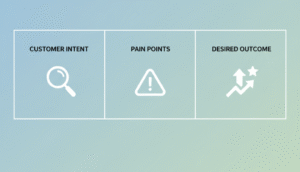
Before anything else, take a step back for a second. Before you even start thinking about how to write a compelling product description, you need to understand customer intent and look at what is actually going on in your customer’s mind the moment they land on your product page.
Most of the time, people are not just browsing for fun. They show up with a reason. They may be dealing with a specific issue. Something may be missing in their daily routine. Or perhaps they are simply chasing a feeling they want more of. Comfort. Confidence. Convenience. Whatever it is, there is usually a deeper motivation underneath the search.
Your job is not just to list out what the product is. It is to help them imagine what life looks like once they have it. You are not just describing a thing. You are showing them how that thing makes their day smoother, their mood better, or their tasks easier. This shift in how you approach the description is small on the surface, but it entirely changes how your copy lands.
Here is a simple example. When someone types in “comfortable running shoes,” they are not really shopping for shoes. What they are looking for is something else. A pain-free morning jog. A better pace. The feeling of being prepared and supported while they move. Once you understand buyer psychology and the emotion behind the search, writing a persuasive product description becomes a lot easier. Because now, you are not just selling a product. You are selling the outcome they truly want.
The Essential Elements of High-Converting Product Descriptions
Lead with Benefits, Not Features
This is a mistake that many online stores still make, even the largest ones. They focus far too much on features and forget what the customer actually cares about. Yes, features are part of the picture, but benefits are what really sell.
A feature tells someone what your product has. A benefit shows them what it actually does for them. There is a big difference. This is the core principle of benefit-driven copywriting that successful e-commerce brands use.
Let’s take a simple example. You could write something like, “This jacket has waterproof fabric.” Sure, that is technically true. But now look at this version instead. “Stay completely dry during unexpected downpours.” It feels different, right? That second one instantly helps the shopper picture what it will be like to wear the jacket. They can imagine standing in the rain and staying dry. That small shift speaks directly to their experience.
If you are not sure how to write benefit-focused product descriptions, there is a pretty simple way to break it down:
- First, figure out the feature. What does your product come with?
- Next, think about the function. What does that feature actually do?
- Finally, ask yourself what it means for the customer. What is the real-world benefit?
Once you start flipping your copy this way, everything starts to sound more useful, more human, and way more likely to convert. According to Shopify’s research on product page optimization, benefit-focused descriptions can improve conversion rates by up to 30%.
Create Emotional Connections Through Storytelling
The product descriptions that really resonate with people are the ones that evoke an emotional response. The most effective ones do not just list facts. They help people imagine. They paint a small scene, something real, something a little familiar. This approach to storytelling in product descriptions is what separates good copy from great copy.
Instead of leaning into dry specs or overly technical lines, try stepping into the customer’s world for a moment. Help them see themselves using the product in their everyday life.
Take a coffee maker, for example. You could simply state, “It brews 12 cups in 8 minutes.” That is accurate. It works. But now try something like, “Picture yourself enjoying that perfect first cup while the smell of fresh coffee fills the kitchen and the rest of the pot is ready for whoever wakes up next.”
See the difference? One tells them what the product does. The other helps them feel what it is like to own it. That emotional link is powerful. Our brains are naturally wired to respond to stories. So when you give people something to visualize, you are giving them more than just information. You are helping them take a mental step toward making a purchase.
Address Common Objections and Concerns
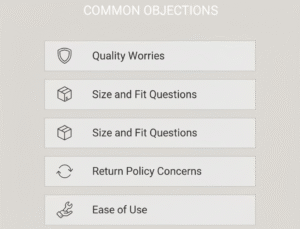
Every product out there has something that might deter a customer from making a purchase. It could be a concern about quality. Maybe they are unsure about size or fit. Perhaps they have had negative experiences with returns in the past.
Whatever the reason, those small hesitations matter. And smart e-commerce stores do not ignore them. They address customer pain points directly in the product description.
Consider what people typically worry about before purchasing something in your category. It could be durability. One common concern might be the ease of use. It could be the cost-effectiveness or the ease of the return process. Once you understand what those concerns are, discuss them openly.
When you do that, you take away the reasons someone might leave the page. Instead of wondering, they get answers. And that can be the difference between a sale and another abandoned cart.
Advanced Techniques for Product Description Optimization
Use Social Proof and Credibility Markers
Social proof can be one of the most persuasive elements in your product descriptions, especially when it is woven in naturally. People tend to trust what others have already tried, liked, or recommended. It reassures them, especially when they are close to making a purchase.
Adding ecommerce trust signals, such as “trusted by over 50,000 customers” or “recognized with the 2024 Innovation Award,” can increase credibility without sounding overly promotional. These small details provide third-party validation, which helps strengthen your product’s perceived value.
Consider referencing certifications, high review scores, or the item’s popularity within your store. Each of these credibility markers for e-commerce contributes to building trust. When visitors see that others have already had a good experience, they are more likely to feel confident in moving forward with their own purchase.
Optimize Product Descriptions for SEO
Many people become nervous when they hear the word “SEO.” But here is the truth. Writing product descriptions for SEO is not about stuffing several awkward phrases into your copy. It is about understanding what your customer is actually looking for and then speaking to that need.
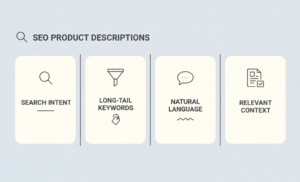
Start with search intent. Ask yourself, what kind of questions or phrases would someone type in if they were looking for a product like yours? Go beyond the obvious. Get specific. Think the way your customer thinks.
This is where long-tail keywords really help. Instead of simply writing something generic like “wireless earbuds,” consider using a more focused term, such as “wireless earbuds for running” or “noise-canceling earbuds for remote work.” These kinds of terms do two things. First, they help search engines understand what your product is about. Second, they make your description feel more relevant to the person reading it.
The goal is to be natural. Let the keywords flow in a way that feels human. When you do that, your product page SEO starts to work harder behind the scenes. Better visibility. Better alignment with what your audience is already searching for. And a better chance of converting that search into a sale. Moz’s guide to e-commerce SEO offers additional strategies for optimizing product content.
Format for Scannability and Mobile Users
Most online shoppers do not read every word. They skim. They glance through the page looking for key points, and they make decisions quickly. This is why the structure of your product descriptions matters just as much as the words themselves.
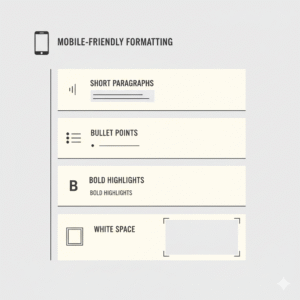
A well-formatted product description should be easy to scan, especially for mobile users. Creating scannable content formatting means using short paragraphs that stay within two or three sentences. Highlight the most important details by using bullet points, and bold any text that needs to stand out. This helps readers grasp the value of your product without feeling overwhelmed.
White space also plays a role. It gives the eye room to rest and makes the content feel less crowded. With more than 60 percent of ecommerce traffic now coming from mobile devices, your descriptions must look clean and readable on smaller screens. If the content feels heavy or hard to skim, shoppers are more likely to scroll away.
Making your mobile-friendly product descriptions is no longer optional. It is a basic expectation. Clear formatting supports a better experience, which often leads to stronger conversions and reduced bounce rates.
Testing and Optimizing Your Product Descriptions
A/B Testing: Different Approaches
One of the best parts about digital marketing is that you do not have to settle for guesswork. You can actually test things. When it comes to writing product descriptions, even minor changes can yield significant results through product page conversion optimization.
Try switching up your headlines. You can compare a benefit-driven version to one that highlights features. Test shorter descriptions against longer ones. Try adjusting the emotional tone or reorganizing the content layout. There is no single formula that fits every product or audience.
These tweaks may seem minor, but they add up fast. A one percent improvement in conversion rate optimization might not sound like much. However, if your store generates $100,000 a month, that small increase can bring in around $12,000 more in revenue each year.
Testing is not just about trying new things for the sake of it. It is about learning what truly connects with your audience. The more you experiment and pay attention to the data, the better your product descriptions will become over time.
Struggling to write descriptions that sound natural and still convert? Reach out to our team for tailored support that fits your brand voice.
Monitor Performance Metrics
You can write the best product description, but if you don’t monitor its performance, you’re missing half the picture. The numbers tell the real story. Some pages will convert like magic. Others might fall flat, and that is okay if you are tracking the right signals.
Start with the basics. Look at conversion rates for each product. Check how long visitors stay on the page. Are they sticking around or bouncing right away? Pay attention to abandoned carts as well. If people are backing out before checking out, something may not be working as expected.
Customer reviews and feedback are just as valuable. They can tell you whether the description matched the buyer’s expectations or fell short of them. If you notice consistent questions or confusion, that is a sign your copy could be clearer.
This kind of tracking not only helps you fix what is broken, but also enables you to identify product listing improvements. It shows you what is already working, so you can build on it. Over time, your descriptions will become sharper, more persuasive, and better aligned with what your audience actually wants to read. Google Analytics for e-commerce provides powerful insights into how your product pages perform.
Industry-Specific Best Practices for Writing Product Descriptions
Fashion and Apparel
When it comes to clothing and accessories, your description needs to do what the customer cannot. Since they cannot feel the fabric or try it on, your words have to create that experience for them. Focus on how the piece feels against the skin, how it moves with the body, and how it fits into their lifestyle.
Think about phrases like “buttery soft fabric” or “a relaxed drape that flatters all body types.” Mention how it hugs at the waist or flows at the hem. It would be even more beneficial to provide them with styling ideas. Is it perfect for casual Fridays, brunch with friends, or cozy nights in? Assist them in envisioning how it would look on them before they proceed to add it to their cart.
Electronics and Tech Products
Tech descriptions need a different kind of balance. Specs are important, especially for tech-savvy buyers, but most customers are not engineers. They want to know what those specs actually mean for their everyday use.
Instead of just listing numbers, tie them to real outcomes. For example, instead of simply stating “64 GB RAM,” you could say: Run multiple apps smoothly without slowdown, even with 30 tabs open and your music streaming. Use simple comparisons, clean benefits, and language that turns complexity into clarity.
Home and Garden
For home products, it is all about helping customers imagine the item inside their space. Yes, give dimensions and material details, but also go beyond. Describe how it fits into their daily life.
Paint a scene. Imagine a rustic dining table that comfortably accommodates six and withstands the messiness of real life, from family dinners to after-school crafts. Show how a throw blanket makes the sofa feel like home or how a smart garden tool makes weekend yardwork easier and more satisfying.
The Psychology of Persuasive Product Copy: Understanding Buyer Decision Triggers
Understanding how people actually make decisions is key to writing product descriptions that convert. Most customers make a purchase decision based on emotion first, then look for logical reasons to justify that choice. Your descriptions should speak to both aspects of buyer psychology in e-commerce.
Creating a sense of urgency or scarcity can work well, but only if it’s genuine. Instead of fake countdowns, mention limited stock or seasonal availability if it’s real. And if you have happy customers, weave their testimonials directly into your copy. It gives others the logical push they need after they have connected emotionally.
Also, keep things easy to read. People trust what they understand quickly. Clear, simple wording and clean formatting help your product feel more valuable. When it’s easy to grasp what makes something great, it’s easier to hit that buy button. Nielsen Norman Group’s research on web usability shows that clarity directly impacts trust and conversion rates.
Measuring Success and Continuous Improvement
The best e-commerce brands treat product descriptions as living assets. Regularly reviewing conversion rates, return reasons, and customer questions helps identify areas that need improvement through e-commerce content optimization. If customers repeatedly ask the same questions, those answers should be included in the description.
Stay flexible with seasonal updates. A summer dress might highlight sun-friendly features in warmer months, then shift to layering options in fall. This keeps your copy fresh and relevant.
Strong product descriptions combine strategy with empathy. They address genuine concerns, highlight benefits, and continually evolve. When written well, they reduce support questions, improve conversions, and help your business grow.
Frequently Asked Questions
Q1: How long should product descriptions be?
The ideal length depends on the product and how much your customer needs to know before making a purchase. For simpler items, 50 to 100 words is usually enough. More complex or expensive products may require 200 to 400 words to explain their features, benefits, and address common questions.
What matters most is clarity. Provide sufficient detail to establish trust and minimize hesitation, but avoid unnecessary filler. If the description enhances customers’ confidence in their purchase, the length is likely optimal.
Q2: Should I use the same product description across multiple platforms?
Copying and pasting might save time, but unique product descriptions for e-commerce work better. They enhance SEO and enable you to target each platform’s specific audience directly.
For example, Amazon shoppers may focus on reviews or shipping, while visitors to your site might care more about your brand story. Keep the message consistent, but tweak the tone and details for each space to match your brand voice.
Q3: How do I write descriptions for products with many variations?
Think the way your customers do. What phrases would they type when looking for your product? Use that same language in a way that feels natural. Focus on what makes each variation unique while maintaining consistency in your overall messaging.
Incorporate long-tail keywords where they naturally fit, and sprinkle in related terms to maintain a smooth flow. Search engines now understand context, so repeating the same keyword over and over is no longer necessary.
Q4: What’s the best way to incorporate keywords without keyword stuffing?
Include long-tail keywords in product pages where they fit naturally, but avoid forcing phrases that do not sound right. Use related terms and synonyms to ensure the copy flows smoothly. Search engines today are smart enough to understand intent and context, so you do not need to repeat the same phrase over and over to get noticed. Focus on writing copy that sells while naturally incorporating SEO-friendly product descriptions.
Q5: How often should I update my product descriptions?
Review and update product descriptions regularly, especially when you receive customer feedback, notice performance issues, or launch new marketing campaigns. Review every few months, starting with bestsellers and underperformers. Even small updates can significantly boost product page SEO, especially during busy seasons or in competitive niches.
Strong product copy does more than inform; it builds trust and drives action. Learn how we help businesses write content that works across real platforms.
