
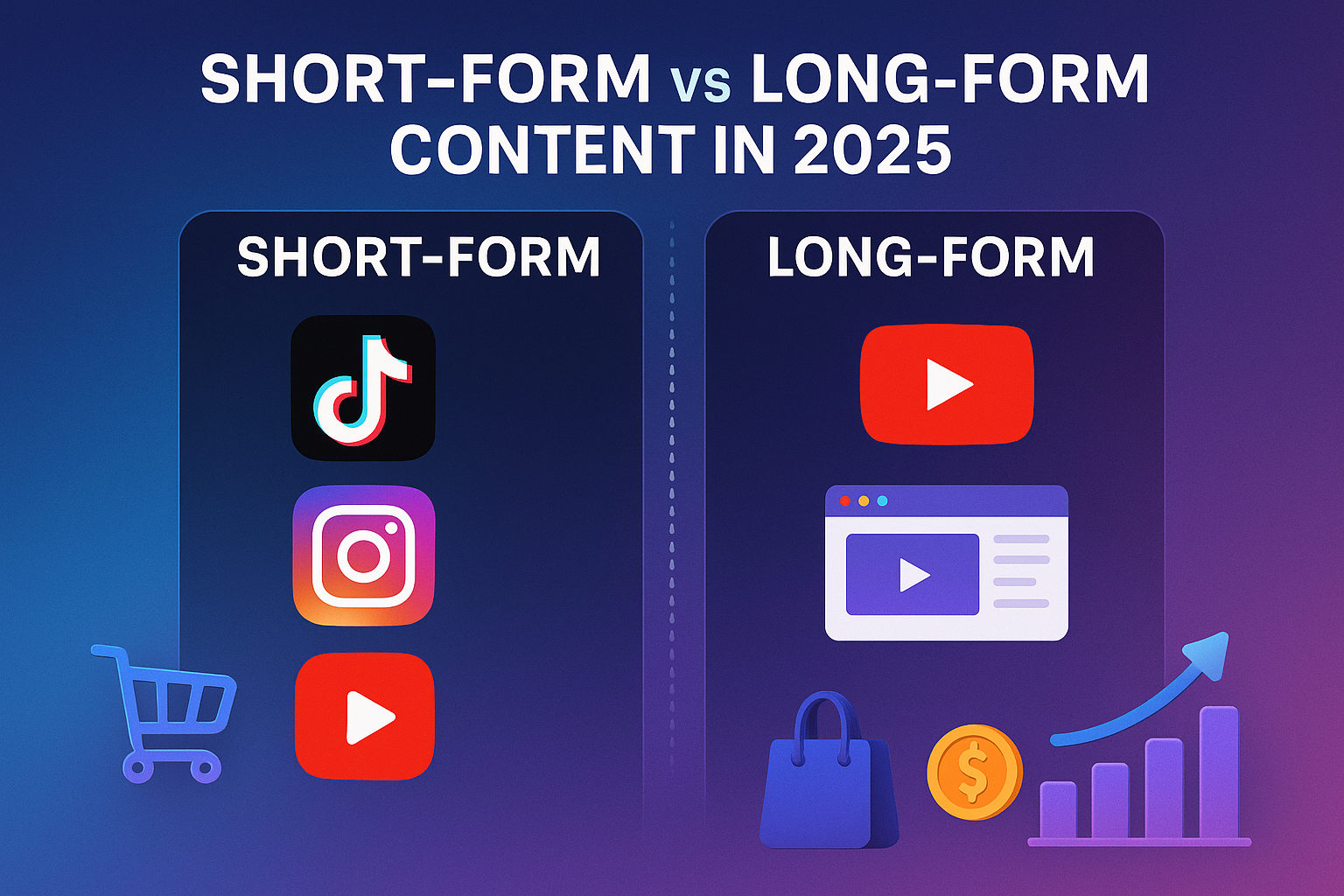
Shorts vs long-form content 2025 continues to shape how sellers reach customers online. In fact, short videos often get 2.5 times more engagement than long videos, making short-form video automation tools essential for fast results. However, long-form content still drives conversions and builds trust with buyers.
For sellers, the key is knowing when to use each format and what video automation tools are winning in 2025. Moreover, the right AI tools for creating shorts and long videos make scaling both easier. Best AI tools for video content save time and reduce costs in today’s competitive market. As a result, they allow sellers to produce both short clips and long videos without sacrificing quality.
Furthermore, these tools work for product demos, seasonal campaigns, tutorials, and customer education. E-commerce video automation combined with long-form video automation helps brands maintain consistent output across all channels. Therefore, this guide explores the best automation tools for e-commerce sellers and shows how to balance short and long videos for maximum engagement and results.
Why Shorts vs Long-Form Matters in E-Commerce
The debate around shorts vs long-form content 2025 is not just about video length. Instead, it shows how customers actually consume content online. For instance, younger audiences scroll quickly and expect instant answers. On the other hand, older shoppers prefer longer explanations before deciding to buy.
According to a 2025 HubSpot report, long-form blog posts over 2,000 words generate about 56 percent more backlinks than short content. At the same time, videos under 90 seconds retain roughly 50 percent of viewers on average. This data comes from Wistia research on video engagement patterns.
Consequently, e-commerce brands need both formats to grab attention and boost sales. Understanding when to use each format separates winning sellers from those who struggle.
Consumer Behavior in 2025
Today’s shoppers behave differently across platforms. For example, TikTok users want instant entertainment and quick product reveals. Meanwhile, YouTube viewers prefer detailed reviews and tutorials. Similarly, Instagram audiences fall somewhere in between, consuming both Reels and longer IGTV content.
As a result, understanding these patterns helps sellers choose the right format. Furthermore, matching content length to platform behavior increases engagement. It also improves conversion rates when done strategically. Additionally, consumer attention spans vary by platform and age group.
Short-Form Platforms
Short videos perform best on platforms like TikTok and Instagram Reels. In particular, they create awareness quickly and benefit from short-form video automation tools. These platforms prioritize content under 60 seconds. Moreover, their algorithms favor fast-paced, entertaining clips that hook viewers immediately.
For instance, TikTok automation tools 2025 make it easier to produce consistent content. Similarly, Instagram Reels automation helps brands maintain posting schedules without manual effort. Consequently, both platforms reward consistency with greater reach. In addition, sellers who post regularly see higher engagement rates.
Long-Form Platforms
Long-form content thrives on YouTube and product pages. Specifically, it builds trust and educates buyers through detailed explanations. Therefore, using long-form video automation helps sellers maintain consistent messaging while delivering thorough product information.
Furthermore, YouTube long-form optimization focuses on watch time and engagement. In fact, videos that keep viewers watching for over five minutes signal quality to the algorithm. As a result, this improves rankings and recommendations significantly. Additionally, product page videos also reduce return rates by setting clear expectations.
Best Automation Tools for Shorts vs Long-Form Content
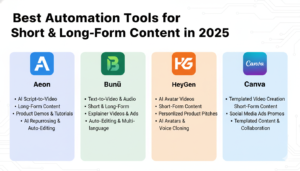
Finding the right automation tool depends on your business size and content goals. For example, some platforms focus on short clips, while others handle long videos with ease. Moreover, many now offer hybrid solutions that support both formats. AI video creation platforms make it easier than ever for e-commerce brands looking to scale efficiently.
Here are the best video automation software for e-commerce, making waves in 2025. In particular, each tool solves specific problems for online sellers looking to automate their content production.
Aeon
Aeon uses AI to generate professional videos with minimal input. Specifically, you provide text or audio, and the platform creates complete videos for product demos, tutorials, or social content. In addition, Aeon includes customizable voiceovers and automated captions.
Designed for e-commerce teams that need high output without hiring full production crews, this tool excels at both short-form video automation and long-form video automation. For instance, Aeon handles everything from 15-second product teasers to 10-minute tutorials. As a result, this flexibility makes it ideal for sellers managing large product catalogs who want to know how to automate short-form video creation in 2025.
Bunu
Bunu is a Shopify video automation app that creates UGC-style product videos automatically. Specifically, it pulls product images, customer reviews, and AI voiceovers to create authentic-looking content. In fact, no manual filming is required at all.
Moreover, Bunu excels at creating shorts that feel personal and relatable. Stores wanting to scale video production quickly find this tool invaluable. In particular, it answers the question of how to automate short-form video creation in 2025 for product-focused brands. Additionally, the app integrates directly with Shopify stores for seamless workflow and automated UGC video tools functionality.
Furthermore, sellers managing dropshipping operations can combine this with Walmart dropshipping services for a fully automated workflow using Walmart dropshipping automation with video tools.
HeyGen
HeyGen allows brands to create personalized videos using AI avatar video creators that speak over 170 languages. In fact, no traditional filming equipment is needed. Moreover, it handles both short promotional clips and longer explainer videos seamlessly.
As a result, this makes HeyGen perfect for international e-commerce brands seeking AI video content tools for online sellers. Furthermore, the platform significantly reduces production time while maintaining professional quality. In particular, it’s one of the top affordable short-form video automation tools for sellers targeting global markets. Additionally, avatars can be customized to match brand personality and style.
Canva
Canva has grown beyond static graphics. In fact, its AI-powered video editors now support video creation for e-commerce, including product photo uploads and automatic lifestyle mockups. Moreover, Canva ensures brand consistency with templates and design kits.
Works well for creating both shorts and long-form content while remaining simple enough for small teams. Furthermore, Canva’s drag-and-drop interface makes it accessible even for sellers with no video editing experience. In addition, the platform also offers thousands of stock videos and music tracks. Businesses searching for scalable video creation tools for businesses find Canva particularly useful.
Scheduling Tools
Scheduling and publishing are just as important as creation. For instance, tools like Hootsuite and Buffer help you post videos across multiple platforms at peak engagement times. Moreover, they also track performance metrics so you can see what works best.
These automated publishing tools save hours of manual posting. In addition, they provide insights that inform your future video strategy. Furthermore, Buffer and Hootsuite both support omnichannel content automation across TikTok, Instagram, YouTube, and Facebook. Consequently, analytics dashboards show which videos drive the most traffic and sales. Sellers searching for automated video production for online stores rely on these platforms daily.
Amzart Solutions Integration
For sellers ready to scale their entire marketing strategy, Amzart offers automation and marketing services that integrate content creation with sales optimization. Specifically, their platform combines AI video tools for product pages with multi-channel distribution.
In particular, Amzart helps sellers implement the best automation tools for e-commerce sellers across all their channels. As a result, this creates a seamless workflow from content creation to customer conversion. Additionally, the service includes strategy consulting and hands-on implementation support for content automation for product videos.
How to Balance Shorts vs Long-Form for Maximum ROI
Winning with shorts vs long-form content 2025 means using each format strategically. In particular, avoid forcing one style when the other fits better. Instead, match the video length to customer intent and platform behavior.
As a result, this ensures your audience stays engaged while your content drives real results. Furthermore, strategic content planning increases ROI significantly.
Short-Form for Awareness
Shorts are ideal for awareness and discovery. Specifically, they perform best on TikTok, Instagram Reels, and YouTube Shorts. Keep clips under 60 seconds and focus on hooks that grab attention within the first three seconds.
For example, show your product solving a problem quickly, and add captions for viewers who watch without sound. Moreover, using short-form video marketing tools for e-commerce makes it easier to produce these clips consistently. As a result, shorts spread fast, bringing new eyes to your brand and boosting reach.
In addition, YouTube Shorts automation tools help maintain consistent posting schedules. Similarly, Instagram Reels automation ensures your content reaches audiences during peak hours. Consequently, both approaches increase visibility without manual effort. Furthermore, consistency matters more than perfection in the awareness stage when building brand recognition.
Long-Form for Conversion
Long-form content builds trust and drives conversions effectively. Specifically, it thrives on YouTube, product pages, and email campaigns. In particular, longer videos give brands room to explain, teach, and build credibility while increasing monetization opportunities through deeper engagement.
Therefore, use automation tools for YouTube long-form videos to create tutorials, customer testimonials, or detailed product comparisons. As a result, these videos help customers fully understand your product before purchase. Furthermore, this reduces returns and improves satisfaction rates significantly while boosting long-form content conversion rates.
In fact, long-form content conversion rates typically outperform shorts when measuring actual sales. However, long videos require more upfront investment in production time and quality. Nevertheless, the payoff comes through higher average order values and lower refund rates for informed buyers.

Content Calendar Tips
Create a content calendar that includes both formats. For example, plan shorts around trending topics or seasonal promotions, while scheduling long videos for product launches or educational series. Moreover, repurposing long videos into short clips maximizes content value without starting from scratch each time.
In addition, content repurposing automation tools help streamline this process across multiple platforms. Specifically, they automatically resize, reformat, and optimize videos for different channels using AI-powered video editors. As a result, this saves hours of manual editing work every week.
Furthermore, batch creation also improves efficiency significantly. For instance, record multiple long-form videos in one session, then break them into shorts throughout the month. Consequently, this approach maintains consistency even during busy periods and answers how sellers can scale video production with automation.
Performance Measurement
Regularly test and measure performance. Specifically, track metrics like watch time, click-through rates, and conversions. In addition, observe which format drives more sales for specific products. Therefore, adjust your strategy based on real data rather than assumptions.
For example, some products sell better with quick demos, while others need detailed explanations to convince buyers. Moreover, analytics reveal these patterns over time. As a result, use them to guide your content decisions moving forward. Furthermore, A/B testing different video lengths helps optimize results.
If managing content production feels overwhelming, contact Amzart to explore automated solutions tailored to your business needs.
Challenges Sellers Face with Short vs Long-Form Automation
Automation makes content creation faster, but it comes with its own challenges. In fact, not every tool suits every business. For example, some require learning curves, while others integrate poorly with existing workflows. Therefore, understanding these obstacles helps sellers make smarter choices and avoid wasted effort.
Quality control remains a key concern. Specifically, AI-generated videos can sometimes lack the human touch customers expect. In addition, they may feel generic or miss the brand personality. As a result, always review automated content before publishing, and add personal touches where needed.
Moreover, platform-specific requirements complicate automation further. For instance, TikTok prefers vertical videos under 60 seconds, while YouTube favors longer horizontal content. Therefore, your automation tool must handle these variations automatically. In particular, look for platforms like Canva or Aeon that resize content for different channels without extra work.
Furthermore, cost and scalability vary between tools. For example, some charge per video, while others use subscription models. As a result, calculate costs based on your content volume. In fact, a tool that seems inexpensive may cost more at scale. Therefore, choose scalable video creation tools for businesses that grow with your company.
Additionally, integration issues can slow workflows significantly. In particular, the ideal automation tool connects seamlessly with your e-commerce platform, social accounts, and analytics software. However, poor integration means more manual work, defeating the purpose of automation. Consequently, prioritize tools with robust API connections and proven compatibility.
Finally, content saturation is another risk many sellers overlook. In fact, automation makes production easy, but posting too often can dilute your message. Therefore, quality beats quantity every time. As a result, focus on creating content that truly serves your audience and aligns with your video content strategy for sellers.
Real Examples of Shorts vs Long-Form Success
How Top Brands Use Automated Short-Form Videos
Looking at real brands makes it clear what works in e-commerce. In fact, many sellers now use both short and long-form content strategically. As a result, their results demonstrate the power of balanced content strategies in driving engagement and conversions.
Moreover, learning from successful examples helps sellers avoid common mistakes. In particular, real data shows which approaches actually drive sales.
For instance, Meta found that catalog product video ads drive up to 20 percent higher conversions than static images. Furthermore, brands using automated video production for online stores scaled ad production without increasing costs. Specifically, they quickly generated product-specific videos and tested different variations to identify winners.
As a result, this approach significantly improved ROI and shows how 2025 content automation tools benefit e-commerce sellers. In addition, testing multiple versions helps find what resonates with audiences.
How Small Businesses Compete with Video Automation
Similarly, small businesses leverage affordable short-form video automation tools like Bunu and Aeon to compete with larger brands. Specifically, automation allows them to create product videos consistently and maintain a reliable posting schedule. Moreover, this consistency builds audience trust and keeps products top of mind.
Consequently, over time, these sellers notice higher engagement and improved conversion rates. In fact, the investment in automation pays for itself through increased sales.
Using Short Clips to Drive Long-Form Conversions
Furthermore, influencer-driven campaigns also combine both formats effectively. For example, brands create short teaser clips for social media and link them to longer YouTube reviews. As a result, this funnel approach captures attention with shorts while converting viewers through long-form explanations.
Sellers looking to replicate these results should explore YouTube automation services that handle both shorts and long-form content creation at scale. In particular, it takes advantage of each format at different stages of the customer journey. Therefore, viewers who want more information click through to detailed content.
How Livestreaming Boosts Engagement with Automated Content
Additionally, live shopping events blend real-time engagement with recorded content. In fact, global livestream sales are expected to hit 500 billion dollars in 2025. Moreover, sellers use content automation for product videos to promote these events with short clips and follow up with longer recorded videos.
Brands can amplify these campaigns using TikTok marketing services that automate short-form video distribution across multiple social platforms. Consequently, this strategy maximizes reach, extends content lifespan, and boosts overall engagement. Furthermore, recorded content continues generating value long after live events end.
Conclusion: Choosing the Right Video Strategy for Your Business
The battle between shorts vs long-form content 2025 doesn’t have a single winner. Instead, both formats serve critical roles in modern e-commerce marketing. For instance, short videos drive awareness and discovery through platforms like TikTok and Instagram Reels. Meanwhile, long-form content builds trust and converts browsers into buyers through detailed education.
Therefore, success comes from understanding what video automation tools are winning in 2025 and implementing them strategically. In particular, tools like Aeon, Bunu, HeyGen, and Canva make professional video creation accessible to sellers of all sizes. As a result, they remove technical barriers while maintaining quality and consistency across all content.
Furthermore, start by evaluating your current content needs honestly. Specifically, identify which products benefit most from quick demonstrations versus detailed explanations. In addition, build a content calendar that balances both approaches based on your audience behavior. Moreover, use automation to maintain consistency without overwhelming your team or budget constraints.
Remember that the best automation tools for e-commerce sellers integrate seamlessly with your existing workflow. In fact, they should save time, reduce costs, and improve results simultaneously. Therefore, test different platforms and measure performance regularly to optimize your strategy over time.
Ready to scale your video content strategy with proven automation? Explore Amzart’s automation and marketing services designed specifically for online sellers. In particular, their team helps businesses implement AI video content tools for online sellers that drive real results across all platforms.
Frequently Asked Questions
Q. What is the difference between shorts and long-form content in e-commerce?
Shorts are videos under 90 seconds designed for quick engagement on social platforms. In contrast, long-form content exceeds five minutes and provides detailed product information. Specifically, shorts drive awareness while long videos build trust and conversions.
Q. How much does it cost to automate shorts vs long-form content in 2025?
Costs vary widely based on tools and volume. For example, basic automation tools start around 20 dollars per month. However, enterprise solutions can cost hundreds of dollars monthly. In general, most platforms offer tiered pricing that scales with your content needs.
Q. Are shorts or long-form videos more profitable for beginners?
Shorts are easier and cheaper to produce initially. In fact, they help beginners build audiences quickly. However, long-form content often drives higher conversions once you have an audience. Therefore, start with shorts and add long-form as you grow.
Q. Which AI tools automate both short and long-form video production?
Tools like Aeon, HeyGen, and Canva support both formats. Specifically, they offer templates and AI features that adapt content length based on your needs. In addition, Hootsuite and Buffer help schedule and distribute both types across platforms.
Q. How can sellers scale video production with automation?
Sellers can use AI video creation platforms to generate multiple videos simultaneously. Furthermore, automation handles editing, captioning, and formatting for different platforms. As a result, this eliminates manual work and maintains consistent output without hiring large production teams.
