
TikTok vs YouTube Shorts: Which Platform Delivers Better E-commerce Results in 2025?
Choosing between TikTok vs YouTube Shorts for e-commerce marketing is now critical for online retailers in 2025. Moreover, TikTok alone generated over $9.4 billion in consumer spending through its integrated shopping features in 2024. This data comes from industry research by data.ai, highlighting the massive impact of short-form video commerce. Additionally, the competition between these social media platforms has intensified dramatically as both fight to dominate social commerce.
While both TikTok and YouTube Shorts provide strong opportunities for e-commerce businesses, they attract different audiences. Furthermore, each platform offers unique advantages that directly impact your sales performance. Therefore, the choice between them depends on your business goals, target demographics, and available marketing resources. In fact, making the right decision can mean achieving viral visibility versus losing money on poorly optimized video marketing campaigns.
This comprehensive comparison of TikTok vs YouTube Shorts for e-commerce will guide you through the key differences. Additionally, we’ll help you weigh costs and show which platform delivers better long-term results for your online business.
Ready to boost your online sales? First, explore our comprehensive digital marketing solutions at AMZART to maximize your social commerce potential across all platforms.
The Current Landscape: Short-Form Video Dominance in E-commerce
Short-form video content has completely transformed how consumers discover and shop for products online. In other words, what started as entertainment has become a powerful sales driver. Consequently, both TikTok marketing and YouTube Shorts marketing have evolved into established e-commerce ecosystems that brands cannot ignore.
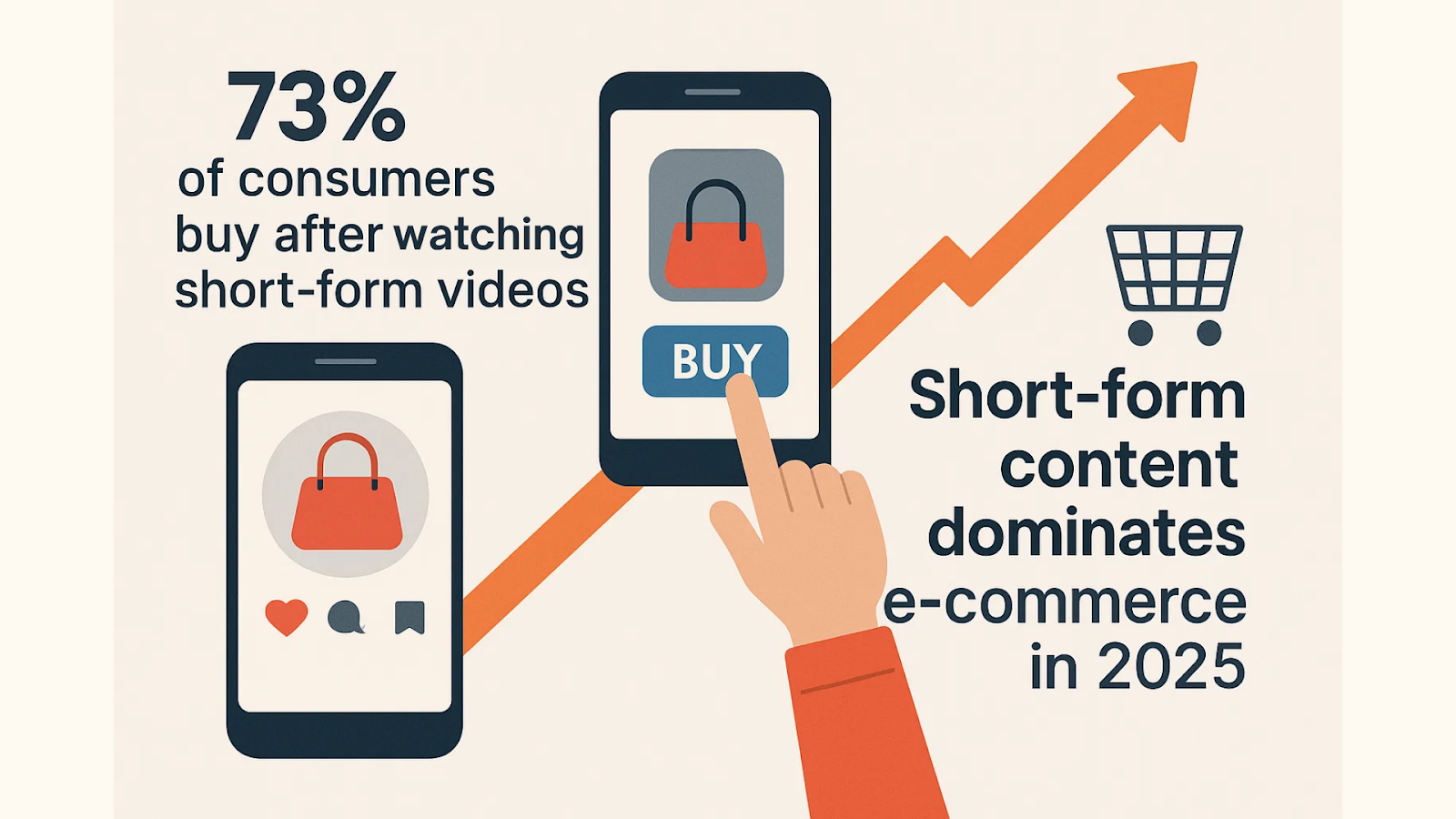
Industry reports indicate that nearly 73% of consumers are more likely to purchase after watching a short-form video demonstration. This statistic underscores the significant influence this content format has on buying decisions. As a result, businesses must rethink their social media marketing strategies, especially when comparing TikTok vs YouTube Shorts for e-commerce growth.
Platform Demographics: Who’s Shopping Where?
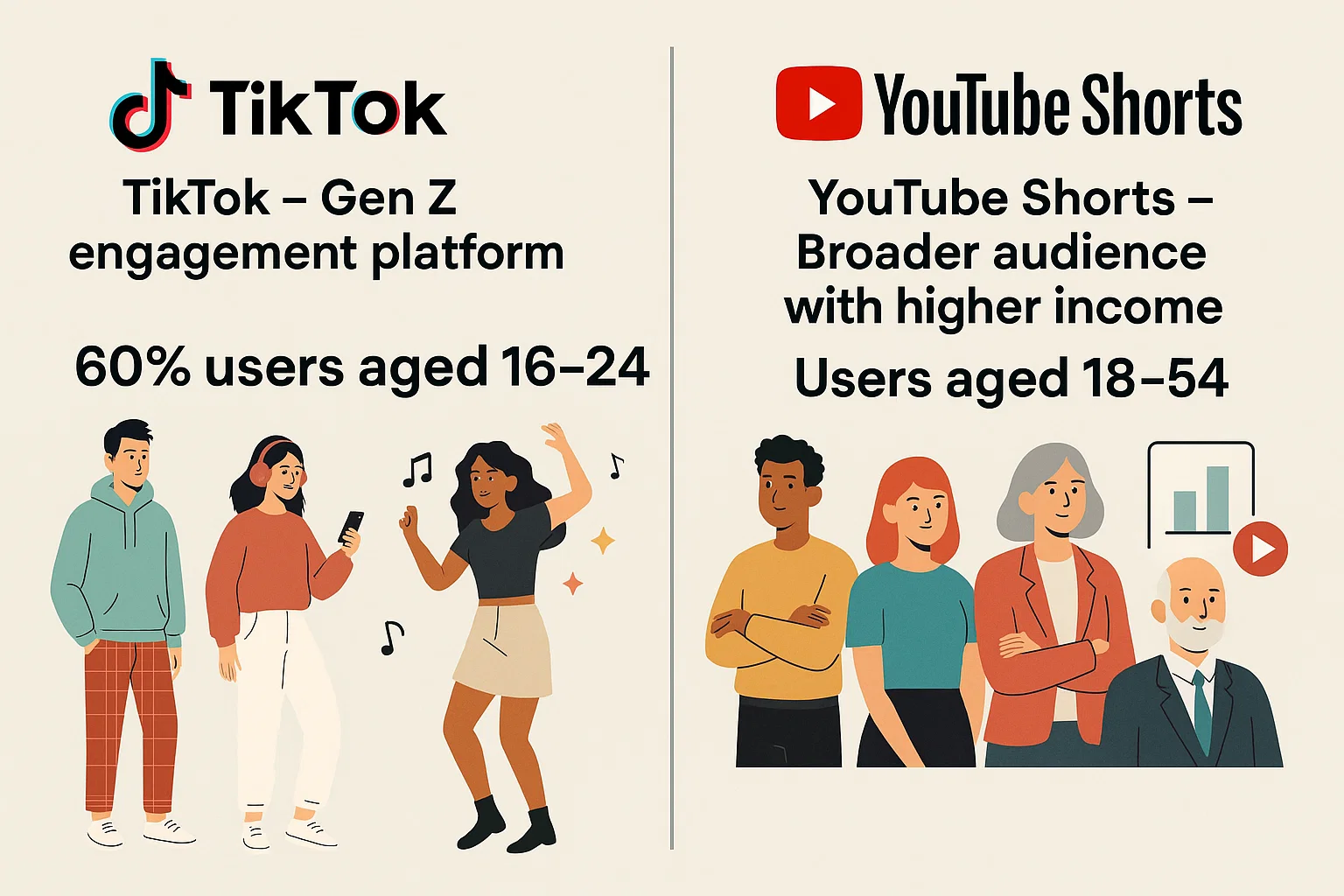
Understanding your audience is crucial when deciding between TikTok vs YouTube Shorts e-commerce strategies. First, TikTok’s audience skews heavily toward younger users. Specifically, about 60% of its user base falls between ages 16 and 24. Therefore, it’s especially effective for brands targeting Gen Z buyers who respond quickly to trends and interactive content.
In contrast, YouTube Shorts reaches a broader demographic. Specifically, it encompasses users aged 18 to 54. This wider reach includes millennials and older consumers who often have higher disposable income. As a result, YouTube Shorts becomes particularly valuable for businesses selling premium products. For updated demographic insights, you can explore the latest social media statistics from Pew Research Center.
TikTok for E-commerce: Strengths and Opportunities
Native Shopping Integration and TikTok Shop Features
TikTok for e-commerce has grown far beyond simple entertainment. Thanks to TikTok Shop, the platform has transformed into a comprehensive e-commerce solution. Moreover, users can browse, compare, and complete purchases all within the app. Consequently, this creates a seamless shopping experience that reduces checkout drop-offs.
What makes TikTok especially powerful is its product discovery engine. Indeed, the platform’s algorithm surfaces new content constantly. As a result, it often introduces users to brands they’ve never seen before. For small businesses or startups launching innovative products, this organic reach creates opportunities that traditional advertising cannot match. You can learn more about how TikTok Shop works on the official TikTok Business page.
Viral Potential and Trend-Driven Sales
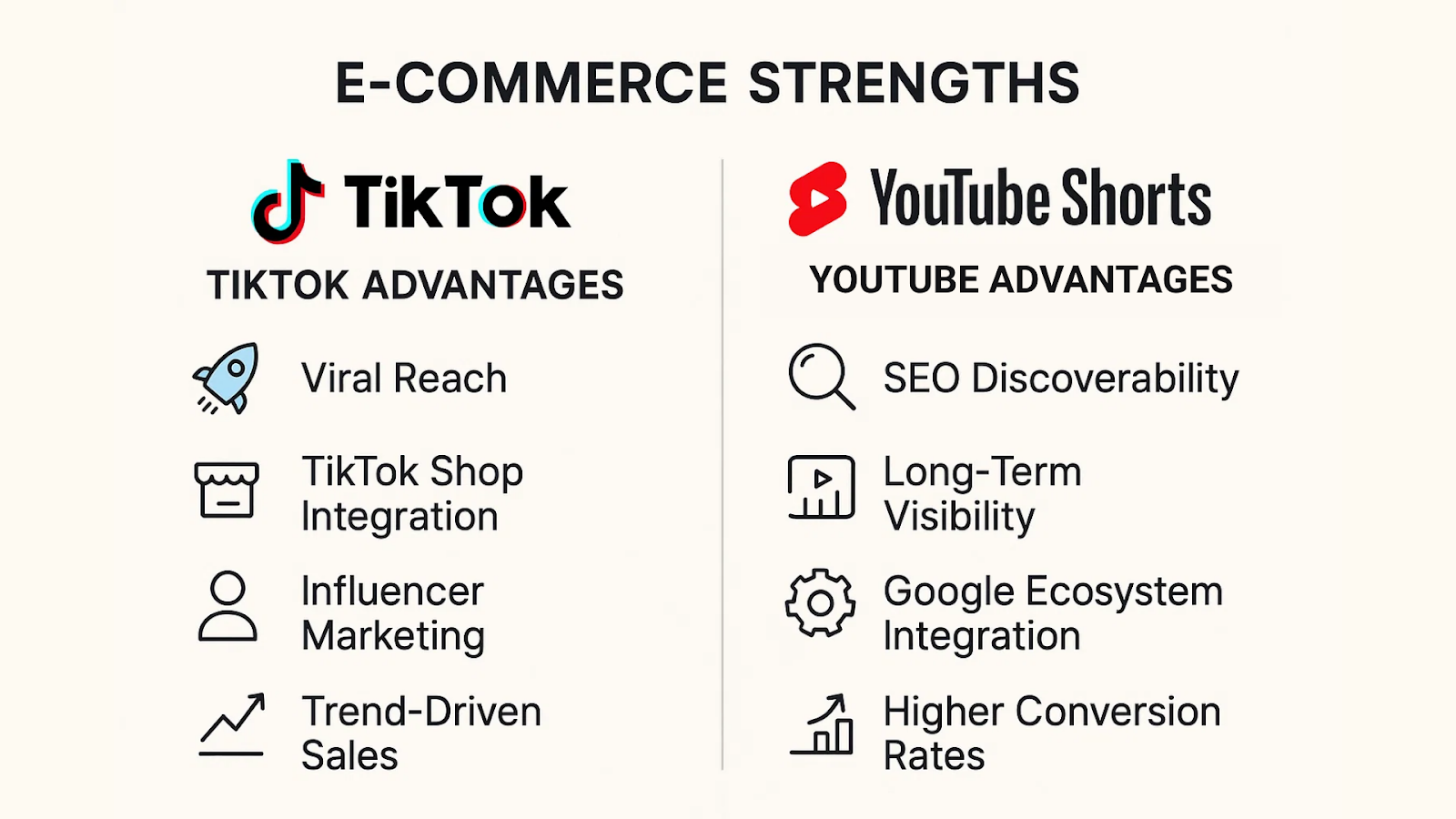
One of TikTok’s most significant strengths lies in its viral marketing potential. Indeed, a single video can turn an unknown product into a best-seller within hours. Furthermore, many brands have experienced massive sales surges simply by appearing in trending content. In some cases, products have sold out entirely after going viral.
However, there is a downside to this level of virality. Specifically, TikTok success can be unpredictable. Therefore, businesses must constantly monitor trends and create fresh content to maintain visibility. Consequently, this demand for consistency requires careful planning and adaptability to stay competitive in the video marketing landscape.
Cost Considerations for TikTok Marketing
When it comes to TikTok advertising costs, the range varies depending on competition and targeted strategies. Initially, many small businesses start with a modest daily budget of around $20 to $50. Meanwhile, larger brands may invest thousands of dollars monthly in TikTok ads.
The good news is that organic content creation on TikTok remains cost-effective. In fact, most successful sellers started with nothing more than a smartphone and simple editing apps. This proves that creativity often matters more than high production value. As a result, TikTok e-commerce marketing becomes accessible even for brands with limited budgets. For more information on advertising costs, check Hootsuite’s guide to social media advertising.
YouTube Shorts: The Search Engine Advantage
SEO Benefits and Long-Term Discoverability
YouTube Shorts for e-commerce hold a unique advantage. Specifically, YouTube is the second-largest search engine globally. Unlike TikTok’s discovery-heavy approach, YouTube content can rank in search results for months or even years. This happens when you optimize with the right keywords. Consequently, this gives YouTube Shorts a powerful layer of visibility that drives sales long after publication.
Moreover, search-driven traffic tends to convert at higher rates. Many viewers arrive on YouTube with purchase intent. They’re actively searching for product reviews, how-to guides, or solutions to specific problems. Therefore, this intent-driven behavior translates into more qualified leads and stronger e-commerce performance compared to virality-driven traffic. For best practices on optimization, Google offers guidance through YouTube’s Creator Academy.
Longer-Term Content Value and Evergreen Marketing
Another key advantage of YouTube Shorts is its ability to generate long-term growth. Specifically, Shorts can easily direct viewers to longer-form content on the same channel. As a result, this helps build subscriber bases and establish brand authority over time. Furthermore, this ecosystem effect makes YouTube Shorts less dependent on fleeting trends. Consequently, it becomes more valuable for sustainable e-commerce strategies.
Interested in maximizing your YouTube potential? Then explore our YouTube automation services to streamline your video content creation and optimization.
Integration with Google Ecosystem
YouTube Shorts also benefits from seamless integration with Google’s broader ecosystem. For instance, Shorts can surface in Google search results. Additionally, shopping ads can link directly to YouTube content. Furthermore, brands can track detailed customer journeys using Google Analytics.
This integration creates multiple touchpoints throughout the sales funnel. Specifically, it covers everything from initial awareness to final purchase. Therefore, businesses gain a comprehensive understanding of how video content contributes to e-commerce sales. When combined, these advantages make YouTube Shorts powerful for companies seeking long-term visibility and consistent conversion opportunities.
Head-to-Head Comparison: TikTok vs YouTube Shorts for E-commerce
| Feature | TikTok | YouTube Shorts |
| Primary Age Demographics | 16-24 (60% of users) | 18-54 (broader range) |
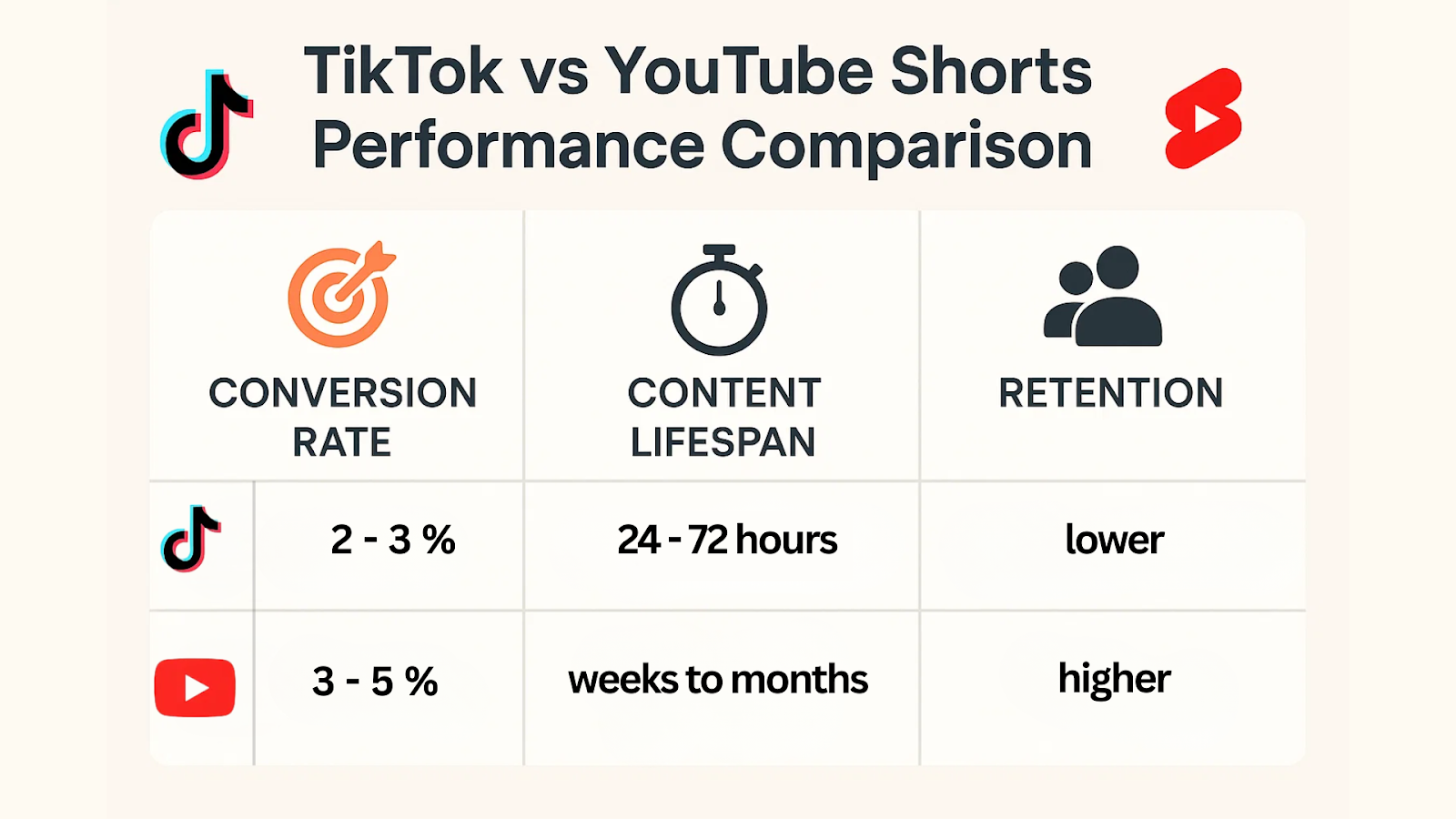
| Average Conversion Rate | 2-3% | 3-5% |
| Content Lifespan | 24-72 hours (trend-dependent) | Weeks to months (evergreen) |
| Discovery Method | Algorithm-driven (For You Page) | Search + Algorithm hybrid |
| Native Shopping Features | TikTok Shop, in-app checkout | Product shelves, Google integration |
| Minimum Ad Spend | $20/day | $20/day (Google Ads) |
| Content Creation Frequency | Daily recommended | 3-5 times per week |
| SEO Benefits | Limited (hashtag discovery) | High (Google search integration) |
| Viral Potential | Very High | Moderate |
| Analytics Depth | Basic to Moderate | Advanced (Google Analytics) |
| Global Reach | 1+ billion users | 2+ billion (YouTube total) |
| Best For | Brand awareness, viral campaigns | Long-term growth, search traffic |
| Learning Curve | Moderate (trend-focused) | Easier (familiar interface) |
| Customer Retention | Lower (discovery-based) | Higher (subscription model) |
Comparing ROI: Which Platform Delivers Better Results?
Conversion Rates and Sales Performance
When it comes to conversion rates, YouTube Shorts generally has the upper hand. Specifically, industry insights suggest that Shorts average between 3% and 5% conversion rates. Meanwhile, TikTok typically falls within the 2% to 3% range. However, TikTok often delivers higher initial engagement and broader reach. As a result, this can balance out the slightly lower conversion numbers.
The real difference comes down to the conversion funnel. Specifically, TikTok excels at generating awareness and sparking initial interest. Therefore, it becomes an excellent top-of-funnel platform. On the other hand, YouTube Shorts performs better at the middle and bottom stages. Consequently, it’s more effective where consideration and purchase decisions take place.
Content Creation Costs and Video Production
Both TikTok and YouTube Shorts reward originality over polished production. However, the pace of content creation differs significantly. Specifically, TikTok trends move quickly. Therefore, brands often need to produce and post content more frequently to stay visible. Conversely, YouTube Shorts is more forgiving. It allows businesses to focus on evergreen videos that generate results over time without daily updates.
The actual production costs remain low on both platforms. In fact, many brands rely on smartphones and basic editing apps to create compelling content. Nevertheless, the main difference lies in frequency. Specifically, TikTok requires a higher volume of content. Meanwhile, YouTube Shorts allows for fewer uploads with longer-lasting impact. For content creation tips, visit Social Media Examiner’s video marketing guide.
Audience Retention and Customer Loyalty
Retention is another area where the platforms differ significantly. Specifically, YouTube’s built-in subscription model encourages stronger loyalty. Subscribers actively choose to see more from a brand. Consequently, this often results in a higher customer lifetime value because the audience is nurtured over the long term.
TikTok excels in reaching new audiences and creating viral moments. However, converting one-time viewers into repeat customers often requires additional nurturing. Therefore, brands that use TikTok effectively typically pair viral content with effective retargeting strategies and consistent brand narratives.
Platform-Specific Features Comparison
Shopping Tools and E-commerce Integration
TikTok Shop Features:
- First, in-app checkout and payment processing
- Additionally, live shopping events and product demonstrations
- Moreover, creator marketplace for influencer partnerships
- Finally, product catalog integration with major e-commerce platforms
YouTube Shopping Features:
- Initially, product shelves below videos
- Furthermore, shopping ads integration
- Additionally, channel store creation
- Finally, Google Merchant Center connectivity
Both platforms continue expanding their e-commerce capabilities. However, TikTok currently offers more comprehensive native shopping solutions for video commerce.
Analytics and Performance Tracking
Analytics are another central area where YouTube Shorts has a competitive edge. Specifically, with YouTube Studio and Google Analytics, brands gain detailed insights. These include audience behavior, video performance, and full-funnel tracking. Consequently, this level of reporting helps businesses refine content strategies and measure true ROI. Learn more about Google Analytics from their official help center.
TikTok analytics primarily focus on content-level performance. This includes views, engagement, and follower growth. For advertisers, TikTok Business Manager offers more advanced campaign insights. However, its tracking is still less comprehensive than YouTube’s Google-integrated ecosystem.
Making the Strategic Choice: Decision Framework
Assess Your Target Demographics and Audience
Start by considering your ideal customer’s age, interests, and shopping behavior. For B2C brands seeking younger audiences, TikTok marketing often yields faster traction. This is because of its trend-driven culture and strong Gen Z presence. On the other hand, B2B brands or businesses targeting older demographics may find YouTube Shorts marketing more effective. Specifically, the platform reaches a broader age range. Additionally, it includes consumers with higher disposable incomes.
Evaluate Your Content Capabilities and Resources
Success in short-form video marketing depends heavily on your content production capabilities. Specifically, TikTok requires consistent posting and adaptability to rapidly changing trends. Therefore, this means more frequent content creation. Conversely, YouTube Shorts allows for a different content strategy. Evergreen videos can drive ongoing engagement and deliver long-term value. As a result, you don’t need constant updates.
Budget and Resource Allocation for Video Marketing
Finally, weigh your budget and available resources carefully. TikTok marketing may require more regular investment in content creation to stay visible. Meanwhile, YouTube Shorts SEO can deliver lasting value even with fewer uploads. Consequently, businesses with limited time or smaller teams often find YouTube more sustainable. However, TikTok is better suited for those ready to experiment and post frequently.
Looking to dominate social media marketing? Then discover our specialized TikTok marketing services designed to maximize your social commerce success.
Future Outlook: Platform Evolution in 2025
Emerging Features and Platform Updates
Both TikTok and YouTube Shorts continue to evolve rapidly. Specifically, they’re competing for dominance in the short-form video e-commerce market. Currently, TikTok is actively expanding TikTok Shop into more global markets. As a result, sellers can connect with international buyers directly inside the app. Meanwhile, YouTube is steadily rolling out enhanced shopping integrations. Additionally, new monetization tools help creators and brands link products seamlessly through YouTube Shorts marketing.
For e-commerce businesses, keeping up with these updates is no longer optional. Therefore, staying informed about the latest platform features allows you to adjust strategies early. Consequently, you maintain a competitive advantage as new tools are introduced and rolled out. Follow TechCrunch’s coverage of social media for the latest updates.
Market Trends and Industry Predictions
Industry experts agree that social commerce will continue growing throughout 2025 and beyond. Furthermore, both TikTok marketing and YouTube Shorts SEO are expected to receive more investment. Specifically, platforms will refine their shopping features and strengthen partnerships with creators.
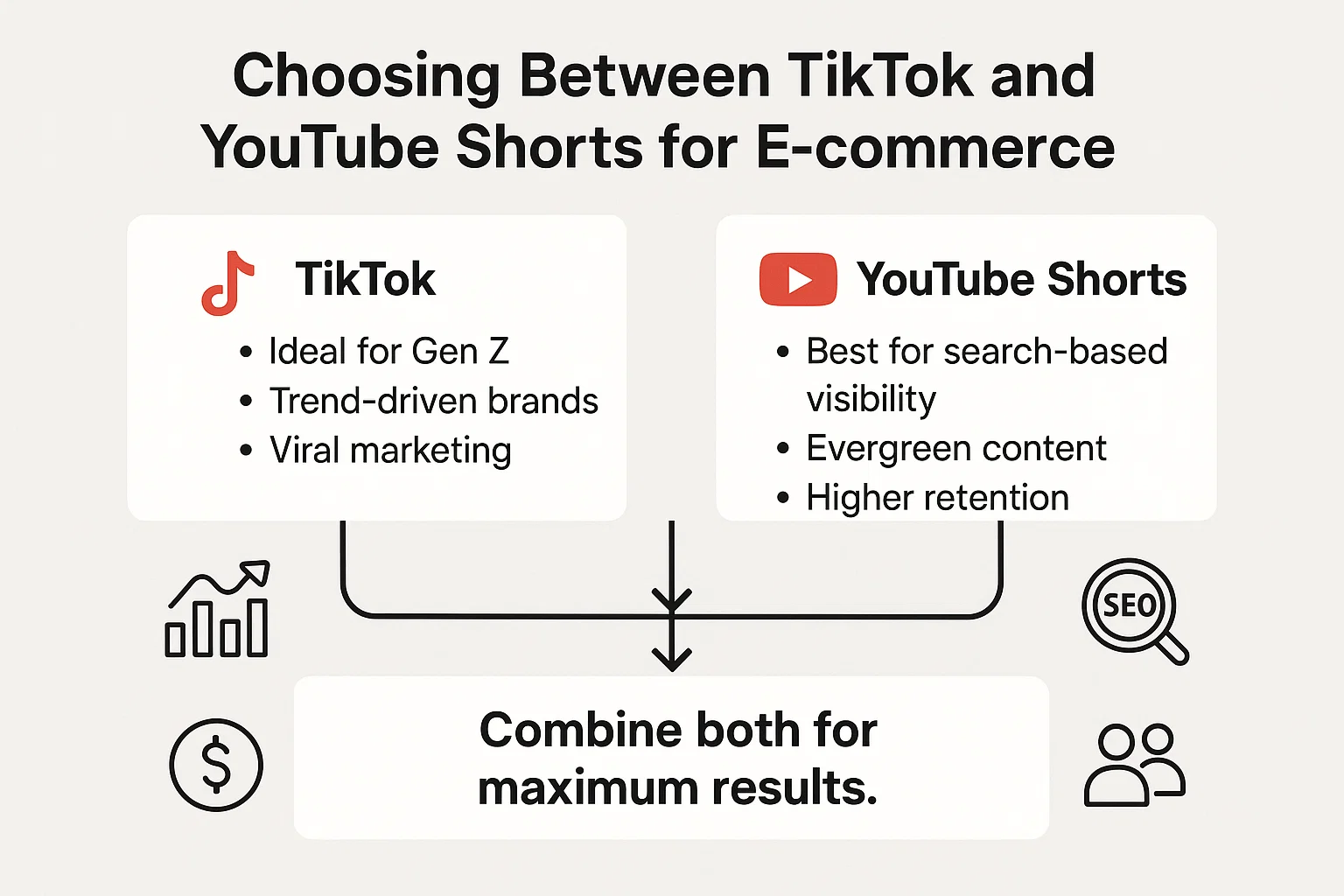
The future may not crown a single winner between TikTok and YouTube Shorts for e-commerce. Instead, the real winners will be businesses that leverage both platforms strategically. Specifically, they’ll use TikTok for viral, trend-driven reach. Meanwhile, they’ll use YouTube Shorts for sustainable, search-based sales growth.
Conclusion: Your E-commerce Video Strategy
The choice between TikTok vs YouTube Shorts for e-commerce in 2025 doesn’t need to be either-or. In fact, many successful online retailers are finding that combining both platforms delivers the best results. Specifically, they use TikTok marketing to spark viral awareness. Meanwhile, they use YouTube Shorts SEO to capture sustainable, search-driven traffic.
When deciding where to invest your energy, consider three essentials. These are your target demographic, your capabilities, and your long-term objectives. Specifically, TikTok excels at rapid engagement and trend-based short-form video marketing. Meanwhile, YouTube Shorts often delivers higher conversion rates. This is thanks to its built-in search engine advantage and integration with the broader Google ecosystem.
The businesses that thrive are those that understand each platform’s strengths. Moreover, they apply them strategically to create a comprehensive social commerce strategy. Therefore, start with the platform that best aligns with your immediate goals. Then expand to both as your confidence and resources grow.
Above all, consistency and authenticity matter more than anything else. Indeed, audiences on both TikTok and YouTube Shorts respond best to genuine content. Specifically, content that solves real customer problems and demonstrates true product value performs better than purely promotional material.
Need expert guidance on platform selection? Then contact our team for a personalized e-commerce marketing consultation.
Frequently Asked Questions
Q. How much does it cost to start selling on TikTok vs YouTube Shorts?
Starting costs are minimal for both platforms. Initially, you can begin with organic content using a smartphone and free editing apps. Furthermore, paid advertising budgets can start as low as $20 per day on TikTok. Meanwhile, YouTube Shorts advertising integrates with Google Ads, with similar minimum budgets.
Q. Which platform converts better for e-commerce sales?
YouTube Shorts typically achieve higher conversion rates (3-5%). This is due to search intent and longer content lifespan. However, TikTok generates broader reach and viral potential. Nevertheless, it can average lower one-time engagement rates. Therefore, the best choice depends on your specific products and target audience.
Q. Can I use the same content on both TikTok and YouTube Shorts?
Yes, cross-posting content is common and recommended for maximum reach. However, optimize for each platform’s specific audience preferences. Specifically, TikTok favors trending sounds and effects. Meanwhile, YouTube Shorts rewards searchable titles and descriptions. Consequently, slight modifications improve performance on each platform.
Q. How do I measure success on each platform?
TikTok success metrics include views, engagement rates, and shares. Additionally, track click-through rates to your product pages. Meanwhile, YouTube Shorts success involves watch time and subscriber growth. Furthermore, monitor search rankings and conversion tracking through Google Analytics integration.
Q. Which platform is better for small businesses just starting?
TikTok often provides faster initial results. This is due to its discovery algorithm and viral potential. However, YouTube Shorts offer more sustainable long-term growth. Additionally, they provide better integration with other marketing channels. Therefore, consider starting with one platform to master it. Then expand to the other as you grow your video marketing expertise.
