
Have you always dreamed of leaving your 9-5 job behind? Starting your own successful online business might be easier than you think. Amazon represents the world’s largest online shopping community. With over 200 million Prime members in the US alone and more than 310 million active customers worldwide, the platform’s market share keeps growing. As a result, your products will be visible to a massive, ready-made audience.
Industry analysts predict remarkable growth ahead. By 2030, Amazon’s third-party seller income is expected to jump 250% to reach $1.2 trillion. Furthermore, experts estimate there will be more than four million Amazon FBA sellers by that time. E-commerce sales will account for 24% of worldwide retail sales, compared to just 15.6% in 2024. What’s more, profitable FBA businesses started in 2025 could see revenue increases of 300-500% by 2030. Typically, established FBA sellers are projected to earn over $85,000 annually by decade’s end.
Why Amazon FBA Is Different
Beyond the numbers, Amazon FBA offers something unique. It allows you to leverage Amazon’s cutting-edge technology to build a business that generates revenue around the clock. The FBA business model works simply: you ship your inventory to Amazon’s fulfillment centers. From there, these facilities handle everything: customer service, packaging, shipping, storage, and even returns. Consequently, you’re free to focus on what truly matters: growing your company.
This comprehensive guide serves as your complete Amazon FBA tutorial. Whether you’re taking an Amazon FBA course or exploring business models like Amazon private label, you’ll learn everything needed to succeed. We’ll cover researching lucrative products, increasing post visibility, and generating more sales. Additionally, you’ll understand the real cost of doing business, including Amazon FBA fees.
Getting Started Is Easier Than You Think
One of the most appealing aspects of Amazon FBA for Beginners 2025 is its accessibility. You don’t need extensive capital, technical expertise, or prior online shopping experience. With the right guidance, necessary effort, and solid planning, you can join thousands of entrepreneurs who’ve transformed their financial futures using Amazon’s robust platform.
Throughout this post, we’ll explore how Amazon FBA works and whether it remains a viable path to success in 2025.
What is Amazon FBA?
Have you ever imagined running an online company without handling shipping or packaging yourself? That’s exactly what Amazon FBA offers. FBA, or Fulfillment by Amazon, stands as one of the most effective solutions for anyone wanting to start selling on Amazon with minimal hassle and maximum reach. For those exploring Amazon FBA for Beginners 2025, this represents the perfect entry point into e-commerce sales.
How the System Works
The process is remarkably straightforward. You simply ship your items to Amazon’s warehouse when using Fulfillment by Amazon. After the products arrive, Amazon stores them and handles everything else. They package orders, ship them to customers, manage returns, and provide customer support. Once your goods reach the Amazon fulfillment center, your hands-off involvement begins. This simplified methodology makes it an ideal Amazon FBA tutorial for beginners.
The Step-by-Step Process
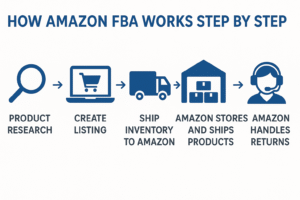
Let’s break down how Amazon FBA works:
First, you identify a product to sell on Amazon. This could be something you manufacture, purchase wholesale, or even private-label products you rebrand as your own.
Next, you create a product listing on Amazon’s marketplace.
Then, you ship the product in bulk to one of Amazon’s fulfillment centers.
After that, when customers buy your goods, Amazon picks, packs, and delivers purchases straight to them.
Finally, if customers have questions or want returns, Amazon’s customer service staff handles everything for you.
Once your inventory is organized, you can essentially run an online store without touching a single box. That’s the true power of Fulfillment by Amazon. Many successful Amazon FBA sellers have built profitable businesses using this exact system.
Real Numbers Behind Amazon FBA
These Amazon FBA numbers help illustrate the opportunity:
- In 2024, 65 percent of Amazon sellers used FBA as their primary fulfillment method
- According to Jungle Scout’s 2024 report, the average new seller using Amazon FBA makes over $30,000 in annual profits, with some scaling much higher
- More than 70 percent of Amazon customers prefer products fulfilled by Amazon due to fast shipping and reliable service
Therefore, anyone considering this opportunity must first understand Amazon FBA charges and profit margins.
Setting Up Your Amazon FBA Seller Account
Before you can start selling on Amazon, you’ll need to set up your seller account. Although this process is straightforward, it requires careful attention to detail. In this section, we’ll guide you through each step so you can begin with confidence.
Step 1: Choose the Right Amazon Selling Plan
Amazon offers two primary selling plans for new sellers:
Personal Plan
This plan costs $0.99 per item sold. If you’re just getting started or expect to sell fewer than 40 items monthly, this option makes sense. Since there’s no monthly fee, it’s low-risk for beginners.
Professional Plan
For $39.99 per month, this plan provides several advantages. It’s required if you plan to sell more than 40 items monthly. Moreover, you gain access to bulk listing tools, advanced reports, advertising features, and Buy Box eligibility. If you’re serious about making Amazon FBA your business, the Professional Plan represents the better choice.
Amazon selling plan comparison: If you expect rapid growth, starting with the Professional Plan will save you money in the long run.
Step 2: Register on Amazon Seller Central
Once you’ve selected a plan, it’s time to create your Amazon FBA seller account. Amazon Seller Central is the official platform where you handle all your Amazon store management.
Visit the Amazon Seller Central Website
Navigate to sellercentral.amazon.com and click Sign up.
Enter Your Business Details
You’ll need to provide the following information:
- Business name or individual name
- Business address and phone number
- Billing information, including a valid credit card
- Tax information, such as a W-9 form if you’re a U.S. seller
- Bank account details where Amazon can deposit your earnings
Pro tip: Registering as an LLC offers legal protection and adds credibility to your brand. However, if you’re not ready for that step, you can still sign up as an individual.
Verify Your Identity
Amazon will verify your identity by requesting:
- A government-issued ID (such as a passport or driver’s license)
- A recent bank or credit card statement
- Possibly a live video call to confirm your documents
Typically, verification takes 24 to 48 hours.
Use a Professional Business Email
While personal email addresses work, we strongly recommend creating a business email. It adds trust and professionalism when communicating with customers and suppliers.
Example: yourname@yourstore.com instead of yourname123@gmail.com
By completing these steps, you’ll successfully create your Amazon FBA seller account and gain access to Amazon Seller Central setup tools. This platform serves as your control panel for everything from listing products to managing inventory and tracking sales.
How to Start Selling on Amazon: FBA vs Other Fulfillment Models
To understand FBA’s specific benefits, it helps to compare it with other Amazon selling methods:
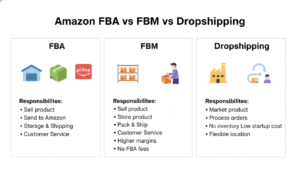
Fulfillment By Merchant (FBM)
This approach allows you to offer products on Amazon’s marketplace while managing all storage, shipping, and customer service yourself. While it gives you greater flexibility and higher profits (by avoiding specific FBA fees), it demands considerably more work and operational expertise.
Dropshipping
With this method, you list items for sale without maintaining inventories. When orders arrive, you purchase items from a third-party supplier who ships directly to customers. Although dropshipping on Amazon requires little initial investment, increasingly strict delivery times and product quality regulations have made it more challenging.
Hybrid Models
Many experienced sellers combine FBA and FBM tactics. They use each model’s features for specific goods or seasons, maximizing flexibility and profitability.
Why Shoppers Trust Fulfilled by Amazon
Amazon customers inherently trust the brand. When your item displays the Prime badge, it signals fast delivery, reliable service, and effortless returns. Importantly, that badge only appears if your item is registered in FBA. This step increases your product visibility on Amazon and boosts conversion rates, especially when competing with other sellers.
Consider this scenario: two identical items appear in search results. One is fulfilled by a random seller. The other ships with Prime, is fulfilled by Amazon, and includes 24/7 support. Most customers will choose the second option without hesitation.
Amazon FBA Explained in Simple Terms
Think of FBA as renting Amazon’s infrastructure. You’re employing their warehouses, using their delivery systems, and tapping their customer support. This allows you to control a vast e-commerce empire, even if you’re working from home with just a laptop. What’s better? You don’t need to start big. Amazon FBA sellers often begin with just a few hundred dollars’ worth of stock and build their business over time.
By understanding how Amazon FBA works, you can start building a business that runs nearly independently. It’s efficient, consistent, and designed for growth on Amazon.
Now that you understand Amazon FBA and its behind-the-scenes operations, let’s explore why 2025 is the perfect year to start and how to build your own FBA store from scratch.
Why Amazon FBA for Beginners 2025: Start Selling on Amazon
If you’re wondering whether Amazon FBA will still be worth it in 2025, the answer is a resounding yes. Despite new e-commerce trends and rising alternative platforms, Amazon FBA passive income opportunities in 2025 remain one of the simplest and most scalable ways to start selling online.
Let’s review the benefits of Amazon FBA and the realities of choosing it today.
The Biggest Amazon FBA Benefits in 2025
Faster Shipping Leads to More Sales
When Amazon fulfills your product, it becomes eligible for Prime shipping. The Prime stamp of approval is more than just a certification; it tells millions of shoppers your product qualifies for two-day shipping. Consequently, this can send your conversion rate on Amazon soaring. In fact, Amazon discovered that Prime-eligible products experience as much as a 30 percent increase in sales.
No Warehouse? No Problem
With Fulfillment by Amazon, you don’t need your own warehouse or storage space. Instead, Amazon stores your inventory in its massive network of fulfillment centers. As a result, you can focus on sourcing products and growing your brand on Amazon while Amazon handles the physical side of the business.
Access to Amazon’s Massive Customer Base
More than 2.5 billion people visit Amazon every month. When you sell through FBA, you’re not building traffic from scratch; you’re tapping into an audience that’s already there, actively searching, and ready to buy. This existing customer base gives you an enormous advantage over starting your own independent e-commerce site.
Hands-Off Customer Service
One of the best things about FBA is that Amazon provides customer service for orders it ships. This includes handling questions, refunds, and returns. If you want more of a passive income stream, this represents a huge advantage for Amazon seller tips.
Global Selling Made Easy
Through Amazon Global Selling, you can use FBA to reach international customers without needing multiple stores. Amazon handles international shipping, making it much easier to build your brand worldwide.
But Is There a Catch?
No business model is ever perfect. While Amazon FBA in 2025 remains a sound idea, there are a few things you should know beforehand.
There Are Fees
Amazon charges for storage, fulfillment, and referrals. If your inventory sits too long, long-term storage fees may apply. Therefore, managing your stock carefully is vital to keep costs down. That said, many FBA sellers report profit margins between 15 and 30 percent, even after all fees are paid. Learn more about Amazon FBA fees.
Strict Rules to Follow
Amazon maintains tight policies. If you violate their terms, your account could be suspended. Staying updated with Amazon seller guidelines is essential. You must package products correctly and deliver precisely what’s promised in your listings. On Amazon, reputation is everything.
You Need to Research Your Niche
Simply choosing a random product won’t work. You need to select a product with proven demand that isn’t dominated by big brands. Product research tools like Helium 10 or Jungle Scout can help you avoid saturated or low-margin niches.
Choosing the Right Products to Sell on Amazon FBA
Selecting appropriate products is one of the most vital aspects of your Amazon FBA experience. Your store’s success starts with innovative Amazon FBA product research. Selling a product just because you like it isn’t enough; you need to identify products that people are actively searching for and ready to purchase. In this section, we’ll show you how to find profitable products for Amazon FBA using beginner-friendly strategies and tools that professionals rely on.
Why Product Research Matters
You could have the best branding, pricing, and marketing strategy. However, if your product doesn’t solve a problem or meet a demand, it won’t sell. Amazon FBA for beginners becomes much easier when you let data guide your choices.
With proper research, you can uncover low-competition FBA products that offer high margins and steady sales.
3 Best Amazon FBA Product Research Methods
1. Use Amazon FBA Tools
Modern software tools make it easy to analyze markets, keywords, and competitors. Two of the best options include:
Jungle Scout
This tool is excellent for those just starting. It helps you see monthly sales estimates, competition levels, and pricing trends. Additionally, it shows you product ideas based on what’s already working. Check out Jungle Scout for more information.
Helium 10
This option is perfect for advanced users. It features strong keyword research capabilities, reverse ASIN lookup, and detailed analytics. It helps you dig deeper into Amazon FBA product research and monitor your competitors. Learn more at Helium 10.
Pro Tip: Most sellers use both tools to compare data and improve decision-making.
2. Check the Amazon Best Sellers List
This free method is a goldmine of information. Amazon updates its Best Sellers list every hour. By browsing these lists by category, you can see what’s trending now and gain clues about customer demand.
3. Study What Customers Want
Look closely at customer reviews and Q&A sections on listings. You’ll discover what buyers love or hate, giving you a chance to improve on current options. This insight proves especially helpful if you’re launching a private label brand.
What Makes a Product Ideal for Amazon FBA?
Use these guidelines to filter potential products:
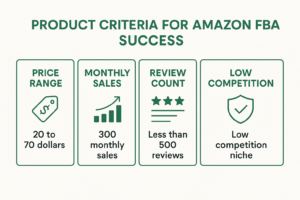
Price: Choose items between $20 and $70. Products in this range often have healthy profit margins and lower return rates.
Monthly Sales: Aim for products that sell at least 300 units per month. This proves steady demand exists.
Reviews: Focus on products with fewer than 500 reviews. These are easier to compete with, particularly for beginners.
Avoid products with very high reviews and saturated markets unless you can strongly differentiate your offering.
Products to Avoid
While selling trendy items might seem tempting, avoid these common traps:
Electronics
These often have high return rates, technical issues, and more negative reviews.
Heavy or Bulky Products
These result in high shipping and storage costs, which eat into profits significantly.
Best Niches for Beginners
If you’re just starting, focus on evergreen niches. These categories consistently have high demand and are typically simple to initiate:
- Home organization products
- Fitness accessories
- Pet supplies
- Kitchen tools
- Office and school supplies
These categories usually have stable sales, simple products, and strong private label potential.
By using the right tools and following clear criteria, Amazon FBA product research becomes a data-driven process rather than a guessing game. Take your time, test different niches, and build a list of potential winning products.
Finding Reliable Suppliers
When it comes to sourcing products, many Amazon FBA sellers have two main choices: international suppliers, such as those on Alibaba, or domestic suppliers in their country.
Source from Alibaba
Alibaba connects buyers to thousands of manufacturers around the world. It’s one of the most trusted places for private label suppliers to conduct business. When using Alibaba to find items for Amazon FBA, look for sellers who offer a trade guarantee. This protects buyers in case something goes wrong with the order. Additionally, ensure you only work with verified sellers; these companies have completed Alibaba’s verification process and are trusted.
A good rule of thumb is to contact multiple suppliers before making a choice. Compare their prices and production times, then negotiate to get the best deal.
Consider Local Suppliers
New sellers often overlook local suppliers, but they can prove very beneficial. Working with local manufacturers or suppliers can improve communication, reduce shipping delays, and speed up turnaround time. If you’re living in the US, you can find trusted US sources for your Amazon FBA business using sites like ThomasNet or attending local trade shows.
Order Samples First
Before placing a large order, always request product samples. Inspect the quality of the goods, packaging standards, and expected delivery time. This simple step can help you avoid costly mistakes when purchasing and ensure your Amazon FBA product meets customer expectations.
How to Ship to Amazon FBA Warehouses
Once your stock is ready, it needs to be sent to an Amazon FBA center. Here’s how to follow the process used by Amazon FBA.
Step 1: Create Your Shipping Plan
Log in to your Amazon Seller Central account. From the inventory menu, choose the items you wish to ship and create a new FBA shipping plan. On this page, you’ll enter the quantity of units, packaging type, and Amazon FBA warehouse location.
Step 2: Label Each Unit
Each product must have an FNSKU, a unique Amazon barcode. This helps Amazon track your inventory effectively. You can either print FNSKU labels yourself or pay Amazon a small fee per unit to handle it.
Step 3: Choose a Shipping Method
You have two primary options for delivering your products to Amazon:
SPD (Small Parcel Delivery): Best for small shipments sent through couriers like UPS.
LTL (Less Than Truckload): More cost-effective for bulk orders shipped on pallets.
Each method has specific packaging requirements, so make sure you follow Amazon’s FBA prep rules carefully.
Important Notes
- Keep all invoices and communication with your supplier in case Amazon needs verification
- Track your shipment and confirm when it reaches the warehouse
- If importing goods from another country, be sure to verify customs regulations and applicable duties
By taking time to source the right products and follow Amazon’s shipping steps, you set yourself up for success. Initially, this aspect may appear complex, but after a few attempts, it becomes straightforward.
Growing Your Amazon FBA Business: Advanced Strategies for 2025
Once your Amazon FBA for Beginners 2025 company is operational, growth becomes the next priority. However, development requires thoughtful execution, clever strategies, and precise tools, it cannot happen by chance. Amazon’s platform is more dynamic than ever in 2025, so sellers must surpass expectations. These advanced techniques will enable you to scale effectively and sustainably, regardless of your experience level.
1. Automate Your FBA Business for Maximum Efficiency
Time is your most precious asset. The key to gaining more of it lies in automation. By automating routine tasks, you can concentrate your efforts on expansion, Amazon product research, and strategic decision-making.
Repricing Tools
Start by utilizing repricing tools such as Sellerise to maintain competitive prices around the clock. These tools dynamically adjust your pricing and monitor competitors in real-time. As a result, they help you win the Buy Box without requiring manual intervention.
Inventory Management Software
Combine pricing tools with inventory management software like RestockPro. It tracks stock levels, forecasts when to place new orders, and helps prevent both stockouts and overstock situations.
Customer Service Automation
Automation tools like FeedbackFive allow you to send follow-up emails and request reviews automatically. Furthermore, you can use chatbots or customizable templates to answer simple customer service questions. These minor improvements lessen your workload while enhancing the client experience.
2. Expand Into Amazon’s Global Marketplaces
Thinking globally is now necessary, not optional. The global marketplaces operated by Amazon offer countless opportunities for expansion. By expanding into new regions, you can reach untapped consumer bases with distinctive buying habits.
Amazon Europe
Investigate Amazon Europe first, making notes of key markets like the UK, Germany, and France. These regions typically have less competitive niches and offer larger profit margins.
Global Selling Program
Amazon’s Global Selling Program makes the entire expansion process easier. It handles everything from shipping to tax compliance. Additionally, you can use Amazon NARF (North American Remote Fulfillment), which allows you to process sales from your U.S. store and ship to Canada and Mexico.
International growth provides your business with multiple revenue streams and reduces dependence on a single market. This makes your business more resilient. Consider enrolling in an Amazon FBA course to better understand international strategies.
3. Diversify Your Product Line with Strategy
Adding random products to your store isn’t the same as strategic diversification. Thoughtful product expansion improves brand trust and raises average order values.
Product Bundling
Consider grouping related products. For example, if your niche is fitness, pair a yoga mat with a water bottle or resistance bands. Customers receive better value from these FBA product bundles, which frequently result in higher conversion rates.
Subscription Boxes
Look into subscription boxes to generate recurring revenue. Whether it’s wellness products, cosmetics, or pet supplies, thoughtfully curated boxes make customers want to return each month.
Complementary Products
Find complementary Amazon private label products as well. If you sell phone cases, adding charging cables or screen protectors makes sense. Your next launch should be guided by the product reviews and feedback you currently receive from customers.
4. Drive External Traffic to Your Amazon Listings
Amazon recognizes listings that consistently generate traffic and conversions from sources beyond its platform. In 2025, one of the most effective strategies to increase your product’s visibility and sales velocity involves using external traffic sources.
Social Media Advertising
Use ads on Instagram and Facebook specifically designed to drive people to your Amazon listings. These platforms let you target your audience very precisely. Consequently, they help you find customers who are likely to buy.
Email Marketing
Hold giveaways and use contest tools like GiveawayTools to build an email list. While email marketing isn’t native to Amazon, owning your audience gives you control over launches, promotions, and reviews.
Influencer Partnerships
Collaborate with niche micro-influencers. These creators’ audiences are frequently genuinely interested and trust their recommendations. A simple shout-out can result in a significant increase in both traffic and reviews. You can also reference strategies from a reliable Amazon FBA tutorial to learn how others drive traffic effectively.
5. Optimize Your Listings for the Amazon A10 Algorithm
Success on Amazon requires understanding how its algorithm works. The A10 algorithm prioritizes listings with high conversion rates and strong customer engagement.
Focus on Conversion Rates
Make an effort to increase your conversion rates significantly. Aim for a conversion rate above 10% and a CTR above 0.5%. Use captivating product descriptions, educational bullet points, and excellent photos. Focus on benefits rather than features, and address customers’ concerns directly.
Backend Keywords
Don’t forget your backend keywords. Update these hidden gems frequently with high-performing search terms because they’re essential for organic ranking.
Amazon Posts
Make use of Amazon Posts, a free tool in Seller Central. It lets you share lifestyle photos, branding content, and captions centered around your products. It works similarly to a mini social media feed and increases brand awareness in your niche.
To truly master how to start selling on Amazon at scale, focus on optimization, branding, and leveraging all available tools on the platform in 2025.
5 Common Mistakes to Avoid When Setting Up Your Amazon FBA Account
Many newcomers fall into traps that may cost money, time, or even their entire Amazon account. Even with the best intentions, these mistakes happen frequently. Knowing the most common pitfalls will enable you to stay ahead and achieve success on your Amazon FBA journey.
1. Skipping Product Research During Amazon FBA Account Setup
One of the biggest mistakes new sellers make is jumping into a product without adequate research. Just because an item appears popular doesn’t mean it will sell well for you. Failure to employ tools like Jungle Scout or Helium 10 may result in unsalable merchandise. Sound Amazon FBA product research forms the foundation of every successful store.
2. Ignoring Amazon Fees While Setting Up Your Amazon FBA Account
Many sellers have no idea how much their profits are reduced by Amazon’s fees. Referral fees, fulfillment fees, and storage costs quickly add up. Before placing an order, use the FBA Revenue Calculator to determine your actual profit margins.
3. Poor Listing Optimization for Amazon FBA
A poor product listing with subpar photos or unclear descriptions leads to low conversions. This means advertising will cost more and produce fewer sales. To create an appealing listing, use strong keywords, attention-grabbing bullet points, and high-quality photos.
4. Ignoring Amazon FBA Inventory Management
When a best-selling product runs out of stock, it’s more than just a missed opportunity. Your momentum and rankings may suffer as a result. Always monitor your stock closely and restock ahead of time using the tools or alerts provided by Amazon Seller Central.
5. Violating Amazon Policies
Amazon has many rules. Breaking them, even accidentally, may result in account suspension. Read all selling policies carefully and follow them consistently. Knowing how to prevent FBA suspension is as important as knowing how to sell.
Building a solid and successful Amazon business requires avoiding these mistakes. Remain well-informed, stay compliant, and never stop learning.
Final Thoughts: Is Amazon FBA Worth It in 2025?
Is Amazon FBA still worthwhile in 2025? Absolutely, but only if you’re prepared to handle it like official business. The era of quick money and overnight success is over. Today, Amazon FBA for Beginners 2025 strategies require consistency, a solid plan, and hard work, much like any comprehensive Amazon FBA course would teach you.
The Opportunity Remains Huge
The good news is that tremendous opportunities still exist. Start selling on Amazon through Fulfillment by Amazon, which provides sellers with a chance to expand globally due to its millions of daily shoppers. However, it isn’t passive income. You must continue to reinvest profits, track performance through Amazon product research, and verify demand. Understanding Amazon FBA fees and profit margins is crucial for sustainable growth. Nevertheless, for those who put in the time and effort to learn and test, the rewards are worthwhile. Whether you’re exploring Amazon private label opportunities or following an Amazon FBA tutorial, the path to success is clear.
Ready to Start Your FBA Journey?
Create your Amazon Seller Account today and take the first step toward building your brand. Check out our complete setup guide to get started.
Amazon FBA for Beginners 2025: Frequently Asked Questions
Can I do Amazon FBA as a complete beginner with no experience?
Absolutely! Amazon FBA for Beginners 2025 is designed to be accessible for newcomers. You need neither technical knowledge, prior e-commerce experience, nor large startup funds. Amazon manages returns, customer service, and fulfillment, freeing you to concentrate on product selection and marketing. Many successful sellers began with zero experience by continually learning and applying tested techniques.
In 2025, how much money do I need to set up an FBA business on Amazon?
You can launch an Amazon FBA business with as little as $1,000 to $3,000. However, if you want to see long-term growth, you should aim for $5,000 to $10,000. This includes the cost of your initial stock ($500 to $2,000), Amazon FBA fees ($39.99/month for the Professional plan), product samples ($100 to $300), and basic tools. Many successful Amazon FBA sellers suggest starting with a single item and reinvesting the revenue to progress slowly.
On Amazon FBA, how can I identify profitable items to market?
Effective Amazon product research means identifying items with strong demand but controlled competition. Search for products that sell 300+ units monthly, fall between $15 and $50, and have fewer than 100 reviews from top competitors. Examine sales data, keyword search volume, and profit margins using tools including Jungle Scout, Helium 10, or AMZScout. When first starting, avoid oversaturated categories and seasonal products. Read our product research guide for more details.
How long does it take to start making money with Amazon FBA?
Although significant profits usually take 3-6 months to materialize, most new Amazon FBA sellers see their first sales within 2-4 weeks of launch. This timeline includes product research (2-4 weeks), goods sourcing and shipping (4-8 weeks), and progress building through reviews and rankings. Sellers who reinvest early profits often show significant increases from months 6 to 12.
For Amazon FBA, should I use retail arbitrage or private label?
Generally, long-term success in 2025 calls for Amazon’s private label approach. While retail arbitrage offers faster entry, private label provides better revenue margins (25-40% vs. 10-20%), brand control, and scalability. Under a private label model, you source generic goods and add your branding to build a sustainable company with greater competitive barriers.
