
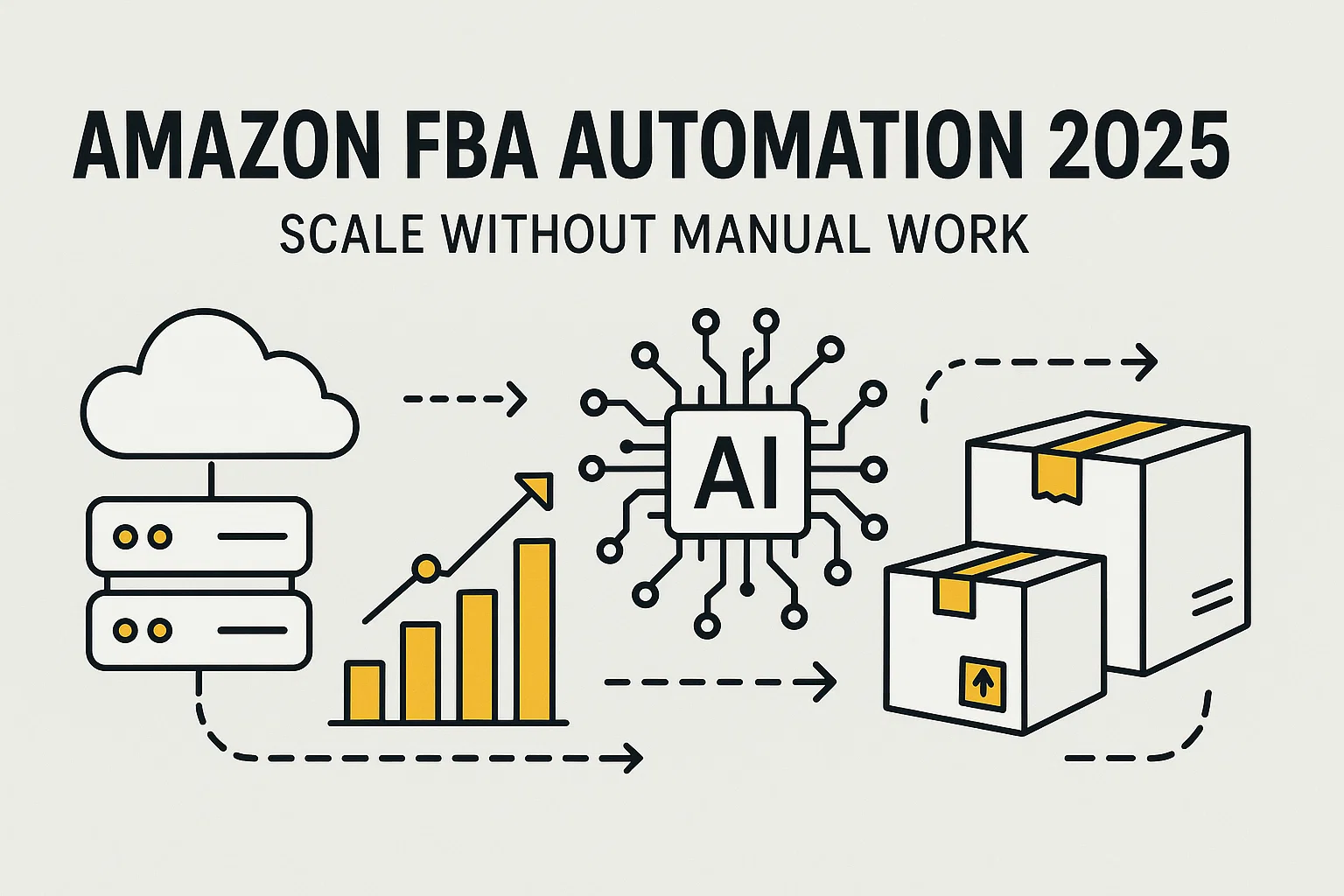
Setting up an e-commerce business in 2025 requires Amazon FBA automation to stay competitive, since simply listing products and waiting for sales is no longer enough. To remain competitive, sellers must leverage Amazon FBA automation and the right Amazon seller tools to automate repetitive tasks. Studies from Statista show that sellers using FBA automation software save nearly 40% of their time and often experience growth of over 25% each year. That is the power of moving away from outdated, manual methods and embracing automated e-commerce scaling.
Think about it this way. Running an Amazon FBA business without automation is like managing a packed restaurant kitchen with only a notebook and your memory. You might get by for a while, but as orders pile up and customers demand more, things start to fall apart. This is exactly why successful sellers invest in Amazon automation solutions. They know it is not just about making tasks easier; it is about creating systems that silently work in the background. These systems manage inventory, adjust pricing, and streamline customer service, allowing sellers to focus on growth instead of being bogged down by small details.
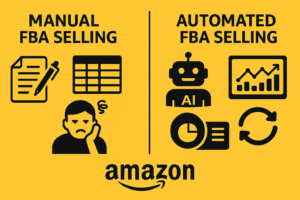
That is where this guide comes in. This comprehensive resource guides you through the most effective FBA automation strategies for automating your store. From the best Amazon automation tools to mindset shifts that separate six-figure sellers from those still stuck in manual processes, you will find everything needed to start scaling smarter, not harder.
Ready to get started? Discover our comprehensive FBA automation services and learn how we help sellers scale efficiently. Ready to explore all our automation solutions? Visit our services page to see how we can transform your e-commerce business.
What is Amazon FBA Automation and Why It Matters
Amazon FBA automation is about implementing innovative systems to automate repetitive tasks in your store, enabling them to run on autopilot. Instead of manually checking stock or adjusting prices all day, you can rely on FBA automation software and structured processes to handle tasks that eat up your time. This includes automated inventory tracking, dynamic repricing tools, automated customer care responses, and even marketing campaigns that run based on performance data rather than guesswork.
The truth is, Amazon’s marketplace is far more advanced than it was even a few years ago. Sellers who still manage everything manually are at a significant disadvantage compared to those who use Amazon automation tools that respond in real time. Automated systems can adjust pricing based on competitor behavior, track inventory around the clock, and place supplier orders automatically. In contrast, manual sellers often lag and miss opportunities because they cannot keep up with the market pace.
For example, a traditional seller might check inventory once a day and adjust pricing as time allows. However, a seller running advanced FBA software can scan inventory every hour, adjust pricing every 15 minutes to stay competitive, and reorder products automatically when levels drop below a set threshold. This difference directly impacts both efficiency and profitability. It explains why sellers who embrace hands-free eCommerce scaling with automation often grow faster and operate with less stress.
To put it into perspective, you can explore solutions such as SoStocked for inventory forecasting and RepricerExpress for dynamic pricing. These are just two examples of tools that make Amazon FBA automation not only practical but necessary in 2025.
Core Areas Where Amazon FBA Automation Drives Results
Smart Inventory Management
One of the most significant advantages of Amazon FBA automation is the ability to manage inventory more efficiently. Poor stock control is a silent profit killer, and research from Jungle Scout reveals that sellers worldwide lose nearly $1.1 trillion annually due to inadequate inventory planning. That number highlights the critical importance of moving beyond spreadsheets and manual tracking.
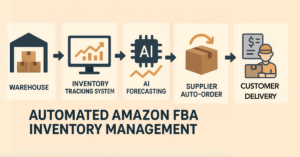
With automated inventory management systems, sellers can track stock levels in real time, forecast future demand using historical data, and even set automatic reorder points. Tools like SoStocked specialize in demand forecasting for Amazon sellers, helping prevent both costly stockouts and overstock that ties up cash flow. These platforms can connect directly to Amazon’s API, supplier networks, and even logistics providers, creating a seamless workflow that keeps products moving without constant manual oversight.
When inventory automation is done right, sellers rarely face the panic of going out of stock during peak demand or dealing with warehouses full of unsold products. Instead, they achieve balance, steady supply, lower holding costs, and consistent sales growth. For sellers looking to scale in 2025, efficient stock level optimization through Amazon automation tools is no longer optional; it is the foundation of long-term success.
Dynamic Pricing Optimization
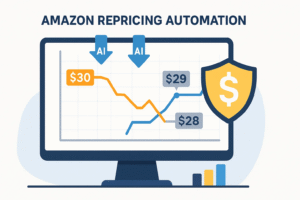
Pricing has always been one of the most challenging aspects of running an Amazon FBA business, and how sellers approach it has changed significantly. In the early days, repricing tools were built to match competitor prices. But in 2025, advanced Amazon repricing automation software goes far beyond that. These systems factor in competitor pricing, your inventory levels, sales velocity, profit margins, and seasonal demand to create strategies that maximize profit rather than just chase the lowest price.
The best FBA repricing tools, such as Aura or RepricerExpress, can adjust prices dozens of times per day, ensuring your products remain competitive without sacrificing margins. In fact, automated repricing often reacts faster than any human could. For instance, if a competitor suddenly runs out of stock, an automated system can raise your prices within minutes to capture maximum profit while still winning the Buy Box. This kind of competitive intelligence automation gives sellers an edge that manual repricing cannot match.
Customer Service Automation
Customer support is another area where manual effort can quickly consume your entire day. For some Amazon sellers, it can mean 6 to 8 hours spent just answering routine questions, processing refunds, or dealing with repetitive feedback. That is where automated customer service tools for Amazon come into play.
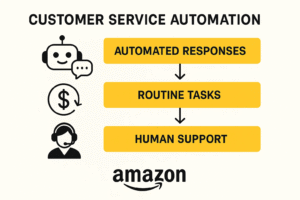
With the proper setup, you can automate responses to common buyer inquiries, process returns, and manage feedback automatically. Tools like Zendesk and Amazon’s messaging automation features enable you to create templates that align with your brand voice and handle most customer interactions. More complex issues can be flagged and routed to a human agent, so you spend time only where it is genuinely needed.
The result is a smoother customer experience, faster response times, and more hours back in your day to focus on growing your store. In 2025, customer service automation for Amazon sellers is not just about saving time; it is about maintaining high standards at scale.
Essential Amazon Automation Tools for 2025
The right tools make the difference between working harder and scaling smarter. In 2025, sellers rely on a range of Amazon automation tools to handle everything from inventory and pricing to advertising and customer engagement. Let’s look at the categories that deliver the most significant impact.
Inventory and Supply Chain Tools
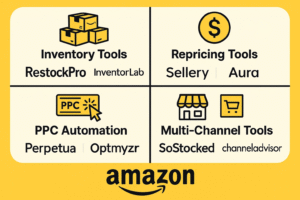
Staying on top of stock levels is one of the most challenging aspects of running an Amazon FBA business, and this is precisely where automation excels. Platforms like RestockPro and InventoryLab have become go-to solutions for managing stock with predictive analytics. These tools connect directly to Amazon’s systems, track your sales history, and automatically generate purchase orders when inventory runs low.
For sellers managing multiple marketplaces, tools like SoStocked are especially powerful. They allow you to manage inventory across Amazon, Walmart, eBay, and even Shopify, making multi-channel automation seamless. With the right setup, you avoid the two biggest inventory headaches: running out of stock and tying up cash in excess products.
Repricing and Competition Analysis
Pricing has a direct impact on your ability to win the Buy Box, and this is where Amazon repricing automation software takes center stage. Longstanding tools like Sellery and RepricerExpress remain strong choices, while newer players like Aura and BQool are quickly gaining traction thanks to advanced algorithms.
The best repricing tools utilize machine learning to analyze market behavior and adjust prices in a way that protects your margins while maintaining competitiveness. Premium options take it a step further by factoring in storage fees, referral costs, and profit targets, ensuring that every adjustment supports long-term growth. Sellers who use these intelligent repricing systems often see faster turnover and steadier profits without spending hours glued to spreadsheets.
Need expert help? Ready to implement these automation strategies? Contact our team for personalized guidance on setting up your automation systems.
Marketing and Advertising Automation
Advertising is another area where automation is transforming performance. Tools like Perpetua and Optmyzr use AI-driven strategies to optimize Amazon PPC campaigns. They can automatically raise or lower bids, pause underperforming keywords, and even build new ad groups from search term data.
What makes these platforms so valuable is scale. An automated PPC system can make hundreds of adjustments per day, a task that no human manager could realistically keep up with. The result is usually a stronger ACoS (Advertising Cost of Sales), better ad visibility, and higher profit per advertising dollar.
If you are looking to streamline your growth in 2025, adopting these Amazon FBA automation tools is not optional. They are essential to keeping your store competitive, profitable, and ready to scale without adding extra hours to your workload.
Building Your Amazon Automation Strategy
Start with High-Impact, Low-Risk Areas
One of the biggest mistakes sellers make is trying to automate everything at once. While it feels efficient, it often leads to confusion and avoidable errors. A smarter approach is to start with areas that yield fast, measurable benefits while carrying minimal risk.
Repricing is usually the easiest win. By setting up guardrails within your repricing automation software, you can ensure prices never climb too high or drop too low, while still taking advantage of market opportunities. This gives you immediate control while still protecting your brand reputation.
Another low-risk area is stock management. With the right Amazon FBA automation platforms, results show up quickly. Many sellers notice fewer stockouts and improved cash flow within the very first month of using automated inventory tools. It is one of those changes where the benefits are visible almost immediately.
Gradual Implementation Approach
Sellers often underestimate the value of pacing. Instead of flipping every automation switch at once, focus on adding tools one step at a time. Each area you automate should have a clear reason behind it and a defined outcome you want to see.
For example, after inventory and pricing, the next logical move could be customer service automation. By rolling out email templates, auto-replies, and refund workflows gradually, you reduce the chances of errors while still freeing up hours of your time. Taking this slower, more deliberate path keeps your operations stable while your automation systems grow stronger.
Integration and Workflow Design
The real power of Amazon FBA automation shows up when tools start working together. Think of it as building a connected system, rather than just plugging in separate apps. For example, your repricing software should pull data from your inventory management system. This prevents unwanted price spikes when stock levels get too low. Similarly, your automated customer service setup should be linked to your inventory, allowing it to provide shoppers with accurate delivery estimates.
Most modern automation platforms include API connectors, which enable your tools to share data in real-time. This seamless integration enables your systems to trigger actions automatically, whether that involves adjusting prices, updating product availability, or sending customer notifications. When your workflow is designed with these connections in mind, automation becomes not just convenient but reliable and scalable.
Advanced Amazon FBA Automation Strategies
Multi-Channel Inventory Synchronization
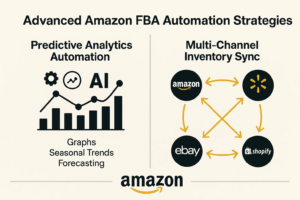
For sellers managing multiple storefronts, keeping inventory aligned is one of the most challenging tasks. The most effective way to solve this is by utilizing Amazon automation strategies that update stock counts in real-time across all channels. With multi-channel automation in place, a sale on Amazon instantly reduces the available quantity on your Walmart, eBay, or Shopify listings. This prevents overselling and ensures accurate product availability everywhere you sell.
Tools such as ChannelAdvisor and Sellbrite go beyond simple synchronization. They automate pricing, order routing, and fulfillment across your connected platforms, minimizing fulfillment errors and improving customer satisfaction. For sellers serious about scaling, multi-channel inventory synchronization is no longer optional; it is essential for maintaining consistent operations across all platforms.
Predictive Analytics for Demand Planning
The latest Amazon FBA automation software has moved far past simple stock tracking. Today’s systems use predictive analytics to forecast demand with remarkable precision. These tools factor in seasonality, consumer trends, competitor moves, and external influences such as weather or economic shifts.
By running this level of demand forecasting for Amazon FBA automation, sellers can avoid costly stockouts during high-demand seasons while also preventing excess stock from piling up during slower months. Advanced platforms can automatically adjust reorder thresholds, recommend new advertising budgets, and even highlight opportunities for fresh product launches based on real-time market signals. Predictive automation is still evolving, but it is quickly becoming the future of eCommerce automation for Amazon sellers.
Automated Competitive Intelligence
Keeping an eye on your competitors at scale is nearly impossible without the right tools. That is why many sellers are now turning to automated competitive intelligence systems. These platforms track competitor pricing, monitor their stock levels, and even flag new product releases as they hit the market.
The best solutions do more than report changes; they can also automate responses. For instance, when a competitor runs out of stock, your system can increase ad spend to capture more sales, or when a competitor sets a promotional price, your repricing tool can react instantly to maintain your market position. In competitive niches, this type of automation provides a real edge that manual monitoring simply cannot deliver.
Common Automation Pitfalls and How to Avoid Them
Over-Automation Without Human Oversight
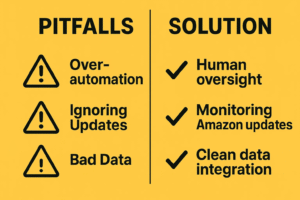
Amazon is always evolving. Updates to policies, algorithms, and seller requirements often appear with little notice in Amazon Seller Central. A process that worked smoothly last month may suddenly perform poorly if rules have changed. This is why sellers must stay alert. Setting up alerts, checking notifications, and making periodic adjustments ensures your automation tools remain compliant and effective as Amazon evolves.
Ignoring Platform Changes
Amazon continually updates its rules, algorithms, and processes, as reported by Amazon Seller Central. Last month, automated processes worked well, but they may not perform as well now due to changes to the platform or new terms of service. To keep smart automation tools working effectively, it is essential to monitor them and make adjustments regularly.
Set up alerts and regularly check Amazon’s seller notifications to ensure your automation solutions remain compliant and function effectively as the platform evolves.
Poor Data Quality and System Integration
Even the most advanced intelligent FBA systems are only as strong as the data they rely on. If product details are wrong, if cost estimates are inaccurate, or if your tools are not integrated correctly, your automation will make harmful decisions. Before scaling up, sellers should clean their datasets, double-check all cost inputs, and test system connections. Smooth system integration is crucial because automation built on weak data will consistently yield subpar results.
Measuring Success and ROI of Your Automation
Key Performance Indicators to Track
Amazon FBA automation is designed to help your business grow, save time, and generate higher profits in ways that are measurable. To understand whether automation is delivering real value, sellers should track a set of clear performance indicators. Important metrics include the time it takes to complete routine tasks, the frequency of inventory turnover, the effectiveness of price optimization, and the average response time for customer service. These operational metrics show you how much time automation is saving compared to manual work.
Financial performance is just as important. Sellers should monitor profit margins, cash flow, and overall revenue growth to ensure automation is strengthening the bottom line. Industry benchmarks from Helium 10 indicate that most sellers experience a positive return on investment within 3 to 6 months after implementing full Amazon FBA automation solutions. For many, the combination of faster workflows and stronger financials is what confirms the value of automation.
Continuous Optimization and Improvement
Amazon seller automation is not a one-time fix. It should never be treated as a set-it-and-forget-it system. The most successful sellers are those who continuously refine their automation processes as markets shift and consumer behavior changes.
Regular reviews are essential. By monitoring system performance, adjusting your automation settings, and refining strategies over time, you ensure that automation continues to support your business rather than hinder it. Amazon automation strategies should evolve as your firm grows, making your systems more resilient and adaptable with every cycle of improvement.
Ready to scale? Transform your Amazon business with our specialized Amazon FBA automation services designed for sellers ready to scale efficiently. Whether you’re just starting or looking to optimize existing operations, our expert team can help you implement the right automation strategies to achieve your business goals.
Conclusion: Your Next Steps Toward Automated Success
By 2025, sellers seeking genuine growth will need Amazon FBA automation in place. The automation tools, strategies, and systems we covered here are not theories. They are the same proven methods that successful sellers already use to increase revenue and reduce repetitive tasks through hands-free FBA scaling.
The most effective way to start is straightforward. Select one or two areas, such as inventory management or pricing optimization, and become familiar with those tools first. Once you see results, you can expand into more advanced automation. Just remember that automation should strengthen your business instincts, not replace them.
Sellers who take action now will have a noticeable advantage over competitors who continue working manually. While others spend hours on repetitive tasks, your systems will run quietly in the background, optimizing performance, identifying opportunities, and fueling consistent eCommerce growth.
The bottom line is this: the longer you wait, the more ground you lose. Each day without automation is another day your competitors move ahead. If you are serious about growth, now is the time to set up Amazon FBA automation and let your systems work for you.
Frequently Asked Questions
Q. How much does it cost to automate an Amazon FBA business?
Amazon FBA automation costs range from $200 to $1,000 per month for most sellers. The cost of Amazon FBA automation in 2025 typically depends on business size and the Amazon automation tools selected. The ROI usually justifies the investment within 90 days through time savings and improved performance.
Q. What’s the first automation tool Amazon sellers should implement?
Repricing automation should be the first tool implemented for Amazon sellers. Repricing automation should be the top priority for most Amazon sellers, as it delivers immediate, measurable results with minimal risk and requires little ongoing management once properly configured using the best FBA automation solutions available.
Q. Can small Amazon sellers benefit from automation, or is it only for large businesses?
Small Amazon sellers benefit significantly from automation and often experience greater improvements than larger businesses. Amazon FBA automation typically yields the largest percentage improvements for small sellers, as they usually have the most manual processes to optimize. Many smart automation platforms offer affordable plans specifically designed for small to medium-sized operations.
Q. How long does it take to see results from Amazon FBA automation?
Most sellers see results from Amazon FBA automation within two to four weeks. Most sellers notice improvements within 2-4 weeks of implementing effective automation systems, with full ROI typically realized within 90 days as systems optimize and streamline operations.
Q. Is it possible to over-automate an Amazon FBA business?
Yes, it is possible to over-automate an Amazon FBA business without proper oversight. Yes, over-automation without appropriate oversight can lead to missed opportunities and poor decision-making. The key is automating routine tasks while maintaining human control over strategic decisions and exception handling through intelligent business strategies.
