
Amazon FBA product sourcing is the key to success on Amazon. Over 9.7 million sellers operate on Amazon worldwide, with 2.3 million active sellers in the United States alone. However, here’s the shocking truth: only 13% of Amazon FBA firms generate six-figure revenues annually.
Even more startling, 87% of new sellers never reach $100,000 in revenue. Additionally, 63% abandon their FBA ventures within the first year.
So, what separates the struggling 87% from the profitable 13%? It’s not luck or perfect timing; it’s strategic product sourcing.
What Successful Sellers Do Differently
The data reveals clear patterns among top performers. First of all, they dedicate 40% of their time to sourcing and supplier research. Moreover, they maintain relationships with 3-5 different suppliers. As a result, they rotate inventory 8-12 times per year. Furthermore, they prioritize quality partnerships over the lowest prices.
Meanwhile, struggling sellers typically work with a single supplier. Consequently, they experience stockouts three times more frequently. In addition, they focus exclusively on finding the cheapest products rather than building sustainable supplier relationships.
Understanding Amazon FBA Product Sourcing Fundamentals
What Is Amazon FBA Product Sourcing?
Amazon FBA product sourcing involves identifying, negotiating with, and purchasing inventory from manufacturers or suppliers. Then, you send that inventory to Amazon’s fulfillment centers for storage and shipping.
Unlike dropshipping, where products ship directly from suppliers to customers, FBA sourcing gives you complete control. Specifically, you control customer satisfaction, inventory management, product quality, and brand presentation.
Key Insight: Recent industry studies show that sellers using strategic sourcing methods earn 35% more on average. This is compared to those relying on traditional retail arbitrage approaches. Learn more about Amazon FBA business models.
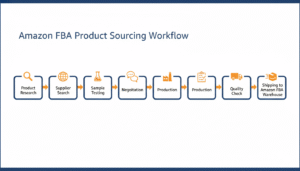
The Complete Amazon FBA Sourcing Process
1. Product Research
First, analyze market demand, competition levels, and profit potential. This foundational research identifies products that align with your business goals. Additionally, it reveals market opportunities.
2. Supplier Identification
Next, explore sourcing options including direct manufacturer outreach, trade shows, and online marketplaces like Alibaba. Alternatively, consider domestic wholesalers. Each method offers distinct advantages depending on your budget, timeline, and business model.
3. Supplier Vetting
After that, conduct thorough background checks and request product samples. Also, evaluate communication quality. This step establishes quality and reliability standards for future partnerships.
4. Negotiation
Then, discuss pricing, minimum order quantities (MOQs), payment terms, and delivery schedules. Successful negotiations determine your profitability. Moreover, they determine your competitive positioning.
5. Quality Assurance
Following negotiation, order samples and conduct inspections. This ensures products meet Amazon’s requirements. Furthermore, it ensures they meet customer expectations.
6. Fulfillment
Finally, ship inventory to Amazon fulfillment centers. Once received, products become available for Prime delivery.
Top Amazon FBA Sourcing Strategies
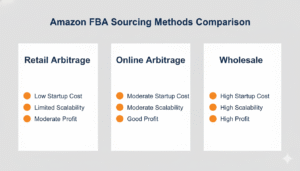
1. Retail Arbitrage
What It Is
Retail arbitrage means purchasing discounted products from retail stores. Then, you resell them on Amazon for profit.
Who It’s Best For
This strategy works best for new sellers with limited capital. It’s also ideal for those looking to learn the FBA system.
Key Advantages
First, retail arbitrage has a low barrier to entry. Second, it requires minimal startup costs. Third, it offers immediate cash flow potential. Finally, it provides a flexible schedule.
Main Challenges
However, retail arbitrage is time-intensive. Additionally, it’s difficult to scale. Moreover, there’s heavy competition. Also, it depends heavily on inventory availability.
Helpful Tools
To succeed with retail arbitrage, use tools like Scoutify, SellerAmp, or the Amazon Seller App. Learn more about retail arbitrage strategies.
2. Online Arbitrage
What It Is
Online arbitrage means sourcing discounted products from e-commerce websites. Instead of physical stores, you shop online.
Who It’s Best For
This method works for sellers who want arbitrage benefits. However, they don’t want geographic limitations.
Key Advantages
First, online arbitrage offers location independence. Second, it provides access to a broader inventory. Third, it requires lower time investment than retail arbitrage. Finally, it’s good for testing product categories.
Main Challenges
On the other hand, there’s high competition because many sellers use the same tools. Additionally, inventory availability is inconsistent. Furthermore, it requires constant price monitoring.
Helpful Tools
For online arbitrage, consider using OAXray, SourceMogul, or Tactical Arbitrage. These tools help automate product research.
3. Wholesale Sourcing
What It Is
Wholesale sourcing means purchasing established products in bulk. You buy from manufacturers or authorized distributors.
Who It’s Best For
This strategy suits sellers ready to invest capital. It’s perfect for those wanting a steady inventory supply and sustainable growth.
Key Advantages
First, wholesale sourcing offers predictable inventory management. Second, it provides higher profit margins than arbitrage. Third, you sell proven products with existing demand. Finally, it’s a scalable business model.
Main Challenges
However, wholesale sourcing requires high minimum order quantities. Additionally, it needs significant upfront capital. Furthermore, you face competition from other authorized resellers.
Getting Started
To begin wholesale sourcing, you’ll need a business license, tax ID number, and reseller’s certificate. Then, find suppliers at trade shows like the National Hardware Show or ASD Market Week. Alternatively, use online platforms like Faire or TopTenWholesale.
Success Metrics
Notably, sellers using wholesale sourcing strategies achieve 2.3x higher annual revenue. This is compared to those relying solely on arbitrage.
4. Private Label Product Sourcing
What It Is
Private label sourcing means working with manufacturers to create custom products. You sell these products under your own brand.
Who It’s Best For
This strategy works for sellers committed to building a long-term brand. It offers maximum profit potential.
Key Advantages
First, private labeling gives you complete control over branding, design, and packaging. Second, it provides the highest profit margins. Third, it protects against price competition. Fourth, it creates a scalable and defensible business asset. Finally, it offers an opportunity to build brand recognition beyond Amazon.
Main Challenges
However, private labeling requires the highest upfront investment. Additionally, it has longer lead times. Furthermore, you’re responsible for quality control. Also, there’s a higher risk of product failure.
Step-by-Step Process
To start private labeling, follow these steps:
- First, identify market gaps or opportunities
- Next, vet and select manufacturers
- Then, order and test samples
- After that, manage production and quality control
- Subsequently, create optimized product listings
- Finally, build brand presence through marketing
For more guidance, check out this private label guide.
5. Dropshipping for Amazon FBA
What It Is
Dropshipping means orders are fulfilled directly by suppliers. They ship to customers, which eliminates inventory holding.
Important Policy Note
However, Amazon has strict dropshipping policies. You must ensure invoices and packing slips display only your business name. They cannot show the supplier’s name.
Who It’s Best For
This method works for testing new products. It’s also useful for managing slow-moving or seasonal items alongside FBA inventory.
Key Advantages
First, dropshipping requires no inventory investment. Second, it has low financial risk. Third, it enables quick product testing.
Main Challenges
On the other hand, there are policy compliance risks. Additionally, potential delivery delays can occur. Moreover, you have limited quality control. Finally, there’s an account suspension risk.
Our Recommendation
Therefore, use dropshipping strategically as a complement to FBA. However, don’t make it your primary model. For more information, read Amazon’s dropshipping policy.
6. Print-on-Demand (POD)
What It Is
Print-on-demand means custom products are printed and shipped only after orders are placed. These products include t-shirts, mugs, and notebooks.
Who It’s Best For
This strategy works great for designers, artists, or entrepreneurs. Specifically, it targets niche markets with custom designs.
Key Advantages
First, POD requires zero inventory investment. Second, it allows unlimited product variations. Third, it has low startup risk. Finally, it offers creative freedom.
Main Challenges
However, there are higher per-unit production costs. Additionally, delivery times are longer. Furthermore, you depend on third-party fulfillment. Also, quality control can be limited.
Popular Platforms
For POD, consider using Printful, Printify, or Gooten. These platforms integrate seamlessly with Amazon.
7. Seasonal Product Sourcing
What it is: Focusing on products with predictable seasonal demand spikes.
Examples: Holiday decorations, summer outdoor gear, back-to-school supplies
Advantages:
- Predictable demand patterns
- Higher profit margins during peak seasons
- Less year-round competition
Challenges:
- Cash flow tied up in off-season inventory
- Storage costs during slow periods
- Risk of unsold inventory
Strategy tip: Combine seasonal products (10-20% of portfolio) with evergreen items (70-80%) for balanced revenue.
Emerging Sourcing Models
Crowdfunding Sourcing
Platforms like Kickstarter and Indiegogo allow you to validate demand before committing to production. Consequently, this reduces financial risk.
Subscription Boxes
Curated product collections provide recurring revenue. Moreover, they build customer loyalty around specific themes or niches.
Local Artisan Partnerships
Collaborate with local craftspeople or small manufacturers. As a result, you get unique, handmade inventory that differentiates your brand.
AI-Powered Sourcing
Advanced tools analyze market trends, supplier reliability, and profitability metrics. Therefore, they identify optimal sourcing opportunities.
Recent Trend
In 2023, over 10% of new e-commerce product launches used pre-order or crowdfunding strategies. This approach minimizes financial risk and gauges market interest. Learn more about crowdfunding for e-commerce.
How to Find Reliable Suppliers for Your Amazon FBA Business
Using Alibaba for Amazon FBA Product Sourcing
Alibaba remains the world’s largest B2B marketplace. Moreover, it’s where Amazon businesses get most of their supplies. However, to do well on Alibaba, you need to follow a strategic plan. Additionally, you must carefully evaluate suppliers and negotiate effectively.
Step 1: Search and Filter Effectively
First, use specific product keywords. Then, apply filters for minimum order quantities, Trade Assurance participation, supplier location, and certification status. Additionally, look for suppliers with a strong track record and positive reviews.
Step 2: Request for Quotations (RFQ)
Next, contact 8-12 suppliers with detailed product specifications. Include information about quantities and quality standards. As a result, professional RFQs typically yield better pricing and faster service.
Step 3: Negotiate Strategically
When negotiating, don’t focus solely on price. Instead, also discuss payment terms, quality standards, packaging requirements, and delivery timelines. Furthermore, building relationships often leads to better long-term pricing and priority service.
Step 4: Order Samples
Always request samples before placing bulk orders. Then, test samples from multiple suppliers for quality, materials, construction, and market fit.
Step 5: Verify Suppliers
Finally, request business licenses and use Alibaba’s verification services. Additionally, conduct video calls and consider third-party audits for large orders. For more guidance, visit Alibaba’s supplier verification guide.
Working with U.S.-Based and Local Suppliers
When you source products for Amazon FBA within the country, you get several benefits. First, you have greater quality control. Second, communication is faster. Third, shipping times are shorter. Finally, you help the local economy.
Platforms like Makers Row, ThomasNet, and industry-specific directories connect sellers with American manufacturers and suppliers.
Benefits of Domestic Sourcing
First, domestic sourcing offers faster delivery and shorter lead times. Second, you get better communication with the same time zones. Third, quality control and facility visits are easier. Fourth, import duties and customs complications are reduced. Fifth, you can use “Made in USA” branding. Finally, intellectual property protection is better.
Recommended Platforms
ThomasNet: This is a comprehensive directory of North American manufacturers.
Makers Row: This platform connects brands with American manufacturers.
Alibaba USA: Use this for a domestic supplier directory.
Global Sources: This focuses on verified suppliers and trade shows.
Industry-Specific Associations: These offer direct manufacturer relationships.
Important Considerations
However, manufacturing costs are higher compared to international suppliers. Additionally, product variety is limited in certain categories. Furthermore, MOQ requirements may be higher. Also, there are fewer suppliers for specialized products.
Quality Control in Amazon FBA Product Sourcing
Vetting and Verifying Product Manufacturers
To choose a good Amazon FBA supplier, you need to do thorough research. This research ensures the supplier is reliable and maintains quality. Additionally, it confirms they’re a legitimate business. As a result, this approach protects your investment and ensures consistent product quality.
Supplier Verification Checklist
First, verify the business license and registration. Then, check industry certifications and quality standards compliance. Next, review financial stability and credit references. After that, examine production capacity and quality control processes. Also, request previous client references and testimonials. Additionally, review facility photos and virtual tours. Finally, assess communication responsiveness and professionalism.
Factory Audits and Inspections
If you’re buying large volumes or making high-value purchases, consider using third-party inspection services. Companies like SGS, Bureau Veritas, and QIMA offer factory audits, pre-shipment inspections, and quality control services.
Verification Tools
Furthermore, use Alibaba’s supplier verification services. Also, employ third-party background check companies. Additionally, conduct government business registry searches. Moreover, verify industry association membership. Finally, use credit reporting and financial stability checks.
Essential Tools for Amazon FBA Product Research and Sourcing
Top Product Research Platforms
Jungle Scout
Jungle Scout is one of the most trusted tools in the Amazon FBA community. It offers real-time data to help you evaluate products. Specifically, it includes a Chrome extension and a full web app.
Key Features:
First, it provides sales estimates based on historical performance. Second, it offers competition analysis for market difficulty assessment. Third, it includes profitability calculators that account for FBA fees and shipping. Fourth, it has product tracking for sales trend analysis. Fifth, it provides keyword research tools. Finally, it includes a supplier database to identify manufacturers.
Recommended Research Process:
- First, install the Jungle Scout Chrome extension
- Next, browse Amazon categories or use the web app for discovery
- Then, analyze listings for monthly sales, reviews, and seller presence
- After that, calculate profit potential using estimated costs and Amazon fees
- Finally, track shortlisted products to identify stable or growing demand
Learn more at Jungle Scout.
Helium 10
A comprehensive suite of tools for Amazon sellers, covering everything from product discovery to listing optimization.
Key Tools for Research:
- Black Box: Filter product ideas by specific metrics
- X-Ray: Chrome extension for analyzing product demand
- Trends: Identify seasonal patterns and rising demand
Key Metrics to Evaluate:
- Monthly sales volume and total revenue estimates
- Number of sellers and overall market saturation
- Average price and expected profit margins
- Total reviews and average ratings
- Seasonal product fluctuations
- Keyword volume and search competition
Advanced Features:
- Keyword trend analysis
- Competitor monitoring
- Reverse ASIN lookup
Other Valuable Tools
AMZScout: Precise sales estimates, product tracking, detailed FBA fee calculations
Viral Launch: Keyword research, competition analysis, advanced trend forecasting
SellerApp: Product research, keyword analysis, PPC campaign management
MerchantWords: Keyword search volume specialization for buyer intent
Strategy tip: Use multiple tools to cross-reference data and reduce sourcing risk.
Spotting Trends and High-Demand Products
Finding profitable products requires more than static research. Sellers who identify emerging trends early gain significant competitive advantages.
Amazon Trend Analysis
Best Sellers Lists: Identify consistent top performers in each category
New Releases: Spot new products rapidly gaining traction
Movers and Shakers: Analyze products with recent sales ranking surges
Monitor these sections daily or weekly to identify products with upward momentum representing untapped opportunities.
External Trend Sources
Google Trends: Analyze product keyword search volume and seasonal patterns
Social Media: Monitor TikTok, Instagram Reels, and Pinterest for viral product ideas
Crowdfunding Platforms: Review Kickstarter and Indiegogo projects with high backer counts, indicating potential demand
Retail Websites: Track new product categories at Target, Walmart, and Costco
Industry Publications: Read niche trade journals for expert insights and market developments
Trend Evaluation Criteria
Not every trend is worthwhile. Therefore, to properly assess product trends, use these criteria:
Sustained Growth: Instead of brief viral spikes, aim for consistent growth over 3-6 months.
Market Depth: Make sure there are several related products in the niche. This encourages upselling or bundling.
Cross-Platform Validation: Verify trends on various platforms such as social media, Google, and Amazon.
Competition Level: Stay clear of markets that are already oversaturated. Fierce competition makes profitability difficult.
Profit Viability: Make sure that profit margins cover ongoing fulfillment and advertising expenses.
By adhering to these guidelines, sellers can focus on trends that offer robust demand. Additionally, they can avoid controlled competition.
Evaluating Product Profitability in Amazon FBA Sourcing
Calculating Amazon FBA Sourcing Costs and Margins
Impact on Profit Margins
Efficient sourcing directly increases profit margins. This happens through several methods. First, you reduce costs by eliminating middlemen. Second, you negotiate better wholesale prices directly with manufacturers. As a result, you can save 40-60% on costs instead of paying distributor markups.
By keeping supply chain expenses under control, sellers can increase marketing and advertising budgets. Meanwhile, they still maintain profit. Alternatively, they can keep healthy margins while remaining price competitive.
Lower product costs enable competitive pricing strategies. Notably, successful Amazon FBA sellers typically target gross margins of 35-50%. This accounts for advertising costs, returns, and market fluctuations.
Quality Control Benefits
One important advantage of controlled sourcing relationships is brand reputation protection. When you choose and oversee suppliers directly, you can set quality standards. Additionally, you can carry out inspections. Furthermore, you guarantee consistent product quality that improves brand reputation.
When products meet or surpass expectations, quality control greatly boosts customer satisfaction. Moreover, quality control is crucial for long-term platform success. This is because Amazon’s algorithm gives significant weight to customer reviews and return rates.
Better quality control reduces complaints and returns. Consequently, this improves seller metrics and lowers return processing expenses. Additionally, it increases customer lifetime value. Amazon sellers who regularly produce high-quality goods enjoy better search visibility. Furthermore, they get improved Buy Box placement.
Scalability Advantages
As sourcing relationships develop and order quantities increase, volume discounts become accessible. Suppliers usually provide better pricing for larger, regular orders. Therefore, this increases margins as sellers grow.
Consistent supply chain relationships enable better forecasting accuracy. Additionally, they reduce stockout risks. Furthermore, they allow predictable inventory replenishment. Reputable vendors who understand delivery specifications and quality standards make excellent business partners.
Establishing sourcing relationships that can manage growing order volumes accelerates business growth potential. Moreover, these relationships can handle new product variations and expanding market opportunities. As a result, solid supplier relationships enable rapid scaling without sacrificing delivery performance or quality.
Building Your Amazon FBA Sourcing Budget
Initial Investment Breakdown
When starting Amazon FBA, you need to budget for several key expenses. First, product costs typically range from $1,000 to $3,000 for the first minimum order quantity. Second, sample orders cost $50 to $200 for testing multiple suppliers. Third, shipping to Amazon ranges from $200 to $500. This depends on product weight and origin.
Additionally, Amazon FBA fees are variable. They’re based on product size and weight. Furthermore, product photography costs $200 to $500 for professional listing images. Finally, initial advertising requires $500 to $1,000 for launch campaigns.
Total Recommended Starting Budget: Overall, budget $5,000 to $10,000 for a proper launch. This includes adequate inventory and marketing support.
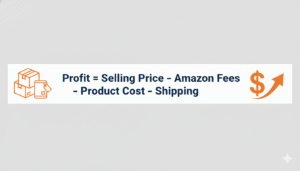
Cost Analysis Formula
To calculate your costs, use these formulas:
Landed Cost Per Unit = (Product Cost + Shipping + Duties + Prep) ÷ Number of Units
Total Amazon Fees = Referral Fee (typically 15%) + FBA Fulfillment Fee + Monthly Storage
Profit Margin = (Selling Price – Landed Cost – Amazon Fees – Advertising Cost) ÷ Selling Price × 100
For more details on FBA fees, visit Amazon’s FBA fee calculator.
Managing Amazon FBA Sourcing Timelines and Logistics
Understanding Customs and Import Duties
For international Amazon FBA product sourcing, understanding customs procedures is essential. This knowledge helps maintain schedules and control costs. Moreover, planning ahead keeps things on track and helps profits.
How Customs Works for China Imports
Most Amazon FBA products originate from China. Therefore, they must clear U.S. Customs and Border Protection (CBP). The process includes reviewing documents, figuring out the duty, and doing physical inspections.
Required Documentation
First, you need a commercial invoice with complete product details. Second, provide a packing list with weights and quantities. Third, include a bill of lading or airway bill. Fourth, obtain import licenses if required for specific products. Finally, get regulatory permits from FDA, FCC, or other agencies if applicable.
Calculating Import Duties
Import duties are determined using Harmonized Tariff Schedule (HTS) codes. Duty rates depend on product classification and country of origin.
Formula: (Product Value + Shipping + Insurance) × Duty Rate = Total Duty Owed
Common Duty Rates:
Electronics typically range from 0-25%. This depends on the specific product. Textiles range from 5-32%. This is based on material and construction. Household goods range from 0-15% for most categories. Finally, toys range from 0-12%. This depends on materials and features.
Duty Optimization Strategies
To optimize duties, first ensure correct HTS code classification. Second, utilize free trade agreements when applicable. Third, evaluate alternative countries of origin. Finally, work with experienced customs brokers. For more information, visit U.S. Customs and Border Protection.
Labeling and Packaging Requirements
Amazon FBA has strict packaging and labeling requirements. To avoid rejections, delays, or extra fees, you must follow these rules carefully. Moreover, understanding these requirements is crucial for successful order fulfillment.
Amazon FBA Packaging Rules
First, products must be properly protected for shipping and storage. Second, each unit requires Amazon FNSKU labels or manufacturer barcodes. Third, case packs need Amazon shipping labels. Fourth, fragile items require appropriate protective packaging. Finally, liquids, powders, and hazardous materials have specific requirements.
Labeling Requirements
FNSKU Labels: These are required for inventory tracking and identification.
Expiration Date Labels: These are required for products with shelf life.
Fragile Stickers: These are required for breakable items.
Poly Bag Requirements: Bags over 5 inches require suffocation warnings.
Made in [Country] Labels: These are required for imported products.
Prep Center Services
Many sellers employ prep centers to handle FBA preparation requirements. This is especially helpful for international shipments.
Services offered:
First, prep centers provide product inspection and quality checking. Second, they offer FBA-compliant packaging and labeling. Third, they handle inventory management and shipment coordination. Fourth, they process returns and refurbishment. Finally, they provide a cost-effective alternative to self-preparation.
For detailed packaging guidelines, visit Amazon’s FBA packaging requirements.
Common Amazon Product Sourcing Mistakes to Avoid
Mistake #1: Ignoring MOQ and Profit Margins
One of the costliest mistakes involves focusing solely on low minimum order quantities (MOQs) without analyzing total landing costs and profit margins.
The MOQ Trap
New sellers often choose suppliers based on low MOQs, believing this reduces risk. However, suppliers with low MOQs frequently have:
- Higher per-unit costs
- Elevated shipping expenses
- Lower quality standards
- Limited negotiation flexibility
Comprehensive Cost Analysis
Calculate complete landed costs, including:
- Product cost per unit
- Shipping and handling
- Import duties and taxes
- Amazon FBA fees (storage, fulfillment, referral)
- Packaging and preparation costs
- Insurance and risk mitigation
- Returns and refunds
- Marketing and advertising costs
Profit Margin Target: Aim for 30-40% minimum gross margins to account for Amazon fee increases, competitive pressure, and unexpected expenses.
Mistake #2: Choosing Trendy Instead of Evergreen Products
The 2017 fidget spinner craze serves as a cautionary tale about trend-based sourcing decisions.
The Fidget Spinner Case Study
Fidget spinners exploded in popularity in early 2017, prompting many Amazon sellers to rush into sourcing. Early sellers earned substantial profits, but the market quickly became oversaturated, prices collapsed, and most sellers were left with worthless inventory.
Critical Statistic: Over 80% of sellers who focused exclusively on trending products during 2017-2018 experienced significant inventory losses when trends shifted rapidly.
Problems with Trend-Based Sourcing
- Rapid market saturation and price erosion
- Short product lifecycle and inventory obsolescence
- High competition from established brands
- Seasonal or fad-based demand patterns
- Limited repeat purchase opportunities
Evergreen Product Advantages
- Consistent year-round demand
- Established market size and growth patterns
- Opportunities for product improvement and differentiation
- Long-term brand-building potential
- Predictable inventory management
Balanced Product Portfolio Strategy
70-80% Evergreen products for stable revenue
10-20% Seasonal products for profit spikes
5-10% Trending products for growth opportunities
Trend Evaluation Framework
Before sourcing trending products, evaluate: ✓ Market size and growth sustainability
✓ Competition levels and barriers to entry
✓ Product differentiation opportunities
✓ Brand building potential
✓ Long-term demand indicators
Conclusion: Building a Sustainable Amazon FBA Business
Success with Amazon FBA sourcing strategies requires prioritizing relationships, quality, and strategic planning. This is more important than simply finding the cheapest products.
Key Takeaways for Long-Term Success
Diversify Your Sourcing Approach
Don’t rely on a single supplier or sourcing method. Instead, build a portfolio of reliable partners. Additionally, use different sourcing strategies.
Prioritize Evergreen Products
While trending products can provide short-term profits, focus on products with consistent demand. Therefore, build your business foundation on year-round products.
Invest in Quality
Better quality products lead to several benefits. First, they generate positive reviews. Second, they result in fewer returns. Third, they improve Amazon’s algorithm performance. Finally, they enable long-term brand building.
Build Supplier Relationships
The 13% of sellers earning six figures annually understand something important. Specifically, strong supplier partnerships drive sustainable success. This is more effective than just focusing on low prices.
Use Professional Tools
Leverage research tools like Jungle Scout and Helium 10. These help you make data-driven sourcing decisions. Therefore, avoid relying on gut feelings.
Calculate Complete Costs
Always analyze total landed costs. This includes shipping, duties, Amazon fees, and advertising. Don’t just focus on product costs alone.
Start Strategic, Scale Smart
Begin with proper capitalization of $5,000-$10,000. Then, test products thoroughly. Finally, scale based on validated demand rather than speculation.
Your Path Forward
The difference between the struggling 87% and the successful 13% comes down to systematic approaches. Specifically, Amazon FBA product sourcing requires prioritizing several key elements.
First, conduct thorough product research using professional tools. Second, build reliable supplier relationships based on quality and communication. Third, perform a comprehensive cost analysis for true profitability assessment. Fourth, implement quality control systems to protect brand reputation. Finally, focus on sustainable business models centered on evergreen products.
Join the successful sellers who generate six-figure incomes. You can do this by implementing professional sourcing strategies. Additionally, build strong supplier partnerships. Moreover, create businesses that deliver customer value while generating consistent profits.
The Amazon FBA opportunity is real. However, success requires more than finding cheap products. Instead, it demands strategic sourcing, quality relationships, and commitment. Furthermore, you must focus on building a sustainable business for the long term.
For additional resources and expert guidance, explore Amazon Seller University and Seller Central Help.
Frequently Asked Questions
Q. How do I find profitable products to sell on Amazon FBA?
To find profitable products, look for several key indicators. First, search for products with consistent sales volume. Use research tools to verify this. Second, check for low competition with fewer than 300 reviews on top listings. Third, ensure healthy profit margins of at least 30-40% after all costs. Fourth, target price points between $15-$50. Finally, prioritize year-round demand rather than seasonal spikes.
Use tools like Jungle Scout or Helium 10 to evaluate sales volume. Additionally, check review counts and assess the competitive landscape.
Q. What profit margin should I target for Amazon FBA products?
You should target a minimum profit margin of 30-40% after deducting all costs. These costs include product cost, Amazon FBA fees, shipping to Amazon warehouses, and advertising expenses. Additionally, factor in returns and customer service.
This margin provides cushion for market fluctuations. Moreover, it allows for competitive pricing adjustments. Furthermore, it supports sustainable business growth.
Q. How do I evaluate supplier reliability and quality?
Follow this comprehensive evaluation process. First, request samples from multiple suppliers. Second, verify business licenses and certifications. Third, check references from previous customers. Fourth, conduct factory audits either in-person or virtually. Fifth, start with small test orders before large commitments. Sixth, evaluate communication responsiveness and professionalism. Finally, use third-party inspection services for large orders.
Q. How much initial investment do I need for Amazon FBA product sourcing?
You should budget for several key expenses. First, allocate $50-200 for samples. Second, plan $1,000-$3,000 for minimum order quantities on first orders. Third, budget $200-500 for shipping. Fourth, account for variable Amazon FBA fees. Fifth, set aside $200-500 for product photography. Finally, plan $500-1,000 for initial advertising.
Total recommended starting capital: Overall, budget $5,000-$10,000. This properly launches your first product with adequate inventory. Additionally, it covers your marketing budget.
Q. Should I source from China or use domestic suppliers?
Consider China when: First, you need lower manufacturing costs. Second, you’re comfortable with longer lead times of 4-8 weeks. Third, you can handle customs and import processes. Finally, you’re sourcing standardized products.
Consider domestic suppliers when: First, you want faster turnaround times. Second, you need easier quality control and communication. Third, you prefer “Made in USA” branding. Finally, you’re willing to accept higher unit costs.
Many successful sellers use a hybrid approach. They source some products domestically and others internationally. This decision is based on product-specific factors.
Q. How long does it take to receive inventory from overseas suppliers?
Typical timeline from China:
First, sample production and shipping take 1-2 weeks. Next, negotiation and order placement take 1 week. Then, production time requires 2-4 weeks. After that, air shipping takes 5-7 days. Alternatively, sea shipping takes 3-5 weeks. Subsequently, customs clearance takes 3-7 days. Finally, delivery to Amazon takes 1-3 days.
Total timeline: Overall, expect 6-12 weeks. This depends on the shipping method and complexity.
Therefore, plan inventory needs well in advance. This avoids stockouts during the sourcing and shipping process. For more shipping insights, visit Freightos.
