
Etsy has become a prime destination for e-commerce automation success. Furthermore, the numbers tell an impressive story. The print-on-demand market is experiencing a remarkable 26% compound annual growth rate. Consequently, projections show it will surge from $12.96 billion in 2025 to $75.30 billion by 2033.
Here’s something particularly interesting: 1 in 3 Etsy sales now involve personalized goods. As a result, automated personalization strategies have become more profitable than ever before.
What Makes an Etsy Niche Perfect for Automation?
Before diving into our top 10 list, let’s explore what makes certain niches ideal for automation. The best automated Etsy niches share several common characteristics. These traits allow sellers to scale their businesses without constant hands-on involvement.
High-Volume, Low-Touch Products
Products that work well with automation don’t require individual customization for each order. Instead, you can create them once and sell them repeatedly without additional work. Think about conventional designs that appeal to broad audiences rather than highly personalized, made-to-order pieces.
Evergreen Market Demand
The most profitable automated niches aren’t dependent on fleeting trends. Rather, they fulfill fundamental human needs and desires that remain constant year after year. While seasonal boosts are beneficial, your foundation should rest on products customers seek throughout the year.
Print-on-Demand Compatibility
Modern automation relies heavily on fulfillment partners who handle printing, packaging, and shipping. Therefore, your niche should align well with common print-on-demand items. These include clothing, home decor, and accessories.
Scalable Design Templates
Automation’s greatest advantage is creating design systems rather than individual products. The best niches allow you to develop templates and frameworks. Moreover, these can be applied across numerous items and variations.
Ready to future-proof your automated Etsy business? Our advanced consulting services help established sellers optimize their operations and prepare for market evolution. Schedule your strategy session today.
The Top 10 Etsy Automation Niches for 2025
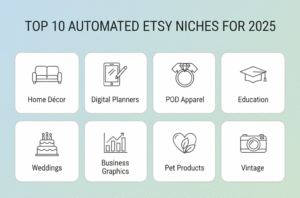
1. Personalized Home Décor and Wall Art
Why It’s Perfect for Automation: Home and Living consistently ranks among Etsy’s top-selling categories. Additionally, this niche excels because of its template-based nature. You can create foundational designs for family names, inspirational quotes, or seasonal themes. Then, automatically apply modifications to meet different customer needs.
Automation Strategies:
- Develop customizable templates for names and dates that auto-populate customer information
- Build seasonal collections that rotate throughout the year
- Utilize variable data printing for family trees, anniversary prints, and milestone celebrations
- Partner with print-on-demand services offering canvas, metal, and wood printing options
Product Ideas:
- Custom family name signs with established design rules
- Motivational quote prints featuring adjustable typefaces
- Birth stat posters with automatic date and measurement population
- Zodiac-themed wall art incorporating the 2025 cosmic metallic trend
Expected ROI: Once systems are established, home décor automation can generate $2,000 to $8,000 monthly. Profit margins typically range from 40% to 60%.
2. Print-on-Demand Apparel with Niche Messaging
Why It Works: Clothing automation thrives when targeting specific communities and interests. The secret lies in developing message-based designs that resonate with particular groups. These include pet lovers, professionals, hobbyists, or lifestyle enthusiasts.
Automation Setup:
- Create design templates for popular categories like dog breeds, nursing, fitness, and similar niches
- Generate multiple colors and styles for each primary design
- Use automated listing tools to produce various product versions
- Establish seasonal campaigns with automatically adjusted messaging
High-Performing Sub-Niches:
- Professional appreciation designs (nurses, teachers, first responders)
- Breed-specific pet designs
- Hobby and interest communities, including crafting, gardening, and reading
- Humorous sayings and dad jokes
- Motivational fitness and wellness messages
Scaling Tips: Begin with 5 to 10 main designs. Then, create more than 50 variations of each. Next, use initial sales data to identify successful designs. Finally, expand them into full collections.
3. Digital Planners and Printable Organization Tools
Why It’s Automation Gold: Digital products represent the ultimate form of automated selling. You build once and sell infinitely with zero fulfillment fees. Meanwhile, the planning and organization market has expanded massively. This growth continues as digital wellness and remote work trends rise.
Product Categories That Sell:
- Digital monthly and weekly planners with hyperlinked pages
- Budget tracking apps and financial planning tools
- Goal-setting worksheets and habit tracking sheets
- Social media content planning templates for managers
- Wedding planning and party organization books
Automation Advantages:
- Instant delivery through Etsy’s digital download system
- Zero inventory or shipping costs
- Simple creation of product bundles and upsells
- Customer reviews rapidly boost business visibility
- Easy translation into multiple languages for global reach
Success Metrics: Top digital planner shops generate $5,000 to $15,000 monthly. Products typically range from $3 to $25 each. The key is assembling related items into collections rather than selling individual pieces.
For more insights on digital product success, check out Etsy’s seller handbook on digital downloads.
4. Print-on-Demand Jewelry and Accessories
Why It’s Trending: Jewelry sales on Etsy grew by 16% and remain strong. Personalized or customized items perform especially well. Furthermore, print-on-demand has expanded beyond clothing to include accessories. This development makes jewelry automation easier than ever.
Automated Product Types:
- Personalized pendant necklaces with name or initial options
- Bracelet sets featuring interchangeable charms
- Keychain collections for various hobbies and professions
- Phone case designs coordinating with jewelry themes
- Tote bags and accessories matching jewelry sets
Design Strategy: Create harmonious collections allowing customers to mix and match items. Consider themes like minimalist geometric patterns, nature-inspired motifs, or personalized family heirlooms.
Fulfillment Partners: Collaborate with services offering laser engraving, sublimation printing on metal blanks, and custom jewelry production. This ensures consistent quality and branding.
5. Educational and Learning Resources for Children
Why Parents Love It: Parents continuously invest in their children’s education. Moreover, the education market never sleeps. This niche combines the timeless nature of learning with the convenience of instant digital delivery.
Top-Selling Educational Products:
- Letter and number learning worksheets with engaging themes
- STEM activity guides and experiment instructions
- Language learning flashcards and vocabulary boosters
- Arts and crafts project instructions and templates
- Study aids and homework helpers for various grade levels
Automation Systems: Develop educational frameworks adaptable across age groups and subjects. Create worksheet templates that can be modified for different themes. However, maintain their educational effectiveness.
Market Expansion: Start with core subjects like math, reading, and science. As your customer base grows, add specialized subjects. These might include coding for kids, financial literacy, or environmental education.
6. Wedding and Event Planning Templates
Why It’s Consistently Profitable: Weddings represent a $4+ billion industry. Couples increasingly turn to DIY solutions to reduce costs. Consequently, event planning templates provide substantial value while remaining simple to automate.
High-Demand Products:
- Wedding invitation suites with coordinated designs
- Reception timeline and planning checklist templates
- Wedding budget tracking spreadsheets
- Seating chart templates and guest management tools
- Bachelor and bachelorette party planning guides
Seasonal Opportunities: Expand beyond weddings to include baby showers, graduation parties, holiday celebrations, and corporate events. Each season brings fresh planning needs and new customer groups.
Pricing Strategy: Bundle related items to achieve higher average order values. A complete wedding planning package can sell for $15 to $40. In contrast, individual templates typically range from $2 to $8.
7. Customizable Business Templates and Graphics
Why Small Businesses Need This: The entrepreneurship boom has created enormous demand for professional business materials at affordable prices. Small business owners need everything from logos to social media templates. However, they often lack design budgets.
Essential Business Products:
- Social media template bundles for various industries
- Business card and letterhead design templates
- Branded graphics and email signature designs
- Presentation templates for pitches and reports
- Blog post templates and website graphics
Automation Advantage: Create industry-specific collections for restaurants, beauty salons, and consultancies. These can be easily customized by changing colors and text. Meanwhile, they maintain a professional appearance.
Customer Lifetime Value: This segment excels for long-term revenue. Business customers frequently return for additional products as their companies grow.
Learn more about designing for small businesses on Canva’s design school.
8. Health and Wellness Tracking Tools
Why It’s Growing: The wellness industry continues expanding. People increasingly want to track and improve their health metrics. As a result, digital tracking tools offer an accessible entry point into wellness routines.
Popular Wellness Products:
- Workout planning and fitness tracking planners
- Meal planning templates and grocery shopping lists
- Habit formation guides and sleep tracking sheets
- Mood trackers and mental health journaling prompts
- Water intake trackers and nutrition monitoring sheets
Automation Integration: Partner with app developers or create QR codes linking to digital versions of your physical tracking tools. This approach lets customers choose between print and digital solutions.
Target Audiences: Focus on specific wellness communities rather than trying to help everyone. Consider new parents, retirees, those managing chronic illnesses, or fitness enthusiasts.
9. Pet Owner Accessories and Memorial Items
Why Pet Products Win: Pet owners spend an average of $1,480 annually on their pets. Emotional purchases lead to higher profit margins. Because of this emotional connection, pet-related products often command premium prices.
Automated Pet Products:
- Customizable pet photo templates suitable for multiple breeds
- Pet memorial products with selectable dates and names
- Training charts and pet care scheduling templates
- Personalized pet travel accessories
- Pet-friendly holiday and birthday celebration products
Emotional Marketing: This niche thrives because of its emotional resonance, not just functional benefits. Therefore, emphasize the pet-owner bond in your marketing and product descriptions.
Seasonal Opportunities: Pet birthdays, adoption anniversaries, holidays, and memorial occasions provide year-round sales opportunities. Each offers different emotional touchpoints.
10. Vintage-Inspired and Retro Design Collections
Why Vintage Never Dies: Nostalgia marketing continues growing stronger. Younger generations embrace vintage aesthetics that they never experienced firsthand. Consequently, this creates consistent demand for retro-inspired designs across multiple product categories.
Trending Vintage Themes:
- 1970s boho and earthy design elements
- 1980s neon and geometric patterns
- 1990s grunge and minimalist aesthetics
- Mid-century modern home décor themes
- Vintage travel and adventure graphics
Cross-Category Applications: Vintage themes work across apparel, home décor, digital planners, and business materials. Therefore, you can leverage design work across multiple product lines.
Design Tip: Draw inspiration from vintage designs without imitating them. Instead, create your own interpretations. Focus on capturing the spirit and aesthetic rather than copying exact elements.
Choosing Your Print-on-Demand Partner
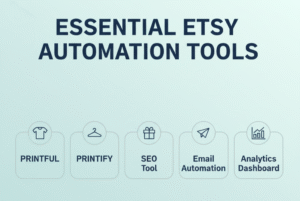
Your fulfillment partner directly impacts customer satisfaction and profitability. Analyze alternatives like Printful, Printify, and Gooten. Evaluate their product quality, shipping timeframes, and Etsy integration capabilities.
Key Evaluation Criteria:
- Product quality and print durability
- Shipping speed and reliability
- Integration is easy with your chosen platforms
- Pricing structure and profit margins
- Customer service responsiveness
- Geographic fulfillment centers for faster delivery
Creating Scalable Design Systems
Instead of creating individual items, build design systems that are easy to modify and expand. This might involve creating template files with adjustable text layers. Alternatively, develop color schemes suitable for multiple items.
Design Efficiency Tips:
- Use consistent fonts and color palettes across collections
- Create master templates with easily modifiable components
- Develop seasonal versions of core designs
- Build organized design libraries sorted by theme and type
- Test new design concepts through small-batch releases
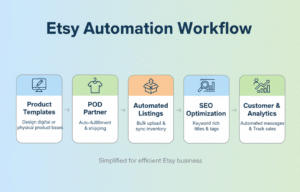
Automating Your Operations
Using print-on-demand services is just one aspect of modern Etsy automation. Consider tools that assist with listing optimization, inventory management, customer communication, and performance analysis.
Essential Automation Tools:
- Listing management software enabling bulk uploads and updates
- SEO optimization tools for keyword research and tracking
- Social media scheduling to maintain consistent marketing
- Automated email campaigns for customer follow-up and repeat sales
- Analytics dashboards for performance monitoring
Ready to transform your Etsy dreams into an automated reality? Our comprehensive automation setup service helps entrepreneurs launch profitable Etsy stores in weeks, not months. Contact us today to discuss your niche selection and automation strategy.
Advanced SEO Strategy for Your Automated Etsy Business
Long-tail Keyword Integration for Maximum Visibility
Successful automated Etsy stores go beyond basic optimization. They also incorporate long-tail keywords that reveal buyer intent. Instead of targeting broad terms, pursue phrases like “automated digital planner downloads for teachers,” “custom family name wall art,” or “print-on-demand wedding planning templates.”
Keyword clusters for Etsy automation:
- Etsy automation niches, automated Etsy business, Etsy print-on-demand
- Print-on-demand automation, Etsy passive income, and automated selling
- Digital products, Etsy, personalized Etsy products, Etsy fulfillment automation
- Etsy business automation tools, scalable Etsy niches, profitable Etsy niches
Schema Markup and Technical SEO Considerations
Etsy handles most technical details. However, ensure your product descriptions contain structured data that search engines easily read. Format dimensions, materials, and customization options consistently. This makes your products more discoverable on both Etsy and Google.
Advanced Strategies for Scaling Your Automated Etsy Business
Smart automation predicts customer needs rather than merely responding to them. Set up systems that automatically adjust product focus, messaging, and marketing strategies. Base these on calendar events and historical sales data.
Seasonal Planning Framework:
- January: New year planning tools and resolution-focused items
- February: Valentine’s Day and relationship-oriented products
- March to May: Spring cleaning, Easter, and Mother’s Day products
- June through August: Summer activities, Father’s Day, and vacation themes
- September to November: Back-to-school items, Halloween, and Thanksgiving products
- December: Year-end organization tools and holiday celebrations
Cross-Selling and Bundle Creation
Automation truly shines when you can increase average order value. Strategically combine and bundle products together. Create ecosystems of related products where purchasing one item naturally creates a need for others.
Effective Bundle Strategies:
- Complete solution packages, like wedding planning or new baby essentials bundles
- Coordinated seasonal collections
- Progressive skill-level sets from beginner to advanced
- Complementary product pairs (planner and habit tracker)
- Mix-and-match collections with coordinating designs
International Market Expansion
Etsy’s global reach enables your automated business to serve worldwide customers. Consider translating digital products and adapting designs for cultural relevance. Meanwhile, optimize your listings for international SEO.
Global Expansion Considerations:
- Market-specific pricing and currency strategies
- Cultural sensitivity in design and messaging decisions
- Product description and keyword translation into other languages
- International shipping options and delivery timeframes
- Regional holiday calendars and seasonal patterns
For global selling tips, visit Shopify’s international e-commerce guide.
Measuring Success and Optimizing Performance
Key Performance Indicators (KPIs) for Automated Etsy Businesses
Monitor metrics that genuinely impact your bottom line. Avoid vanity metrics that look impressive but don’t generate revenue.
Essential Metrics to Monitor:
- Conversion rate from views to sales
- Average order value and customer lifetime value
- Product listing rankings for target keywords
- Customer satisfaction scores and repeat purchase rates
- Profit margin by product category
- Time-to-sale for new product listings
A/B Testing for Continuous Improvement
“Set it and forget it” doesn’t apply to automation. Successful automated businesses continuously improve based on performance data.
Elements to Test Regularly:
- Keyword combinations and tags
- Primary listing photos and secondary image selection
- Pricing strategies and promotional offers
- Product descriptions and feature highlights
- Seasonal messaging and marketing approaches
Scaling Beyond Etsy
If your automated systems work well on Etsy, consider leveraging the same products and fulfillment systems on other platforms, too.
Platform Expansion Options:
- Amazon Handmade for a broader market reach
- Your own Shopify store for higher profit margins
- Social media shops on Facebook and Instagram
- Print-on-demand marketplaces like Society6 or Redbubble
- Wholesale opportunities with established retailers
Building a sustainable automated business requires more than great products. It demands strategic planning and systematic execution. Let our team help you develop a comprehensive automation strategy tailored to your chosen niche and growth goals.
Common Pitfalls and How to Avoid Them
Over-Automation Without Quality Control
The biggest mistake new automated sellers make is prioritizing quantity over quality. While automation should streamline operations, every product still needs high standards. This includes design excellence, description accuracy, and customer appeal.
Quality Control Checklist:
- Review all automated listings before publishing
- Test product quality from fulfillment partners regularly
- Monitor customer feedback for quality issues
- Update product photos when partners improve printing
- Ensure product descriptions accurately reflect what customers receive
Ignoring Etsy’s Algorithm Changes
Etsy regularly updates its search algorithm and marketplace policies. Therefore, automated businesses must stay informed about these changes. Then, adjust their strategies accordingly.
Staying Current Strategy:
- Follow Etsy’s official seller updates and announcements
- Join active Etsy seller communities and forums
- Monitor your listing performance for sudden ranking changes
- Test new features and optimization strategies as they’re released
- Maintain compliance with evolving marketplace policies
Neglecting Customer Service
Automation can make businesses feel impersonal. However, customer service remains crucial for long-term success. Develop systems for handling inquiries, complaints, and customization requests efficiently.
Customer Service Automation:
- Create template responses for common questions
- Set up auto-replies acknowledging customer messages
- Establish clear timelines for responding to inquiries
- Develop FAQ sections addressing typical concerns
- Train virtual assistants on your products and policies when scaling beyond personal management
The Future of Etsy Automation
Emerging Technologies and Trends
Artificial intelligence and machine learning are beginning to transform automated business operations. From AI-generated designs to predictive analytics for inventory planning, technology will continue making automation more sophisticated and profitable.
Technologies to Watch:
- AI-powered design generation and customization
- Predictive analytics for demand forecasting
- Voice search optimization for product discovery
- Augmented reality for product visualization
- Blockchain for authentication and provenance tracking
Market Evolution Predictions
The automated e-commerce space will likely become more competitive but also more sophisticated. Success will increasingly depend on specialization, brand building, and customer experience. These factors matter more than simply having automated systems.
Preparing for Market Changes:
- Develop strong brand identity and customer loyalty
- Focus on niche expertise rather than broad generalization
- Invest in customer data collection and analysis
- Build email lists and social media followings
- Create premium product lines with higher profit margins
Conclusion: Your Path to Automated Etsy Success
The opportunity for automated Etsy success has never been greater. With 95.5 million active buyers and a growing preference for unique, personalized products, the marketplace rewards sellers who deliver quality items at scale. The ten niches outlined in this guide represent proven paths to profitability. Each offers unique advantages for different skill sets and interests.
Success in automated selling isn’t about finding shortcuts. Rather, it’s about building systematic approaches to serving customer needs efficiently. Whether you choose digital planners, print-on-demand apparel, or customizable home décor, your foundation must be solid. This includes product quality, clear customer communication, and continuous optimization based on performance data.
The sellers thriving in 2025’s automated marketplace share common characteristics. They choose their niches strategically. Additionally, they invest time in understanding their customers deeply. Furthermore, they build systems that scale without sacrificing quality. They also understand that automation amplifies both good and bad practices. Automated systems built on strong foundations accelerate growth. Meanwhile, those built on poor foundations accelerate failure.
Your automated Etsy journey starts with a single decision. Which niche aligns best with your interests, skills, and market opportunity? Take that first step. Commit to continuous learning and improvement. Then, let automation transform your entrepreneurial dreams into sustainable passive income.
The marketplace is waiting for your unique contribution. The question isn’t whether automated Etsy businesses can succeed. Instead, it’s whether you’re ready to build yours.
Frequently Asked Questions (FAQs)
Q. How much money can I make with an automated Etsy business?
Income from an automated Etsy business varies depending on niche, product quality, and marketing. New sellers typically earn $500-$2,000 per month in the first six months. Established stores can generate $5,000-$20,000+ monthly, while top sellers make $10,000+ per month by focusing on profitable products and systematic scaling. Success relies on choosing the right niche, maintaining quality, and optimizing based on performance data.
Q. What is the initial investment to start an automated Etsy business?
You can start an automated Etsy store with $200-$800. This covers:
-
Etsy listing fees ($0.20 per item)
-
Design software subscriptions ($10-$30 per month)
-
Product samples for quality testing ($50-$150)
-
Initial marketing ($100-$300)
Print-on-demand services require no inventory, as products are made only after orders. Early profits are usually reinvested into expanding products and improving marketing.
Q. How long does it take to get consistent sales from automation?
Most automated Etsy stores see first sales within 30-60 days. Consistent weekly sales typically start by months 3-4, while full automation benefits appear after 6-12 months. Patience, SEO optimization, and focusing on evergreen niches help achieve consistent sales faster.
Q. Can I run multiple automated Etsy stores at the same time?
Yes, but it’s best to start with one store. Each store needs separate branding, product development, and marketing. Etsy allows multiple shops per seller but requires disclosure of any related stores. Once automation systems are mastered in one niche, they can be replicated across other niches. Scaling multiple stores often needs strong organization and virtual assistance.
Q. What if my print-on-demand partner has quality issues?
Quality control is your responsibility. Avoid relying on a single provider by working with multiple print-on-demand partners. Regularly order samples to check print quality, shipping, and packaging. Reputable providers usually offer replacement guarantees for defective products. Clear communication with customers and including quality control costs in pricing ensures profitability despite occasional issues.
Ready to launch your automated Etsy empire? Don’t navigate this journey alone. Our team specializes in helping entrepreneurs identify profitable niches, set up automated systems, and scale to consistent five-figure monthly revenues. Contact us today for a personalized consultation and take the first step toward your automated success story.
