
Emerging E-commerce Trends 2026: Automation, AI & Marketplace Shifts
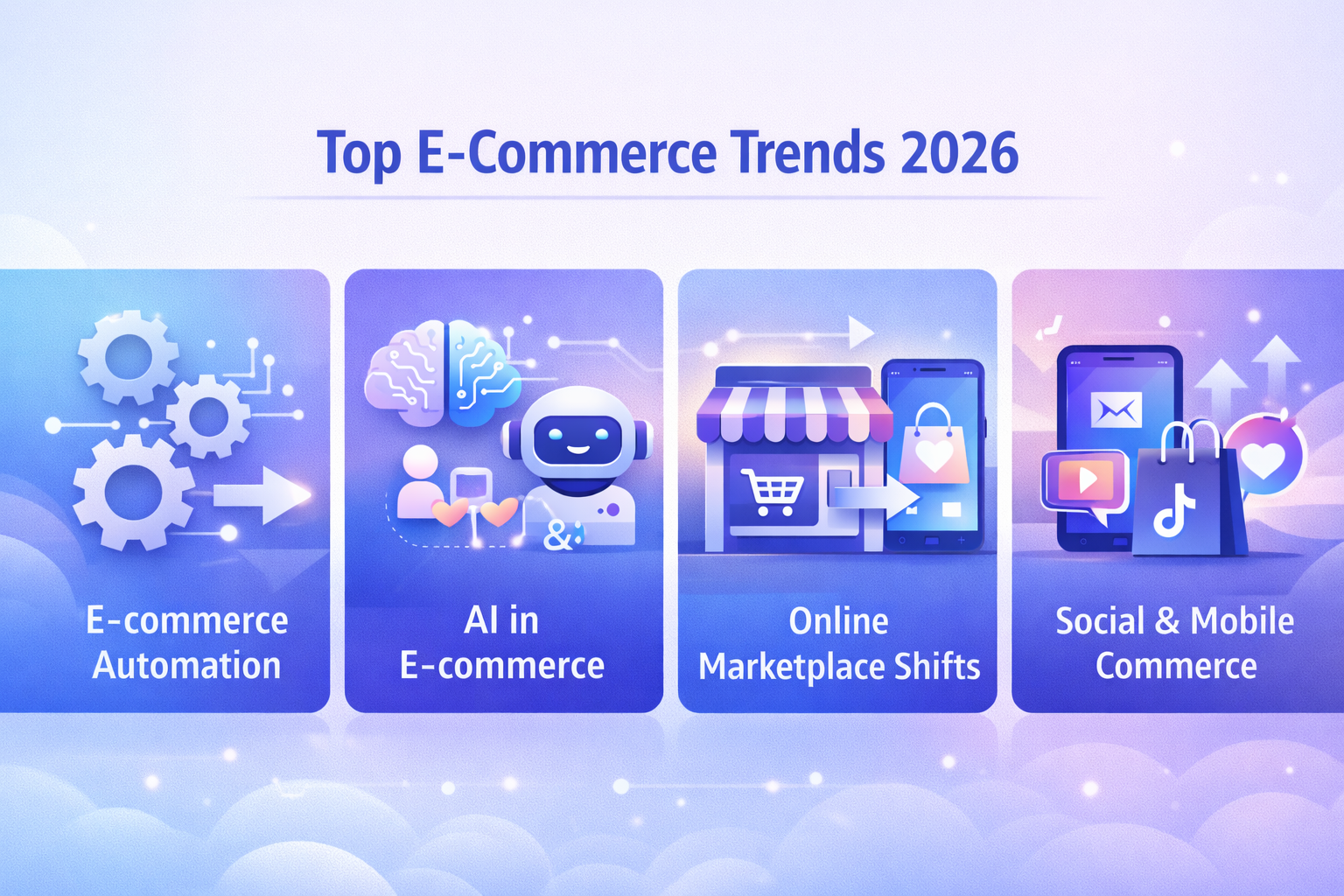
E-commerce trends 2026 are driving some of the biggest changes online sellers have seen in years. According to Shopify, global e-commerce sales are expected to exceed $8 trillion by 2026, fueled by rapid growth in automation, AI in e-commerce, and evolving marketplace dynamics. These e-commerce trends 2026 are already reshaping how businesses sell online, manage operations, and compete in crowded digital marketplaces.
For online sellers, e-commerce trends 2026 bring both opportunity and pressure. What worked last year may stop working much sooner than expected. Automation is becoming essential, AI tools are now accessible to businesses of all sizes, and customer expectations continue to rise. Understanding e-commerce trends 2026 helps sellers choose the right tools, avoid costly mistakes, and build systems that support steady growth.
At the same time, marketplaces are changing quickly. Platforms like Amazon and Shopify are updating their algorithms, policies, and fee structures as social commerce continues to grow. These shifts are central to e-commerce trends 2026, and sellers who adapt early are far better positioned for long-term success.
Because navigating these changes can feel overwhelming, many sellers rely on expert support. Amzart Solutions helps online businesses implement automation, AI strategies, and marketplace optimization aligned with e-commerce trends 2026. If you want personalized guidance, you can also contact the team here to prepare your business for what’s ahead.
Why E-commerce Trends 2026 Matter for Your Business
The future of online selling isn’t something far off. It’s happening right now. Technology is moving fast, and many sellers are struggling to keep up. What worked last year may not work next month. That’s why understanding e-commerce trends 2026 is so important. These trends provide sellers with a clear direction, helping them choose the right tools, avoid costly mistakes, and prepare for consistent growth.
A lot has changed in just a few years. Mobile shopping has grown rapidly, social commerce is now common, and supply chains have faced major disruptions. Sellers who recognized these changes early were able to adjust and stay competitive. Those who ignored them often found it difficult to catch up. The same pattern applies to e-commerce trends 2026, which will shape business success in the years ahead.
These shifts are driven by real data and active changes across major marketplaces. Sellers who follow e-commerce trends 2026, adopt automation, use AI in e-commerce, and stay updated on marketplace rules gain a strong competitive edge. In contrast, sellers who resist change risk falling behind as platforms and customer expectations continue to evolve.
Because adapting to e-commerce trends 2026 can feel overwhelming, many businesses turn to expert support. Amzart Solutions helps online sellers navigate automation, AI integration, and marketplace optimization with practical, results-driven strategies. If you want tailored guidance for your business, you can contact their team here to get started.
Trend 1: E-commerce Automation Takes Center Stage
Automation has become one of the strongest forces shaping online selling in 2026. What was once optional is now essential. Sellers managing orders, inventory, pricing, and customer support manually are finding it harder to scale as competition increases and marketplace requirements become stricter. This shift is a key part of how modern e-commerce businesses stay competitive.
Automation doesn’t just save time. It reduces errors, improves accuracy, and creates smoother workflows across daily operations. Inventory updates, order processing, pricing changes, and customer communication can now run automatically in the background, allowing sellers to focus more on growth and strategy.
Best E-commerce Automation Tools 2026
Automation tools today are stronger and more affordable than ever before. Cloud-based platforms now offer advanced features that once required custom development and large budgets. As a result, even small sellers can access the same automation capabilities used by large brands.
Sellers looking for help selecting or implementing these tools often work with experienced partners. For example, Amzart Solutions helps online sellers streamline operations by integrating the right automation tools without disrupting existing systems.
Inventory & Order Automation
Inventory automation helps prevent both stockouts and excess stock by analyzing past sales, seasonal demand, and market trends. These systems automatically trigger reorders and suggest optimal quantities to protect cash flow.
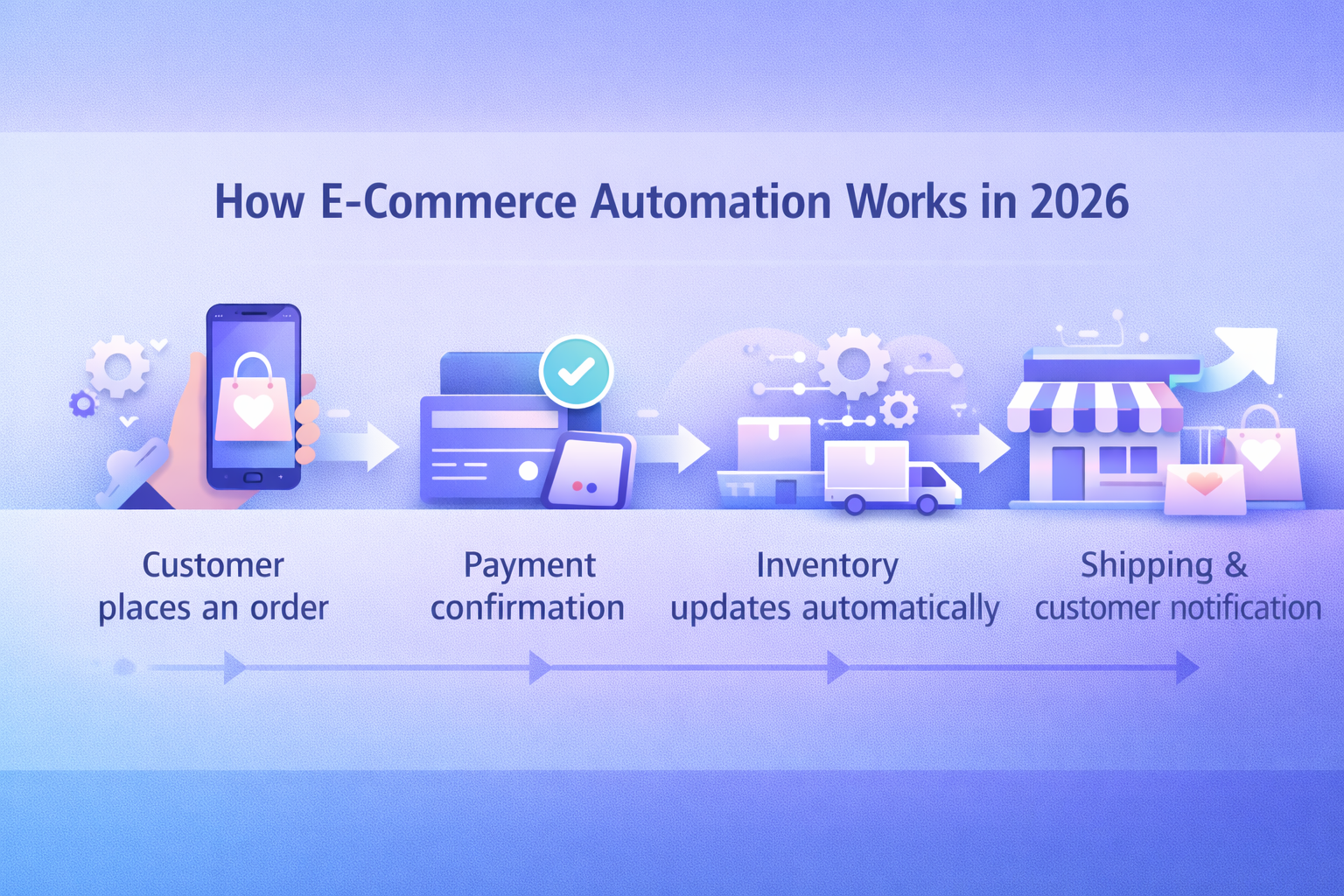
Order processing automation handles everything from payment confirmation to fulfillment and shipping updates. Inventory updates instantly, orders are sent to the correct warehouse, and customers receive tracking information without manual effort.
Customer Communication Automation
Customer communication automation keeps shoppers informed without increasing workload for support teams. Order updates, review requests, abandoned cart reminders, and answers to common questions are handled automatically while still feeling timely and relevant.
How to Start with Automation
Adopting automation doesn’t mean changing everything at once. The best approach is to start with the most time-consuming tasks, such as inventory management or customer service. Map your current processes, identify repetitive tasks, and automate one process at a time.
Testing gradually reduces risk and helps you understand what works best for your business. If you need guidance on where to start, you can contact the Amzart Solutions team here for tailored support.
Trend 2: AI in E-commerce Becomes Mainstream
AI in e-commerce is no longer experimental. It has become a practical, everyday tool for online sellers. By 2026, most successful stores will rely on artificial intelligence for product recommendations, forecasting, customer support, and smarter decision-making. As AI tools become more accurate and affordable, they are quickly becoming a standard part of modern online selling.
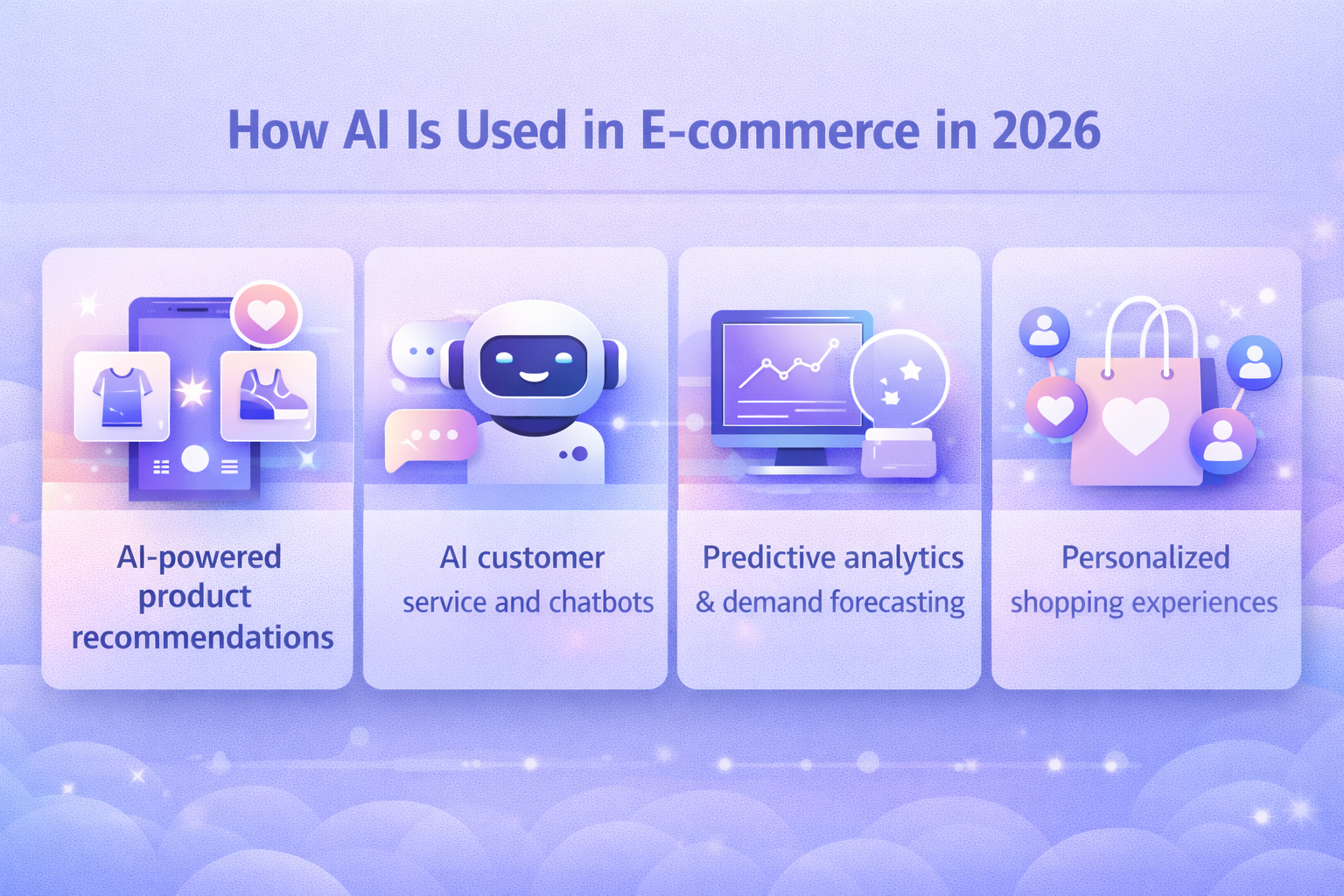
The biggest AI shifts in 2026 focus on personalization, prediction, and automation. These systems analyze customer behavior in real time, identify patterns humans often miss, and help sellers respond faster and more accurately to changing demand.
AI Customer Service for Online Stores
One of the most noticeable changes is in AI-powered customer service. Modern AI chat systems respond instantly, handle routine questions, check order status, process returns, and explain product details without delay. When an issue becomes complex, the conversation is smoothly handed to a human agent with full context, so customers never have to repeat themselves.
These systems continuously improve by learning from every interaction. They identify recurring issues, suggest improvements, and can even predict when customers may face problems before they happen. Research from Gartner shows that AI-driven customer support significantly improves response times and customer satisfaction when implemented correctly.
Personalization with AI in E-commerce
Personalization is where AI truly shines. Each visitor sees a version of the store tailored to their preferences, browsing behavior, and purchase history. AI-powered tools create accurate product recommendations and personalized email campaigns based on real customer data.
These systems analyze thousands of data points, including viewed products, time spent on pages, abandoned carts, and similar customer behavior. What was once impossible is now becoming an expected shopping experience. Stores that deliver strong personalization see higher conversion rates and larger average order values.
Predictive Analytics in E-commerce
Predictive analytics uses AI to forecast future demand and customer behavior. Sellers can identify which products are likely to sell next, which customers are ready to buy, and which inventory may need discounts before it becomes a cash-flow issue.
Modern predictive tools also consider external factors such as seasonality, economic trends, and online activity. According to Statista, data-driven retailers consistently achieve higher profit margins than those that rely solely on intuition.
Implementing AI Without Overwhelm
Managing AI and automation can feel complex, especially for growing businesses. Many sellers choose expert support to avoid costly mistakes and speed up implementation. Amzart Solutions helps online sellers integrate AI tools, automation, and data-driven strategies in a practical, scalable way. If you need tailored guidance, you can contact their team here for personalized support.
Trend 3: Online Marketplace Trends Reshape Competition
Online marketplace trends in 2026 are creating both new opportunities and new challenges for sellers. Major platforms are updating algorithms, policies, and fee structures, while newer marketplaces are gaining traction much faster than before. Understanding these shifts is essential for anyone selling across multiple channels.
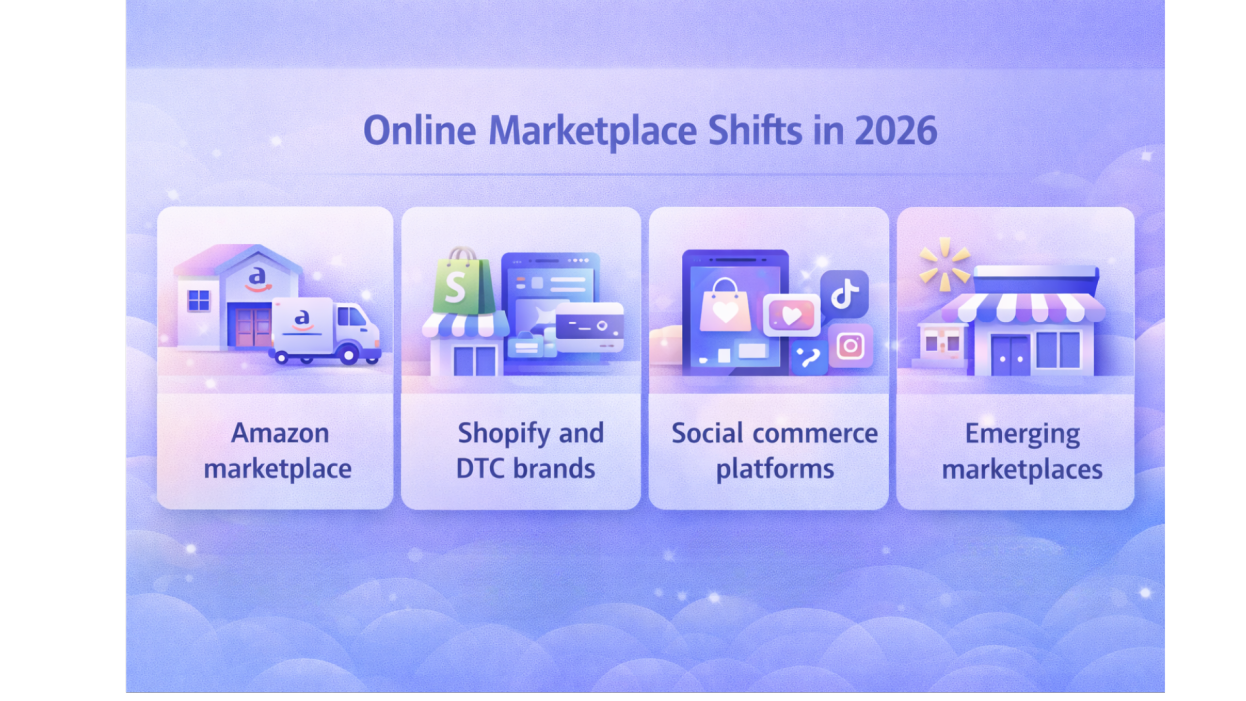
Marketplace changes directly impact product visibility, advertising costs, and profit margins. Amazon remains the largest platform, but competition is stronger than ever. At the same time, Shopify continues to empower independent brands, while platforms like TikTok Shop are pushing social commerce into the mainstream. Each marketplace now serves a different purpose, and success depends on choosing the right channel for the right product.
Emerging Online Marketplaces in 2026
The marketplace landscape in 2026 is more diverse than ever. Walmart’s marketplace continues to grow, offering sellers access to a large U.S. customer base. Meanwhile, platforms like Temu and Shein attract price-sensitive shoppers, while niche marketplaces thrive in specific product categories.
Social commerce is also accelerating. Platforms such as TikTok Shop and Instagram Shopping allow customers to discover products through video and visual content instead of traditional search. According to eMarketer, social commerce sales are projected to grow rapidly, making content-driven selling increasingly important for brands.
International expansion is another major shift. Improved logistics and global payment systems make cross-border selling more accessible, allowing sellers to reach customers in new regions with fewer barriers.
Changes in Amazon, Shopify, and eBay in 2026
Marketplace-specific strategies matter more than ever. Amazon continues to favor sellers who use FBA, maintain strong performance metrics, and invest in advertising. Competition for the Buy Box is intense, making automation and pricing strategy critical.
Shopify has evolved beyond a store builder into a full e-commerce ecosystem. With fulfillment services, marketing tools, and business financing, Shopify enables brands to compete with marketplaces by offering unique products and stronger customer experiences.
eBay, on the other hand, remains strong in categories like collectibles, refurbished items, and rare products. Sellers with the right inventory can still find profitable opportunities by targeting eBay’s unique audience.
Successful sellers understand these differences and adjust their strategies by channel instead of using a one-size-fits-all approach.
Marketplace Competition and Automation
As competition increases, managing multiple marketplaces manually becomes unrealistic. Multi-channel automation tools help sellers sync inventory, manage orders, and adjust pricing from a single dashboard. This reduces errors and saves time as businesses scale.
Automated repricing is especially important on competitive platforms like Amazon, where prices change constantly. Repricing tools react in real time while protecting margins and following predefined rules.
Marketplace analytics also play a key role. These tools show which platforms and products generate the highest profits and where fees or low conversion rates are hurting performance. Using this data helps sellers focus on the most profitable opportunities.
Trend 4: E-commerce Technology Trends You Can’t Ignore
E-commerce technology trends in 2026 extend beyond AI and automation. Innovations such as augmented reality, voice commerce, and mobile optimization are reshaping how customers shop and interact with online stores. While these technologies once felt futuristic, many are now practical for everyday sellers.
Augmented Reality in E-commerce
Augmented reality allows customers to visualize products before purchasing, which is especially useful for furniture, home décor, and fashion. Seeing products in their own space makes shoppers feel more confident, and return rates decrease. Many platforms now support AR natively, and Shopify’s AR tools show how brands are already using this technology effectively.
Voice Commerce and Search Behavior
Voice commerce is growing as shoppers use smart assistants to search for products, reorder items, and make purchases. Optimizing for voice search requires more conversational language and a focus on long-tail queries, which differ from traditional SEO strategies.
Mobile Commerce in 2026
Mobile commerce continues to dominate online transactions. With more than half of purchases happening on mobile devices, stores must load quickly, display clearly on smaller screens, and offer a simple checkout experience. Mobile performance is no longer optional; it directly affects conversions and customer satisfaction.
Top E-commerce Growth Strategies 2026
Growing an e-commerce business in 2026 takes more than one tactic. Real growth comes from combining smart marketing, the right technology, strong products, and consistent customer service. No single strategy guarantees success, but a balanced approach significantly improves long-term results.
Focus on Customer Lifetime Value
Instead of focusing only on one-time sales, successful sellers prioritize customer lifetime value. Retaining existing customers is far more cost-effective than acquiring new ones. Email marketing, loyalty programs, and strong post-purchase experiences help turn first-time buyers into repeat customers.
Diversify Your Sales Channels
Relying on a single platform is risky. Policy or algorithm changes on Amazon or Shopify can affect revenue overnight. Selling across multiple marketplaces while building a direct-to-consumer store helps protect your business and creates more stable growth.
Invest in E-commerce Content Marketing
Content marketing plays a major role in sustainable growth. Educational blogs, product guides, and helpful resources build trust and attract organic traffic. Quality content also improves SEO and gives customers a reason to choose your brand over competitors with basic listings.
Use Data to Guide Decisions
Data should drive every growth decision. Tracking conversion rates, average order value, customer acquisition costs, and profit margins helps sellers understand what’s working and what isn’t. Testing and optimizing based on real data consistently outperforms gut-based decisions.
Leveraging AI-Driven E-commerce Solutions
AI-driven platforms are changing how online stores grow. These solutions combine automation, personalization, analytics, and optimization into a single system, reducing the need to manage multiple tools.
AI tools learn from your products, customers, and sales patterns, allowing them to deliver personalized recommendations and actionable insights. Instead of just reporting numbers, they suggest specific improvements that can increase conversions and efficiency.
Although implementation requires some initial effort, the long-term benefits are clear. Sellers make better decisions, reduce repetitive work, and uncover growth opportunities they might otherwise miss.
If you want expert help implementing AI-driven growth strategies without the technical hassle, Amzart Solutions supports sellers with scalable automation and optimization. You can also contact their team here for tailored guidance.
Preparing Your Business for E-commerce Trends 2026
Understanding where e-commerce is heading is only useful if you act on it. Preparing for e-commerce trends 2026 starts with implementation, not observation. Sellers need to review current operations, identify gaps, and invest in tools and processes that deliver measurable results.
Start with an Honest Business Assessment
Begin by evaluating where your business stands today. Identify strengths and weak points across inventory management, customer service automation, marketplace visibility, and data tracking. Ask whether your systems support growth or slow it down. Clear answers make it easier to decide what needs attention first.
Prioritize High-Impact Improvements
Not every change needs to happen at once. Some improvements deliver quick wins with minimal investment, while others support long-term growth but require more planning. Prioritize based on impact and feasibility, and set realistic timelines to keep progress manageable.
Focus on One Area at a Time
Trying to fix everything at once often leads to overwhelm. A step-by-step approach works better. Improve one or two areas, get them running smoothly, and then move on. This method reduces risk and makes adapting to new systems far more sustainable.
Invest in Continuous Learning
E-commerce technology evolves quickly. What works today may be outdated tomorrow. Staying competitive means learning continuously—following industry blogs, joining seller communities, attending webinars, and testing new tools. Platforms like Digital Commerce 360 provide valuable insights into emerging trends and best practices.
Work with the Right Experts
Many sellers accelerate progress by working with specialists who understand both technology and online selling. The right partner helps avoid costly mistakes and shortens the learning curve. Amzart Solutions supports sellers with automation, AI integration, and scalable growth strategies. If you want tailored guidance, you can contact their team here.
Common Challenges When Adapting to E-commerce Trends 2026
Adapting to e-commerce trends in 2026 isn’t always simple. Most sellers face challenges during the transition, but understanding these obstacles early makes them easier to manage and overcome.
Technology Overwhelm
Technology overload is one of the most common issues. There are thousands of e-commerce tools available, and each promises better growth. Choosing the wrong tools can waste both time and money, which is why careful research and testing are essential before committing.
Integration and Data Sync Issues
Many tools don’t work smoothly together. When systems fail to sync properly, manual work creeps back in, defeating the purpose of automation. Poor integrations often lead to errors, delays, and frustration for growing businesses.
Cost Concerns
Upfront costs can hold sellers back. AI platforms, inventory automation, and analytics tools require investment, which may feel risky for smaller businesses. However, when chosen correctly, these tools often pay for themselves through efficiency and improved performance.
Learning Curves and Adoption Delays
New tools take time to learn and implement. During setup, productivity may dip temporarily, which can discourage sellers from continuing. This learning phase is normal and usually short-lived once systems are running smoothly.
Resistance to Change
Many businesses struggle with change because familiar processes feel safer, even when they’re inefficient. Fear of disruption or failure can slow progress. Starting small helps reduce this risk.
How to Overcome These Challenges
The most effective solution is to take a gradual approach. Automate one process, measure the results, and then move to the next. Early wins build confidence and make adapting to e-commerce trends in 2026 far more manageable.
Real Examples of Sellers Thriving with E-commerce Trends 2026
Learning from sellers who succeed with e-commerce trends 2026 offers both inspiration and practical direction. These are real businesses achieving measurable results by adopting AI, automation, analytics, and social commerce effectively.
AI-Powered Personalization Driving Higher Order Value
A home goods seller added AI-driven product recommendations to their Shopify store. Within three months, the average order value increased by 32%. Customers found complementary products more easily, and the AI suggested combinations the seller hadn’t considered before.
Automation Improving Amazon Performance
An Amazon FBA seller automated inventory management and repricing. As a result, out-of-stock issues dropped by 90%, and Buy Box ownership increased from 65% to 88%. Even with more competitive pricing, profit margins improved due to smarter inventory planning.
Marketplace Analytics Increasing Profitability
A multi-channel seller used marketplace analytics to identify their most profitable platforms and products. Some items performed better on Walmart than on Amazon. By shifting focus, they increased overall profitability by 40% without increasing sales volume.
Social Commerce Reducing Customer Acquisition Costs
A fashion brand embraced social commerce through TikTok Shop. By creating short, engaging product videos, the seller built a loyal audience and generated consistent sales. Customer acquisition costs were significantly lower compared to paid advertising on other platforms.
What These Examples Show
These success stories prove that e-commerce trends 2026 are more than predictions. Sellers who thoughtfully apply AI, automation, analytics, and social commerce are achieving real growth, greater efficiency, and stronger margins.
Taking Action on E-commerce Trends 2026
Knowledge alone doesn’t drive results. You now understand the key e-commerce trends for 2026 and why they matter. The real impact comes from deciding what actions you’ll take and when you’ll take them.
Choose One Priority to Start With
Trying to do everything at once leads to overwhelm. Start by choosing one area with the biggest potential impact. This could be implementing your first automation tool, testing AI-powered customer support, or expanding into a new marketplace. Focusing on one priority increases the chances of success.
Set Clear Goals and Timelines
Avoid vague plans. Instead of saying you’ll “look into automation,” set clear deadlines. For example, commit to researching a few tools, scheduling demos, and making a decision within a specific timeframe. Clear goals turn ideas into action.
Allocate Time and Budget Intentionally
Growth requires investment. This may involve budgeting for new tools or setting aside time for learning and implementation. Treat these resources as essential to scaling your business, not optional extras.
Track Results and Adjust
Before making any changes, record your current performance metrics. After implementation, track how those numbers change. Measuring results helps confirm what’s working and guides smarter decisions moving forward.
Get Support When Needed
You don’t have to navigate these changes alone. Many sellers work with experts to avoid costly mistakes and speed up progress. Amzart Solutions helps businesses implement automation, AI tools, and growth strategies aligned with e-commerce trends for 2026. If you want personalized guidance, you can contact their team here.
Frequently Asked Questions
Q. What are the top e-commerce trends in 2026?
The top e-commerce trends for 2026 include the widespread adoption of automation tools, AI-powered personalization and customer service, major shifts in marketplace dynamics, and the integration of emerging technologies such as augmented reality. These trends are driven by increasing competition and rising customer expectations. Therefore, sellers who embrace these changes early gain significant competitive advantages.
Q. How can AI improve online stores in 2026?
AI improves online stores through intelligent product recommendations, automated customer service, predictive inventory management, and personalized marketing campaigns. AI systems learn from customer behavior and optimize the shopping experience in real time. In addition, they can handle thousands of decisions per day that would be impossible for humans to manage manually.
Q. Which marketplaces will grow fastest in 2026?
Social commerce platforms like TikTok Shop and Instagram Shopping are experiencing explosive growth. Meanwhile, Walmart’s marketplace continues to expand aggressively. Additionally, specialty marketplaces focused on specific niches are also thriving. However, Amazon remains the largest overall marketplace with the most opportunities for most sellers.
Q. How can I automate my e-commerce business effectively?
Start by automating your most time-consuming repetitive tasks first, typically inventory management or customer service. Choose tools that integrate well with your existing systems and platforms. Then, implement changes gradually, testing and optimizing each automation before adding the next. Focus on tools that provide clear ROI through time savings or improved performance.
Q. What tools are essential for AI and automation in online selling?
Essential tools include inventory management systems with demand forecasting, automated repricing software, AI-powered customer service chatbots, email marketing automation platforms, and multi-channel management tools. However, the specific tools you need depend on your business model, sales channels, and product types. Most successful sellers use a combination of several tools working together.
