
How to Find Reliable Dropshipping Suppliers in 2025: Complete Guide
Reliable dropshipping suppliers form the backbone of every successful e-commerce business. In fact, finding trustworthy suppliers is the single most critical decision you’ll make. According to recent industry data, 84% of dropshipping businesses fail within their first year. Moreover, in nearly 70% of these failures, supplier issues are the root cause.
Additionally, 67% of retailers report that supplier reliability directly impacts their customer satisfaction scores. Furthermore, businesses working with reliable dropshipping suppliers see 43% higher profit margins compared to those with inconsistent partners.
The Reality of Supplier Reliability
Here’s the truth: 84% of dropshipping businesses fail in their first year. Moreover, in 7 out of 10 cases, supplier issues cause the failure. According to the National Retail Federation, supply chain problems cost sellers over $1.1 million yearly. Consequently, this is a major liability.
Simply browsing supplier directories won’t work. Instead, you need a strategic approach. This guide shows how successful owners find the best dropshipping suppliers in 2025. Additionally, it covers proven methods and platform tips.
Quick Answer: How to Find Reliable Dropshipping Suppliers
Follow these steps:
- First, use verified directories like Alibaba and Spocket
- Next, request product samples to check quality
- Then, verify legal documents and registration
- Also, read customer reviews carefully
- Furthermore, test how fast they respond
- Finally, set up service agreements before starting
Understanding the Dropshipping Supplier Landscape
The supplier world has changed a lot. Initially, only a few manufacturers tried direct shipping. However, it has now grown into a full industry. Furthermore, special platforms now support online retailers. As a result, knowing this landscape helps you find good partners.
Types of Reliable Dropshipping Suppliers
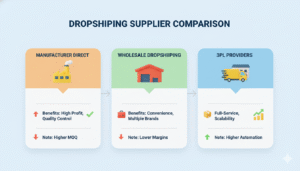
Manufacturer Direct Suppliers
These suppliers offer the best profit margins. Additionally, they give you more quality control. When you work directly with makers, you skip the middlemen. While they need higher minimum orders, the benefits are clear. Specifically, better quality makes them ideal for growth.
Wholesale Dropshipping Companies
These suppliers work between manufacturers and retailers. Moreover, they stock products from many brands. They also handle all shipping tasks. Although they’re very convenient, there’s a trade-off. Usually, profit margins are a bit lower.
Third-Party Logistics (3PL) Providers
3PL providers offer complete solutions. Specifically, they handle storage, processing, and shipping. Therefore, they’re perfect for fast growth. Additionally, they work well for high volumes. Best of all, you don’t need your own warehouse.
Ready to find suppliers faster? Our team has checked over 500 suppliers. Contact us today to get matched with qualified suppliers.
How to Find Trustworthy Suppliers: Essential Criteria
Building a sustainable business requires the right supplier. Even great marketing can’t fix poor quality. Similarly, bad shipping will hurt your store. Here’s how to check reliable dropshipping suppliers properly.
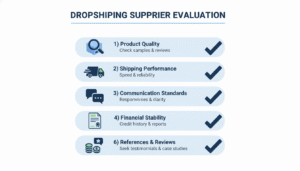
Product Quality Standards
Product quality is extremely important. Therefore, always request samples first. Then, check the materials and packaging. Make sure they match your brand standards.
Good suppliers usually send samples. Often, they offer them at cost or free. Additionally, ask about their quality checks. Specifically, ask about inspections and defect rules. Suppliers with ISO certifications show strong commitment.
Shipping Performance and Geographic Coverage
Fast shipping is now expected. Consequently, check suppliers based on delivery times. Also, see how well they serve your markets. Domestic suppliers usually deliver in 2 to 7 days. In contrast, international ones take 7 to 21 days.
Look for suppliers with multiple warehouses. A spread-out model cuts costs. Furthermore, it speeds up delivery times. As a result, this helps customer happiness.
Communication Standards and Service Quality
Clear communication is critical. During checks, watch response times. Also, check if they speak your language well. Are they available during your hours?
Additionally, review their support system. For instance, do they assign account managers? Is there a process for urgent problems? Top suppliers focus on communication. They understand it affects your reputation.
Best Dropshipping Suppliers 2025: Top Platforms
Finding the best dropshipping suppliers 2025 needs more than searching. A reliable network is the backbone of success. Whether starting or expanding, good suppliers ensure quality. Learn more about building e-commerce businesses.
Finding Reliable Suppliers on AliExpress and Alibaba
Alibaba leads the B2B marketplace. When using Alibaba, first choose Gold Suppliers. Additionally, check transaction history and reviews. Use Trade Assurance to protect against fraud.
Meanwhile, AliExpress works well for beginners. It’s also great for testing products early. While margins are lower, it has good features. Specifically, buyer protection is reliable. Choose sellers with high ratings.
Specialized Platforms for Trustworthy Suppliers
Beyond general sites, special platforms exist. They offer better quality controls. Additionally, they have faster shipping.
Oberlo simplified product importing. Although it’s discontinued alone, its features remain. Consequently, it still helps with automation.
Spocket focuses on US and European suppliers. Therefore, it works well for Western customers. They want faster shipping and better quality.
Wholesale2B offers over one million products. With automatic inventory sync, it’s great for North America.
Industry-Specific Directories
For niche products, general sites may not work. In these cases, use specialized directories.
ThomasNet is perfect for industrial suppliers. It offers strong vetting and quality products.
FashionGo serves apparel and accessories. The platform connects retailers with experienced wholesalers.
These focused directories attract better suppliers. Additionally, they have deep product knowledge.
Due Diligence and Verification
Once you find potential suppliers, verify them. Good research reduces risk. Moreover, it protects your brand and ensures reliability.
Verifying Business Registration
Before starting, verify they’re legitimate. Ask for business licenses and tax numbers. Also, request certifications.
In the US, use state databases. For international suppliers, check trade groups. Good suppliers are transparent. They’ll gladly provide documents.
Financial Stability Assessment
A supplier’s financial health matters. It affects their ability to fulfill orders. While reports are rare, you can still check stability.
Consider these factors:
- First, years in business
- Next, workforce size
- Then, logistics investment
- Also, client testimonials
- Finally, payment flexibility
These show if they can support long-term growth.
Reference Verification and Reviews
Ask suppliers for client references. When calling, ask about speed and accuracy. Also, ask about problem-solving.
Additionally, check Trustpilot and the Better Business Bureau. Third-party reviews show real behavior. They also reveal dispute handling.
Red Flags: Avoiding Unreliable Suppliers
Building a good supply chain means knowing what to avoid. While finding the best suppliers matters, spotting red flags is equally important. Early warnings appear in pricing and communication.
Pricing Warning Signs
If pricing seems too good, it probably is. Very low prices mean poor quality. Alternatively, they signal hidden fees.
Before moving forward, check the full costs:
- First, ask about shipping rates
- Next, clarify minimum orders
- Then, review refund policies
Good suppliers maintain healthy margins. Consequently, they can support quality service.
Communication Red Flags
Clear communication is essential. Poor responses early often worsen later. Watch for these warnings:
- First, vague or slow replies
- Next, pressure to commit fast
- Then, the refusal to send samples
- Also, no professional email
- Finally, only informal app chats
Good suppliers value professional talk. Therefore, they respond clearly and quickly.
Transparency Issues
Suppliers who hide details shouldn’t be used. Transparency shows trustworthy partners. Avoid suppliers who:
- First, don’t share verified addresses
- Next, refuse shipping timelines
- Then, avoid inventory discussions
- Finally, won’t do video calls
Lack of transparency usually means poor systems. Alternatively, it signals legal problems.
Building Strong Relationships with Suppliers
Once you find trustworthy suppliers, build relationships. Long-term partnerships bring better pricing. Additionally, they ensure reliable operations.
Negotiation Strategies
Approach talks with mutual value in mind. Long-term partnerships work better than hard bargaining.
Focus on these areas:
Pricing and Payment Terms: Good pricing is important. However, quality should guide choices. Slightly higher prices often bring better satisfaction. For full support, check our Amazon FBA services.
Exclusive Arrangements: If selling unique products, consider exclusivity. These deals strengthen your edge.
Service Level Agreements: Set clear expectations for delivery. SLAs reduce confusion and support standards.
Managing Multiple Supplier Relationships
Using only one supplier creates risk. Diversification helps with negotiations. Furthermore, it protects against problems.
Track these items:
- First, order volumes per supplier
- Next, defect reports and fixes
- Then, communication records
- Also, payment status
- Finally, delivery accuracy
Use SRM tools to organize data.
Performance Monitoring
Setting KPIs allows consistent checks. Monitoring builds accountability. Additionally, it drives improvement.
Use these KPIs:
- First, order accuracy rates
- Next, on-time delivery rates
- Then, defect frequency
- Also, customer satisfaction
- Finally, response times
Do regular reviews with each supplier. Share wins and fix issues. Then, make improvement plans.
Technology Integration and Automation
As your business grows, technology becomes vital. Reliable suppliers must work with your systems.
Inventory Management Systems
Real-time sync prevents stockouts. Look for suppliers with API connections. They should work with automation platforms.
Popular systems include:
SkuVault: Offers strong inventory tracking
QuickBooks Commerce: Handles multi-channel work
Cin7: Uses predictive analytics
These systems keep your store updated.
Order Processing Automation
Smart processing cuts errors. Also, it speeds fulfillment. Check suppliers’ tech abilities:
EDI: Automates order flow
Order tracking: Enables automatic updates
Real-time updates: Keeps customers informed
Good automation cuts overhead. Additionally, it improves the experience.
Data Analytics and Reporting
Data visibility helps make decisions. Leading suppliers offer dashboards showing:
- First, sales trends
- Next, seasonal changes
- Then, location breakdowns
- Also, return rates
- Finally, satisfaction scores
This reporting helps optimize strategy.
Cost Analysis and Profit Optimization
Staying profitable needs understanding full costs. To maximize margins, detailed analysis is key.
Understanding Total Costs
The real cost has many parts. Calculating landed cost means counting:
- First, product cost
- Next, gateway fees
- Then, platform fees
- Also, advertising costs
- Additionally, service expenses
- Finally, return processing
Missing even one leads to underpricing.
Hidden Fees and Charges
Review agreements carefully to avoid surprises:
- First, setup fees
- Next, the monthly fees
- Then, per-order fees
- Also, shipping premiums
- Additionally, return fees
- Finally, conversion costs
Even small fees hurt margins over time.
Strategies for Better Profit Margins
Profit optimization means working smarter. Use these strategies for better margins:
Volume Discounts: Get better pricing with higher sales volume. Tiered discounts bring big savings.
Product Bundling: Combine related products. This increases order value.
Private Labeling: Once a product works, try branding. Branded products earn higher prices.
Want to maximize profits? Our service analyzes your supply chain. Contact our team for a free consultation.
International vs. Domestic Suppliers
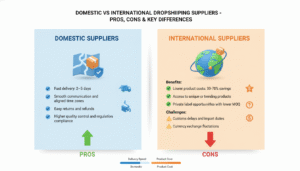
Choosing between domestic and international suppliers balances cost and speed. Each option has clear benefits.
Advantages of Domestic Suppliers
Domestic suppliers offer reliability and fast shipping. Key benefits include:
Faster Delivery: Shipping takes 2–5 days. This meets customer needs.
Smoother Communication: Shared language goes a long way.
Higher Quality: Domestic makers follow strict rules.
Simpler Returns: Processing is faster and cheaper.
These benefits often boost conversion rates.
International Supplier Considerations
Many top businesses use international suppliers. In particular, Asian suppliers offer competitive pricing.
Key advantages include:
Lower Costs: Production costs drop 30%–70%.
Unique Products: Access to trending items.
Private Labels: Customization at lower minimums.
However, challenges exist:
- First, slower shipping
- Next, communication gaps
- Then, the quality control difficulty
- Also, currency risks
- Finally, customs delays
Balancing risks needs good planning.
Legal Considerations and Compliance
Running a professional business needs an understanding of laws. Compliance prevents disputes. Additionally, it protects your store.
Import Regulations and Customs
Importing has specific rules. Ensure all products meet legal standards.
Key factors include:
Product Classification: Use accurate HTS codes.
Safety Certifications: Meet FCC or CE standards.
Labeling Requirements: Include origin labels.
Restricted Items: Avoid banned products.
Working with customs brokers helps this process.
Intellectual Property Protection
Protect your business by checking authorization. Selling fake items causes big problems.
Verify legitimacy by:
- First, requesting brand documents
- Next, ask for legal agreements
- Then, avoiding unclear deals
Violations can cause:
- First, account suspension
- Next, legal orders
- Finally, heavy fines
Tax Implications and Records
Stay ahead with detailed records. Track and store:
- First, supplier invoices
- Next, import documents
- Then, payment proof
- Also, pricing history
- Finally, return records
Different areas have different rules. Consult a tax professional for full compliance.
Scaling Your Supplier Network
As your business grows, your network must evolve. Smart scaling ensures consistent performance.
When to Add New Suppliers
Growing your base should be calculated. Consider adding suppliers when:
- First, current suppliers struggle
- Next, you plan new categories
- Then, new markets need local partners
- Also, diversification becomes necessary
- Finally, better chances appear
Adding suppliers at the right time keeps quality high.
Managing Portfolio Diversification
A good network balances efficiency and safety. Too much reliance creates risk. Conversely, too many suppliers reduce control.
The 80/20 Rule: Focus 80% of resources on top 20%.
Geographic Spread: Use multiple regions to reduce risk.
Matching Strengths: Choose suppliers whose abilities complement each other.
Transitioning Between Suppliers
Switching suppliers needs careful planning. Whether for cost or quality, avoid disruptions.
Best practices include:
Overlap Period: Keep both relationships temporarily.
Inventory Management: Manage buffers to avoid stockouts.
Customer Updates: Inform customers of changes.
Performance Tracking: Watch accuracy closely.
Backup Plans: Have backup suppliers ready.
Good planning preserves customer experience.
Future Trends in Dropshipping
The dropshipping industry keeps evolving. Staying ahead helps businesses compete. Additionally, it delivers better service.
Automation and AI Integration
AI is changing supplier management. Processes become more efficient:
Predictive Analytics: AI forecasts demand well.
Dynamic Pricing: Prices adjust in real time.
Quality Forecasting: ML predicts potential issues.
Smart Matching: AI matches ideal suppliers.
These tools reduce errors. Additionally, they improve decisions.
Sustainability and Ethical Sourcing
Environmental responsibility is now essential. Consumers choose ethical brands. Smart dropshippers partner with suppliers offering:
- First, carbon-neutral shipping
- Next, recyclable packaging
- Then, transparent labor practices
- Also, reduced footprints
- Finally, full transparency
These practices build long-term trust.
Micro-Fulfillment and Regional Distribution
Speed remains critical. To meet same-day demand, suppliers use new strategies.
Micro-fulfillment centers are small automated warehouses. Regional networks offer:
- First, reduced shipping times
- Next, lower delivery costs
- Then, higher satisfaction
- Finally, efficient management
Using suppliers with regional abilities provides advantages.
Frequently Asked Questions
Q: How do I verify if a supplier is legitimate?
Verify through multiple channels. First, check business registration. Next, request client references. Then, search for reviews. Also, ask for licenses. Good suppliers provide this readily. Additionally, use video calls to verify.
Q: What’s the difference between manufacturers and wholesalers?
Manufacturers offer better margins. Additionally, they give direct quality control. However, they need higher minimums. Wholesale companies provide convenience. They gather products from many makers. However, margins are lower. Manufacturers work best long-term. Wholesalers work well for testing.
Q: How can I negotiate better terms?
Focus on building partnerships first. Then, show your growth potential. Key areas include volume pricing. Also, consider payment terms. Additionally, think about exclusive deals. Prepare data showing your performance.
Q: Should I use one supplier or multiple?
Multiple suppliers reduce risk significantly. They also help with negotiations. However, single suppliers offer better terms. Start with one reliable supplier first. Then, slowly diversify as you grow. Aim for balance where no supplier exceeds 60-70%.
Q: How do I handle quality issues with international suppliers?
First, set clear quality standards upfront. Next, use inspection processes. Then, negotiate clear defect policies. Also, consider suppliers with guarantees. Finally, build strong communication channels.
Are you looking to streamline your operation? Our team has helped over 1,000 businesses. Get started with our matching service and skip months of research.
