
The dropshipping landscape has undergone a dramatic transformation, and Shopify dropshipping in 2025 represents the golden era of e-commerce automation. With the global dropshipping market projected to reach $464.4 billion by 2025 and over 30% of e-commerce stores now utilizing dropshipping to fulfill orders, there has never been a better time to start your automated Shopify store.
The numbers tell an incredible story: while only 1.5% of dropshipping stores generate over $50,000 per month, those that leverage automation and strategic positioning are experiencing unprecedented success. With search interest in dropshipping growing by 50% year-over-year, the opportunity window is wide open for entrepreneurs who understand how to harness the power of automation.
What Makes Shopify Dropshipping Different in 2025?
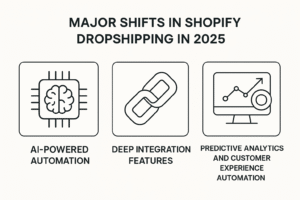
The game has changed completely. Gone are the days of manually processing orders and hoping for the best. Today’s successful automated dropshipping Shopify stores operate like well-oiled machines, using AI-powered tools to handle everything from product research to customer service.
The biggest shift? Integration depth. Modern dropshipping isn’t just about finding products and listing them. It’s about creating sophisticated systems that can predict market trends, dynamically adjust pricing, and maintain customer relationships without requiring constant manual intervention.
The Rise of AI-Powered Automation
Artificial intelligence has revolutionized the approach to dropshipping automation tools. These systems now analyze vast amounts of market data to identify winning products before they become saturated. They monitor competitor pricing in real-time and adjust your margins automatically to maintain profitability while staying competitive.
What’s particularly exciting is how these tools handle the traditionally labor-intensive aspects of the business. Customer service chatbots powered by AI can resolve up to 80% of common inquiries without requiring human intervention, while automated email sequences nurture leads and recover abandoned carts with personalized messaging.
Market Dynamics and Opportunities
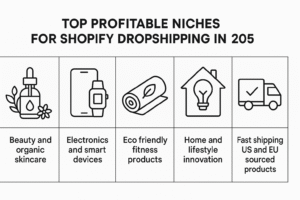
The demographics driving this growth are fascinating. Electronics and media dominate the market with a 34% market share, followed by fashion at 23%. However, what most people overlook is that the real opportunity lies at the intersection of trending categories and automation capabilities.
Consider this: the beauty industry alone is expected to reach $758 billion in 2025, with consumers increasingly interested in vegan and organic products. An automated Shopify store positioned in this space, with proper AI-driven product selection and inventory management, can capture significant market share without the traditional overhead costs.
Setting Up Your Automated Shopify Dropshipping Store
To establish a successful Shopify dropshipping business, it is essential to understand the basics. Your store architecture must allow automation from the start, which includes selecting the right theme, installing appropriate analytics, and setting up integration-friendly payment systems.
Choosing Your Niche Strategically
The most successful automated stores focus on specific niches rather than trying to be everything to everyone. Research indicates that stores targeting specific demographics with tailored product selections achieve significantly higher conversion rates than general stores.
Start by analyzing trending categories, but don’t just follow the crowd. Look for intersections, products that serve specific needs within larger categories. For example, instead of targeting “fitness equipment,” focus on “compact home gym solutions for apartment dwellers” or “eco-friendly yoga accessories.”
Essential Store Configuration
Your Shopify setup should be designed to accommodate automation tools from the outset. This involves establishing your product categories to enable automatic import, setting up SEO structures that can scale, and configuring customer communication workflows that blend automated responses with personalized touches as needed.
Most people are unaware of the importance of the technological foundation. For automation tools to function effectively, they require more than just nice-to-have features, such as well-structured product data, rapid-loading graphics, and designs that are compatible with mobile devices.
Top Automation Tools for Shopify Dropshipping
The best dropshipping apps Shopify offers have evolved into comprehensive platforms that handle multiple aspects of your business. Understanding which tools serve which purposes and how they integrate is crucial for building an efficient operation.
AutoDS: The All-in-One Solution
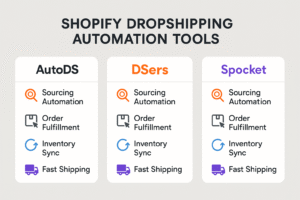
AutoDS stands out as the most comprehensive automation platform available. It handles product sourcing, real-time inventory monitoring, automatic order fulfillment, and even price optimization. What makes it particularly valuable is its AI-powered product research capabilities that identify trending items before they become oversaturated.
The platform’s automated order processing eliminates the manual work that traditionally consumed hours daily. When a customer places an order, AutoDS automatically forwards it to the supplier, tracks shipping, and updates the customer with tracking information, all without your direct involvement.
DSers for AliExpress Integration
For entrepreneurs focusing on AliExpress sourcing, DSers provides seamless integration that streamlines the entire process. Its bulk order processing capabilities and automated supplier communication features make it indispensable for stores handling high order volumes.
The tool’s inventory synchronization prevents the nightmare scenario of selling products that are out of stock, while its shipping cost calculator helps maintain accurate profit margins across different product lines.
Spocket for Premium Suppliers
When targeting customers who expect faster shipping and higher-quality products, Spocket connects you with suppliers in the US and EU. This positioning enables you to offer 2-7 day shipping times, rather than the 15-30 day windows typically associated with overseas suppliers.
The premium nature of Spocket’s supplier network results in higher product costs but also leads to higher customer satisfaction and repeat purchase rates. It’s particularly effective for stores targeting demographics that prioritize quality and quick delivery over the lowest possible prices.
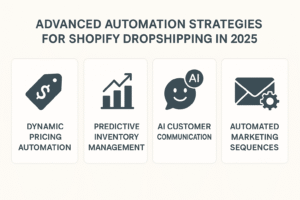
Advanced Automation Strategies
Dropshipping store automation goes far beyond basic order processing. The most successful operators implement sophisticated systems that automate marketing, customer retention, and business intelligence gathering.
Dynamic Pricing Automation
Effective pricing strategies can significantly impact your profitability. Automated pricing tools monitor competitor prices, track demand fluctuations, and adjust your margins in real-time. This isn’t just about matching the lowest prices; it’s about finding the sweet spot where you maximize both conversion rates and profit margins.
The key is setting proper parameters. Define your minimum margins, establish competitive positioning rules, and create triggers for when manual review is needed. The best systems alert you to unusual market movements while automatically handling routine adjustments.
Inventory Management Intelligence
Running out of stock kills momentum, while overstocking ties up capital unnecessarily. Modern inventory automation tools predict demand based on historical data, seasonal trends, and current market indicators.
These systems can automatically pause advertising for products approaching stock depletion, suggest reorder quantities based on lead times and sales velocity, and even identify slow-moving inventory that should be cleared through promotional pricing.
Customer Communication Automation
The most sophisticated stores use behavioral triggers to automate customer communications. Welcome series for new subscribers, abandoned cart recovery sequences, post-purchase follow-ups, and review request campaigns all run automatically based on customer actions.
The magic happens in the personalization. Modern automation tools utilize purchase history, browsing behavior, and engagement patterns to tailor messaging for each customer segment, fostering a sense of personal attention at scale.
Marketing Automation for Dropshipping Success
When marketing your automated store, you need to approach things differently than when running a traditional retail establishment. You are not only competing on prices and products, but also on the level of advancement of your automation systems and how they enhance the consumer experience.
Social Media Automation
AI dropshipping tools now include advanced features for managing social media. These systems can generate product-specific content, schedule posts across multiple platforms, and respond to comments and messages with AI-powered responses.
The most important thing is to stay real while growing your presence. The best automation tools let you specify brand voice parameters and approval protocols for material that needs human review while managing ordinary interactions on their own.
Email Marketing Sequences
Email remains one of the most effective return-on-investment marketing channels for dropshipping stores. Automated sequences can help leads go from their first visit to your website to making multiple purchases. At this point, segmentation becomes extremely crucial. Different types of customers respond to various kinds of communications and offers. Your automation should be able to identify the difference and adjust its communication accordingly.
Advertising Optimization
With automated advertising tools, you can run your Facebook, Google, and other ad campaigns with minimal manual intervention. They adjust bids based on the performance of the ads, stop ads that aren’t performing well, and automatically scale up successful campaigns.
The sophistication level of these tools has reached the point where they can often outperform manual campaign management, especially for stores running multiple product lines across different demographics.
Common Pitfalls and How to Avoid Them
Even with the best automation tools, certain mistakes can derail your Shopify dropshipping guide journey. Understanding these pitfalls and implementing preventive measures is crucial for long-term success.
Over-Automation Mistakes
The biggest mistake new entrepreneurs make is trying to automate everything immediately. While automation is powerful, some aspects of your business, particularly customer service for complex issues and supplier relationship management, benefit from human oversight.
Start with core operational tasks, such as order processing and inventory management, and then gradually expand automation to marketing and customer service as you better understand your business dynamics.
Quality Control Issues
Automation can mask quality problems if not properly configured. Automated systems may continue processing orders for products with quality issues, resulting in customer complaints and refund requests that could have been prevented with proper monitoring.
Implement quality control checkpoints within your automated workflows to ensure consistency and accuracy. Regular supplier performance reviews, customer feedback monitoring, and product quality assessments should continue to be partially manual processes.
Supplier Relationship Management
Your relationships with suppliers remain crucial even in an automated environment. The best automation tools facilitate communication rather than replace it entirely. Regular supplier performance reviews, negotiation of better terms, and development of backup supplier relationships require human involvement.
Financial Management and Profit Optimization
Understanding the financial aspects of your automated dropshipping operation is crucial for sustainable growth. This goes beyond simple profit calculations to include cash flow management, tax implications, and reinvestment strategies.
Cost Structure Analysis
Automated stores have different cost structures than traditional retail operations. Instead of inventory costs, you’re dealing with tool subscriptions, advertising spend, and supplier fees. Understanding these recurring costs and how they scale with your business is essential for pricing and profitability planning.
The key metrics to track include customer acquisition cost, lifetime value, average order value, and profit margins by product category. Automation tools can track these metrics in real-time, but you need to understand what they mean for your business strategy.
Scaling Strategies
The beauty of automation is that it enables scaling without proportional increases in labor costs. However, scaling brings its own set of challenges, including supplier capacity limitations, payment processing considerations, and managing customer service volume.
Plan your scaling strategy around these constraints. Identify the volume levels at which you’ll need to add suppliers, upgrade tools, or implement additional automation layers.
Legal and Compliance Considerations
Operating an automated dropshipping business presents several legal challenges, which become more complex as you scale and automate additional processes.
Tax Implications
Automated sales across many states or countries generate complex tax liabilities. Many automation solutions now incorporate tax computation and reporting functions; however, understanding your duties across various jurisdictions remains critical.
If you plan to expand your business globally or across multiple product categories, consider consulting with experts who are knowledgeable about e-commerce taxation.
Consumer Protection Compliance
Even if you use automated customer communications, you must still comply with consumer protection laws. This includes clear return policies, honest advertising promises, and accurate product descriptions.
Create compliance checks in your automation workflows. For instance, you should verify that automated product descriptions are accurate and that customer service responses include the necessary documentation when required.
Future Trends and Preparations
The dropshipping world is constantly evolving. To stay ahead of the competition, you need to keep current with trends and prepare your automated systems for what’s next.
Emerging Technologies
Artificial intelligence skills are constantly evolving, with new tools appearing for product photography, video creation, and even virtual product try-on experiences. Increasingly, people are utilizing voice commerce and augmented reality to make purchases.
Position your automation infrastructure to support these upcoming technologies. Pick tools and platforms that get better all the time and work with new technologies as they come out.
Market Evolution
Customers’ expectations continue to rise, particularly in terms of shipping timelines, product quality, and the speed of customer support responses. Your automation systems need to change to satisfy these needs while still making money.
Regularly check industry benchmarks and adjust your automation settings to stay competitive. Market standards change, so what works now might not work tomorrow.
Start Your Automated Dropshipping Journey
The opportunity in Shopify dropshipping 2025 is unprecedented, but it requires strategic implementation of the right automation tools and processes. Success comes from understanding not just which tools to use, but how to integrate them into a cohesive system that can scale sustainably.
Whether you’re just starting or looking to automate an existing store, the time to act is now. The businesses that implement sophisticated automation systems today will dominate their niches tomorrow.
Frequently Asked Questions
Q 1: How much does it cost to start an automated Shopify dropshipping store in 2025?
A: Most of the time, it costs between $500 and $2,500 to set up an automated Shopify dropshipping store. This includes the monthly charge for Shopify ($29–$ 79), the subscription fees for automation tools ($19–$ 199 per month), and the initial advertising budget. According to research, half of successful dropshippers started with less than $2,500, and 17% started with less than $500.
Q 2: What are the best automation tools for Shopify dropshipping beginners?
A: AutoDS is the best all-in-one solution for beginners because it takes care & handles product sourcing, inventory management, and order fulfillment. DSers is the most effective for connecting to AliExpress, and Spocket is the most suitable for US and EU sellers who can ship faster. Start with one main tool and add more as your business expands.
Q 3: How long does it take to see profits from an automated dropshipping store?
A: Most successful automated dropshipping stores make their first sales within 30 to 60 days, and they usually start making money consistently within 3 to 6 months. However, only 1.5% of stores generate more than $50,000 per month. Niche selection, automation implementation quality, and consistent system optimization are all essential to success.
Q4: Is dropshipping still profitable in 2025, given the increased competition?
A: Yes, dropshipping remains highly profitable in 2025, with the market projected to reach $464.4 billion. While competition has increased, the use of automation tools and AI integration has leveled the playing field for small entrepreneurs. Success now depends more on the strategic implementation of automation than on manual effort, making it accessible to those who understand the technology.
Q 5: What are the main legal requirements for automated dropshipping stores?
A: Business registration, getting a tax ID, following consumer protection regulations, and making sure that product descriptions are accurate are some of the most important legal requirements. Automated stores must still offer clear return policies, reliable shipping times, and good customer service. You may want to consider consultants who are familiar with the regulations governing e-commerce in the markets you aim to target.
Q6: How do I choose the right niche for automated dropshipping success?
A: Use market demand statistics, competition analysis, and automation tool compatibility to choose your niches. Instead of looking at whole marketplaces, look at little parts of them. Electronics (34% market share) and fashion (23%) are the most popular categories, but there are still chances to grow in new categories, including eco-friendly products and smart home gadgets. Utilize tools like Google Trends and data from automation platforms to ensure your niche choice is accurate.
