
TikTok Influencer Marketing vs Paid Ads: Which Works Better for Your E-commerce Business?
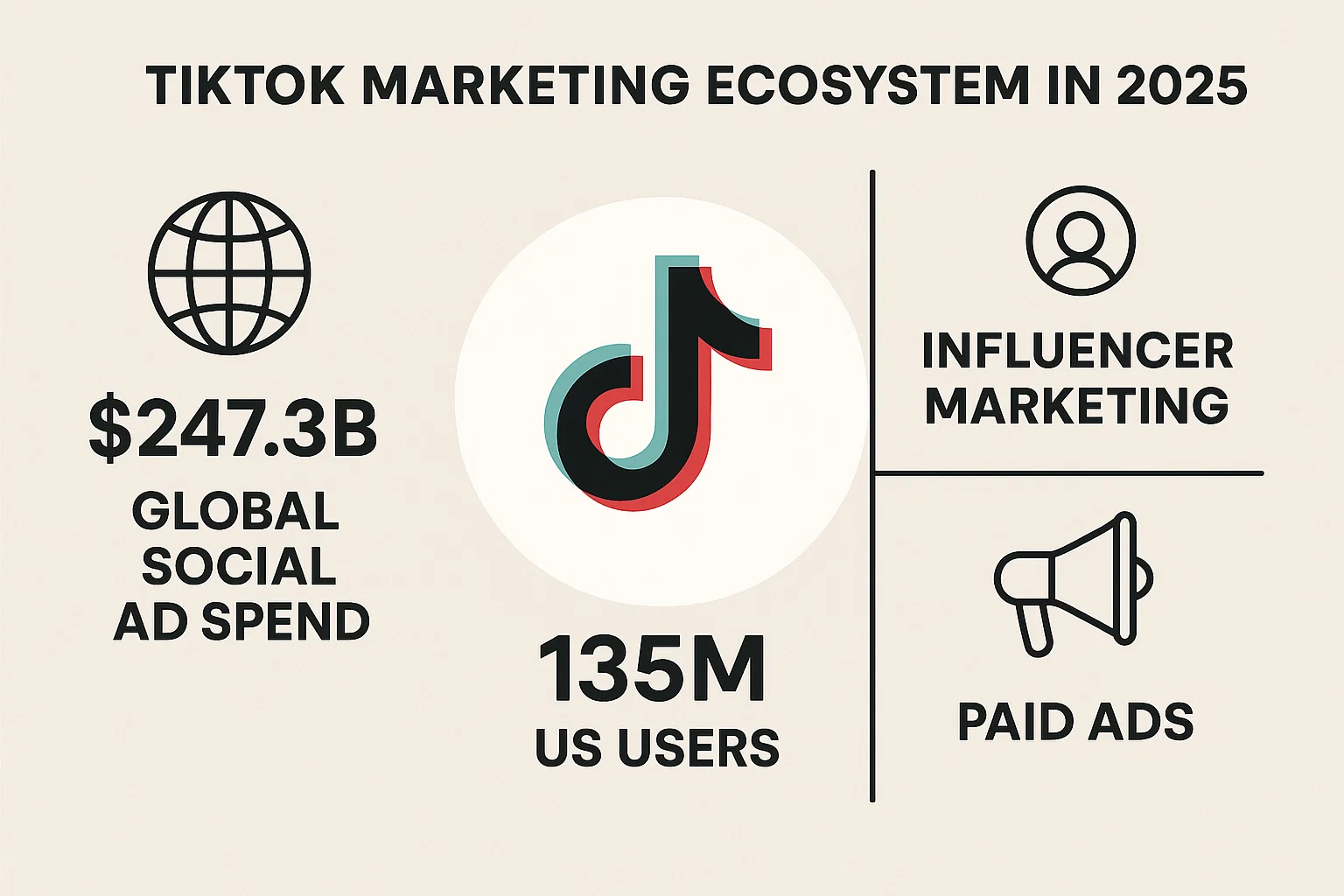
TikTok influencer marketing versus paid ads has quickly become one of the most significant discussions in the e-commerce world. Studies show that brands earn an average of $5.78 for every $1 spent on influencer marketing. This return continues to attract both startups and established businesses. With TikTok dominating social media engagement and reaching over 135 million active users in the United States, selecting the right TikTok influencer marketing strategy can significantly impact your business growth.
The platform has moved far beyond short dance clips and trending challenges. Today, TikTok for e-commerce is a powerful space where brands connect with highly engaged audiences. They can do this in two main ways: through influencer partnerships or through TikTok paid ads. The challenge for most businesses is deciding which approach will actually deliver stronger results for their bottom line.
This guide takes a closer look at TikTok influencer marketing in 2025. We compare the performance, costs, and return on investment for both influencer marketing and paid advertising. Whether you are a small business owner exploring affordable influencer collaborations or a larger brand testing advanced advertising campaigns, understanding the differences is crucial for making informed decisions.
The goal here is simple. We want to break down which strategy helps you build awareness, drive conversions, and generate more sales. By the end, you will have the clarity to decide whether TikTok influencer marketing, TikTok paid promotion, or a hybrid of both works best for your e-commerce goals.
Understanding the TikTok Influencer Marketing Landscape in 2025
The TikTok influencer marketing ecosystem in 2025 has become much more structured. This gives brands clear opportunities through both influencer partnerships and paid advertising placements. Social media overall has now overtaken paid search as the largest advertising channel in the world. According to Statista, it reached a global ad spend of $247.3 billion in 2024. TikTok played a major role in this shift by capturing a significant share of that spend. This shows just how central it has become to digital marketing strategies.
One of the reasons TikTok stands out is its algorithm-driven discovery model. Unlike older social platforms, where visibility depends heavily on follower count, TikTok’s For You page gives any piece of content the potential to go viral. This unique democratization of reach opens new doors for e-commerce businesses. They can choose to collaborate with influencers or run paid ads on TikTok.
User behavior on TikTok also sets it apart. Research from Social Media Today shows that 71% of users decide within the first three seconds if they will continue watching a video. That means brands need to capture attention instantly. This works whether through authentic TikTok influencer marketing content or highly targeted advertising. This fast-paced consumption style has a direct impact on the effectiveness of influencer campaigns and advertising strategies on the platform.
These dynamics explain why some businesses achieve outstanding results with TikTok influencer marketing collaborations. Others see more substantial ROI through direct paid campaigns. The key to success is aligning your marketing strategy with your audience’s behavior, your product type, and your long-term business objectives.
If you’re looking to maximize your TikTok presence and need expert guidance on strategy selection, explore our comprehensive digital marketing solutions to get started with a tailored approach.
TikTok Influencer Marketing: Performance and Benefits
Building Authenticity and Trust with TikTok Influencer Marketing
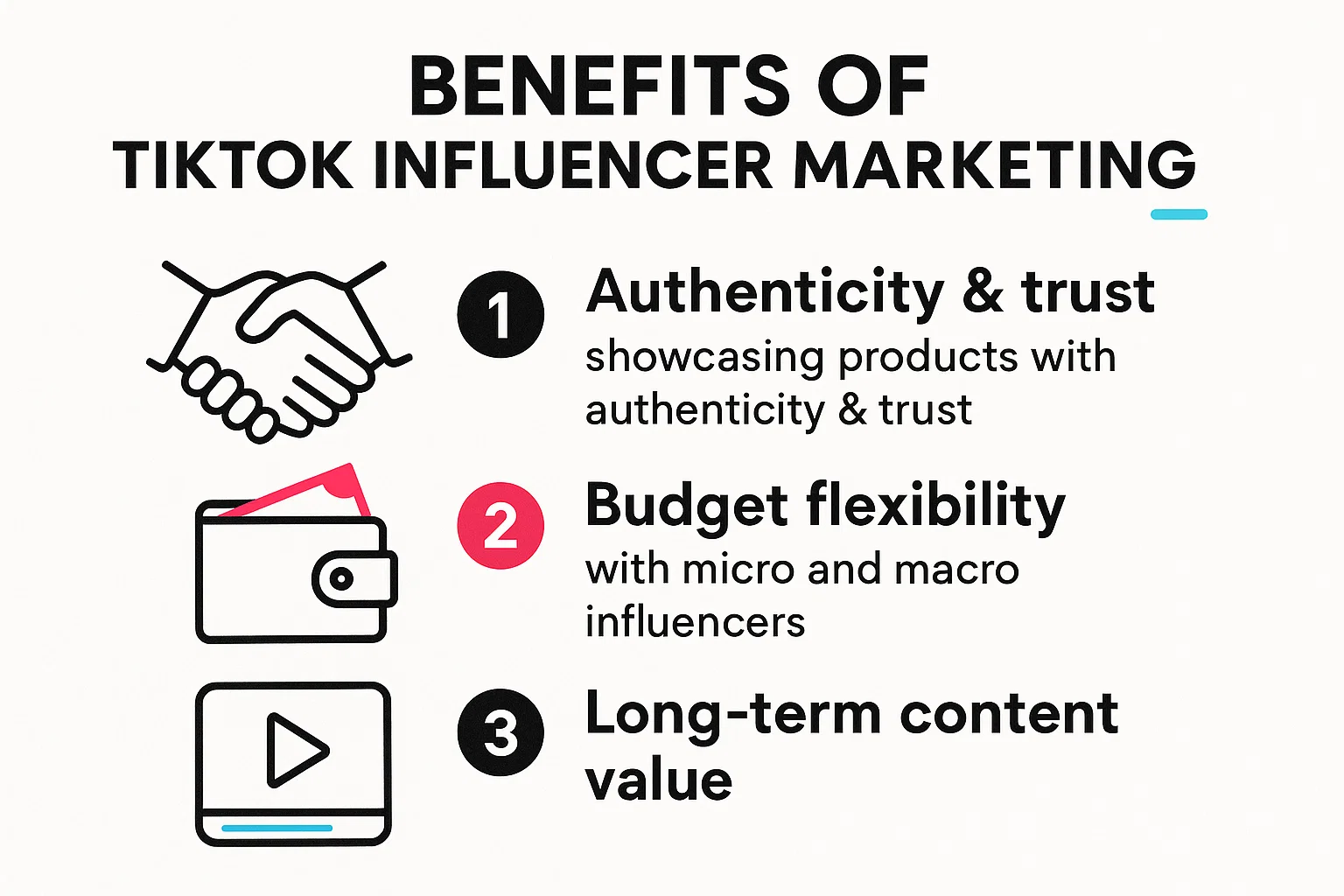
TikTok influencer marketing stands out because it creates a genuine bond between brands and consumers. Unlike traditional advertising, influencer content feels natural and conversational. This is precisely what resonates with TikTok’s audience demographics. In fact, 99% of creators say they prioritize TikTok over other platforms. This demonstrates the depth of engagement within the creator community on this channel.
Authenticity matters more than ever in digital marketing. Consumers today are skilled at filtering out traditional ads. They often use ad-blocking tools to avoid them altogether. A recommendation from a trusted TikTok influencer cuts through that resistance. It feels more like personal advice from a friend rather than a scripted sales pitch. This makes it far more persuasive for e-commerce audiences.
Cost Structure and Budget Flexibility
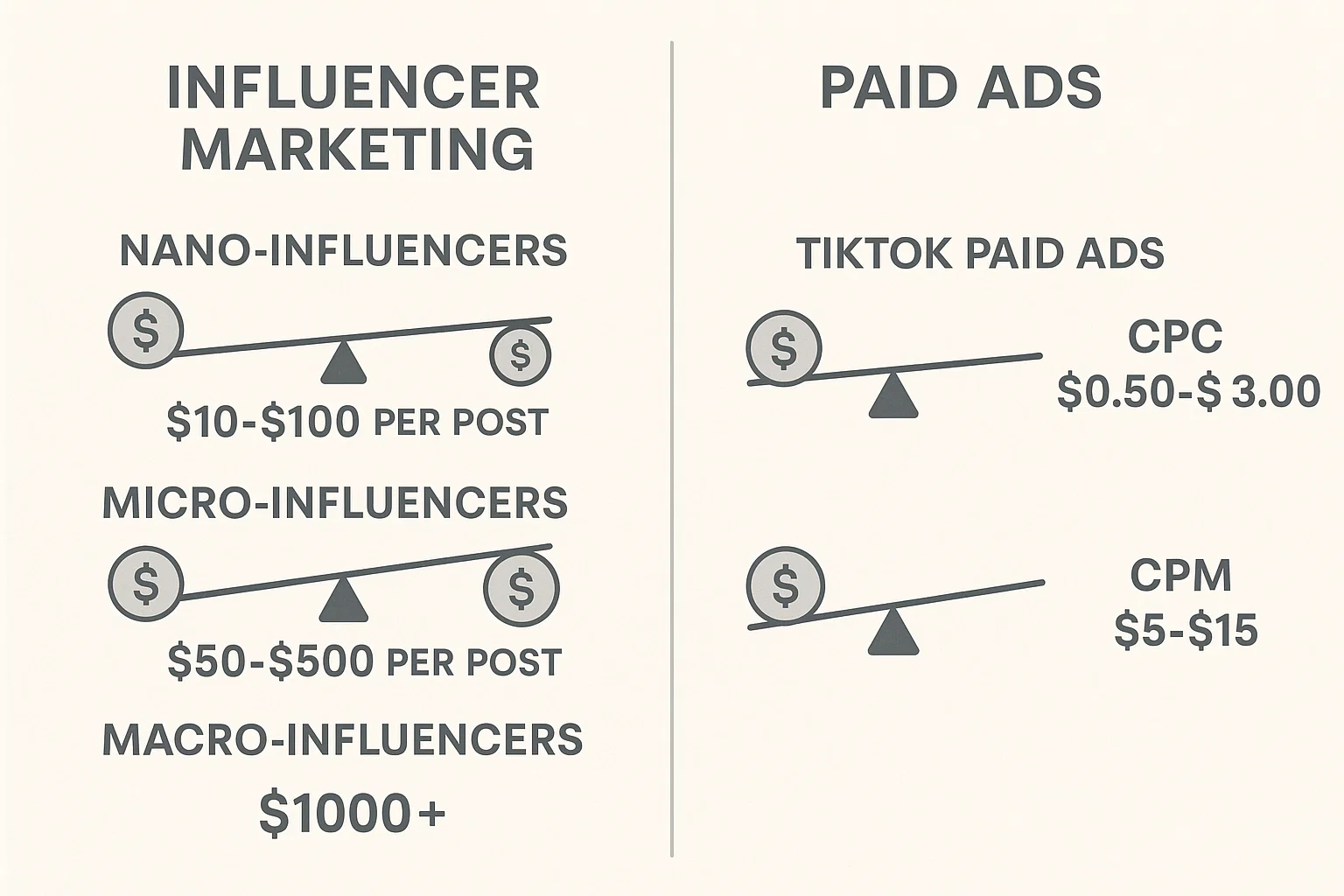
Another reason TikTok influencer marketing has gained momentum is its flexibility in terms of budgets. Micro-influencers with 1,000 to 100,000 followers often charge anywhere between $50 and $500 per post. Larger macro-influencers command higher rates but deliver broader reach. This scalability enables both startups and established brands to test TikTok influencer marketing campaigns without overspending.
The cost-per-engagement is often more attractive than TikTok paid ads. This is particularly true when working with niche influencers whose audiences are highly loyal and responsive. Instead of paying for impressions that may not convert, brands invest in content creation that drives engagement. This content continues to generate shares even weeks after the original post.
Long-term Content Value
One of the most significant benefits of TikTok influencer marketing partnerships is the long-term value of the content they create. A high-performing influencer video does not simply fade away once it is published. It can continue to drive engagement, views, and even conversions for months without any additional investment. This is a sharp contrast to paid TikTok advertising, where the flow of traffic stops as soon as the budget runs out.
Influencer-generated content also carries value beyond the platform itself. With the proper permissions, brands can repurpose influencer videos across other marketing channels. These include social ads, email campaigns, and even product pages. This extends the campaign’s initial impact and maximizes the overall return on investment.
 For more details on current influencer marketing trends and costs, you can explore Influencer Marketing Hub’s TikTok guide, which provides updated data on ROI and pricing structures.
Paid TikTok Ads: Precision and Scalability
Advanced Targeting Capabilities
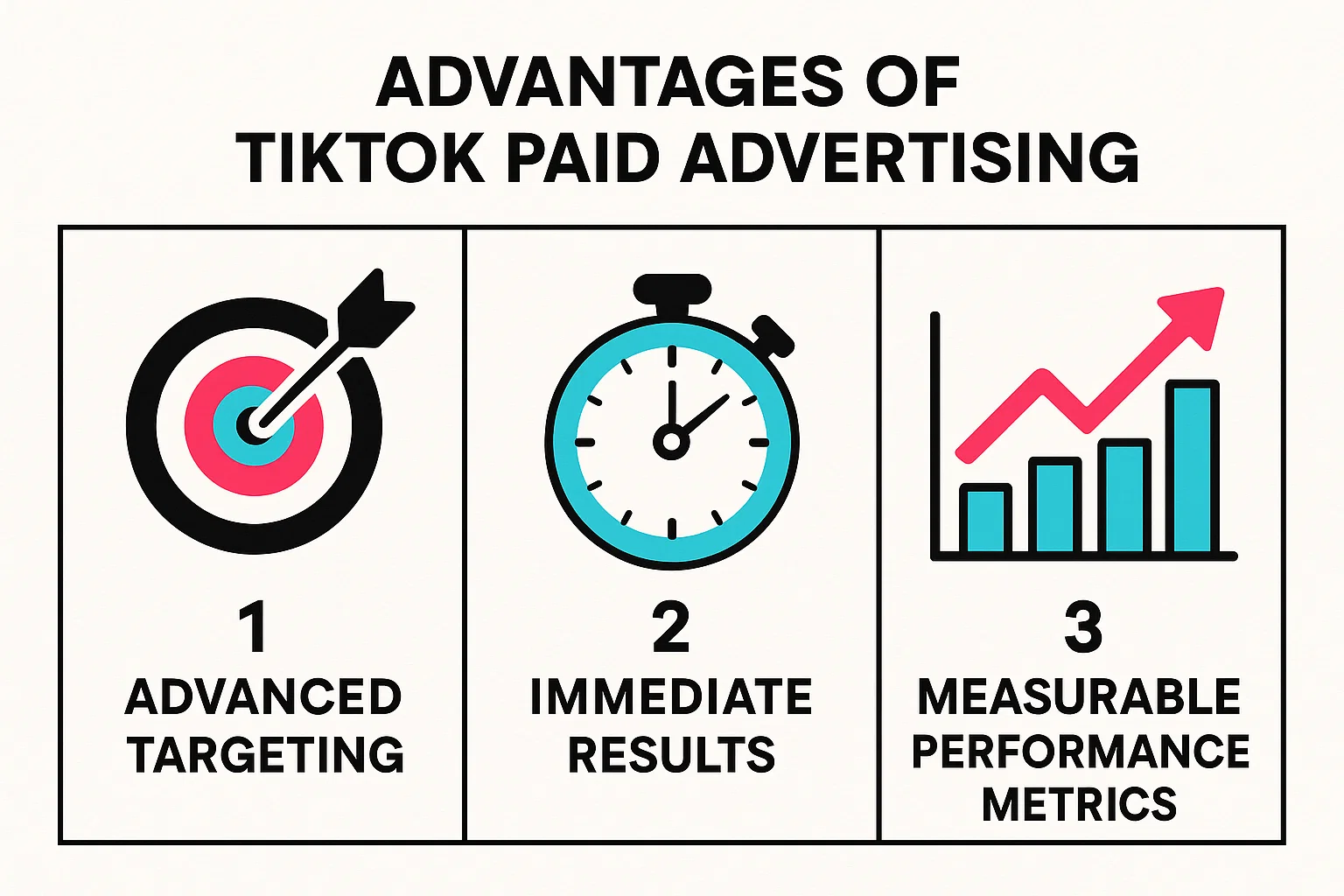
TikTok paid ads give businesses access to one of the most advanced targeting systems in social media marketing. Brands can narrow down audiences by demographics, interests, shopping behaviors, and device usage. They can even create custom audiences using their own customer data. This level of precision targeting enables companies to place their content in front of the exact right users at the right time. This provides far greater accuracy than TikTok influencer marketing alone can achieve.
For businesses with defined customer profiles or those launching a new product, TikTok advertising strategies offer a clear advantage. They need to test market demand quickly. The ability to control who sees your content and how often it is displayed provides predictability. This is something that TikTok influencer marketing partnerships cannot always guarantee.
Immediate Results and Campaign Control
Unlike TikTok influencer marketing campaigns that may take time to gain traction, TikTok advertising delivers immediate results. As soon as your campaign goes live, you can begin generating impressions, clicks, and conversions within hours. This immediacy is especially valuable for time-sensitive promotions, seasonal sales, or urgent product launches where speed is crucial.
Control is another significant advantage. With TikTok ads, you decide on budgets, test different creatives, and make real-time adjustments based on campaign performance. You can pause underperforming ads and scale the best ones quickly. This ensures your spend is always directed where it drives the most value.
Measurable Performance Metrics
One of the most substantial benefits of TikTok paid advertising is access to detailed analytics. The TikTok Ads Manager dashboard provides key metrics such as cost-per-click, conversion rates, and return on ad spend. This makes campaign optimization more straightforward. These insights enable marketers to refine their approach and clearly demonstrate ROI to stakeholders.
In addition, TikTok’s pixel tracking and conversion measurement tools integrate seamlessly with most e-commerce platforms. This means you can track a customer’s journey from the very first ad impression through to purchase. Every dollar spent is measurable. For step-by-step details on how the system works, you can visit TikTok for Business, which offers resources for advertisers at every level.
 Need help setting up advanced TikTok advertising campaigns with proper tracking and optimization? Contact our marketing experts for personalized campaign management services.
Cost Comparison: TikTok Influencer Marketing vs Paid Ads
TikTok Influencer Marketing Investment Structure
The cost of TikTok influencer marketing can vary greatly depending on the creator’s audience size, engagement rates, and niche expertise. For example, nano-influencers with 1,000 to 10,000 followers often charge between $10 and $100 per post. On the other hand, well-established creators with millions of followers may ask for thousands of dollars for a single sponsored video.
But the financial commitment does not stop at creator fees. Running a successful TikTok influencer marketing campaign usually involves additional spending, such as:
- Sending product samples or gifts
- Managing communication and coordination across campaigns
- Securing content rights and usage permissions
- Investing in tracking and reporting tools to measure performance
Due to these additional layers, total costs can range from a few hundred dollars for micro-influencer campaigns to tens of thousands for larger partnerships with top-tier TikTok creators.
Paid Advertising Cost Structure
TikTok advertising follows an auction-based model. This means costs shift depending on the competitiveness of your target audience, the quality of your ad creatives, and your chosen objectives. While marketers generally report spending an average of $46.47 per user across social platforms, TikTok can often be more affordable. The platform still offers lower competition compared to sites like Instagram or Facebook.
Here are the most common TikTok ad costs:
- Cost-per-click (CPC): $0.50 to $3.00
- Cost-per-thousand impressions (CPM): $5 to $15
- Cost-per-acquisition (CPA): Highly variable, depending on your industry and product price point
One advantage of TikTok ads is predictability. With the proper campaign settings, budget planning becomes easier compared to TikTok influencer marketing. Still, to get the best performance, you need ongoing testing and consistent optimization rather than a “set it and forget it” approach.
 ROI Analysis and Value Assessment
Studies from HubSpot show that TikTok influencer marketing has delivered up to 11 times the ROI of traditional banner ads. This is primarily because audiences often perceive creators as more authentic and trustworthy than branded messages. That said, this return on investment depends heavily on choosing the right influencers. It also depends on aligning them with your audience and managing campaigns effectively.
Paid advertising ROI, on the other hand, is strongly influenced by campaign management. With skilled optimization, ad creatives that resonate, and smart budget allocation, TikTok ads can deliver highly profitable returns. Poorly managed campaigns, however, can drain budgets without generating meaningful results.
Both strategies have clear strengths. TikTok influencer marketing offers authenticity and trust, while TikTok advertising provides scalability and predictability. For many brands, the best results come from striking a balance between both, rather than choosing one over the other.
Performance Metrics: What the Data Reveals
TikTok Influencer Marketing Engagement Rate Comparisons
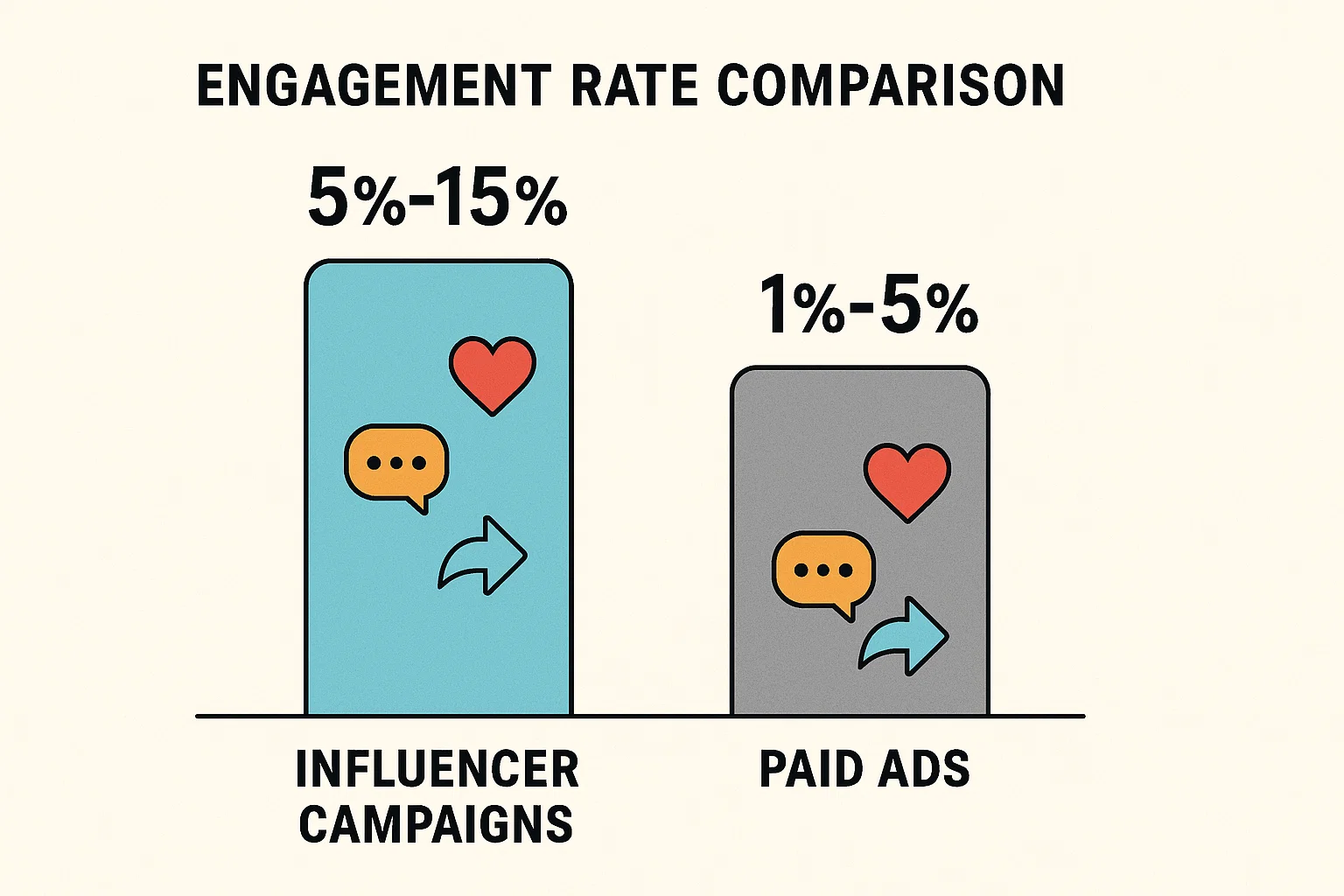
When it comes to engagement, TikTok influencer marketing content almost always outperforms traditional paid advertising. Authentic creator videos often generate engagement rates between 5% and 15%. Paid ads generally fall within the 1% to 5% range, depending on the strength of the creative and the precision of the targeting setup.
The type of engagement is also different. TikTok influencer marketing campaigns often lead to more meaningful interactions. These include shares, saves, and genuine comments that reflect real interest. Paid ads, by contrast, tend to get more surface-level engagement, such as quick likes or passive views. These deeper influencer interactions help drive stronger brand awareness and higher purchase intent over time.
Conversion Performance Analysis
Conversion results depend heavily on the campaign’s goal and execution. TikTok influencer marketing excels during the awareness and consideration stages. This is when audiences are still forming opinions and weighing their options. Paid ads, however, typically deliver stronger performance when the goal is direct response. This includes getting immediate sales or sign-ups.
Research from Sprout Social shows that 62.2% of marketers prioritize video views as their primary KPI for TikTok campaigns. Meanwhile, 27.7% focus more on likes and comments. This demonstrates that success measurement on TikTok is not just about sales. It is also about broader engagement and brand-building impact.
Reach and Scale Considerations
Scalability is where paid advertising takes the lead. With ads, you can quickly increase your budget to expand reach almost instantly. TikTok influencer marketing, on the other hand, is naturally limited by the creator’s audience size and the content’s potential to go viral.
That said, TikTok influencer marketing content carries a unique advantage. If a campaign resonates, a single influencer video can organically achieve millions of views without any added spend. In many cases, this kind of organic reach would cost tens of thousands of dollars if you were trying to replicate it through paid advertising.
Which Strategy Works Better for Different Business Types?
Startup and Small Business Considerations
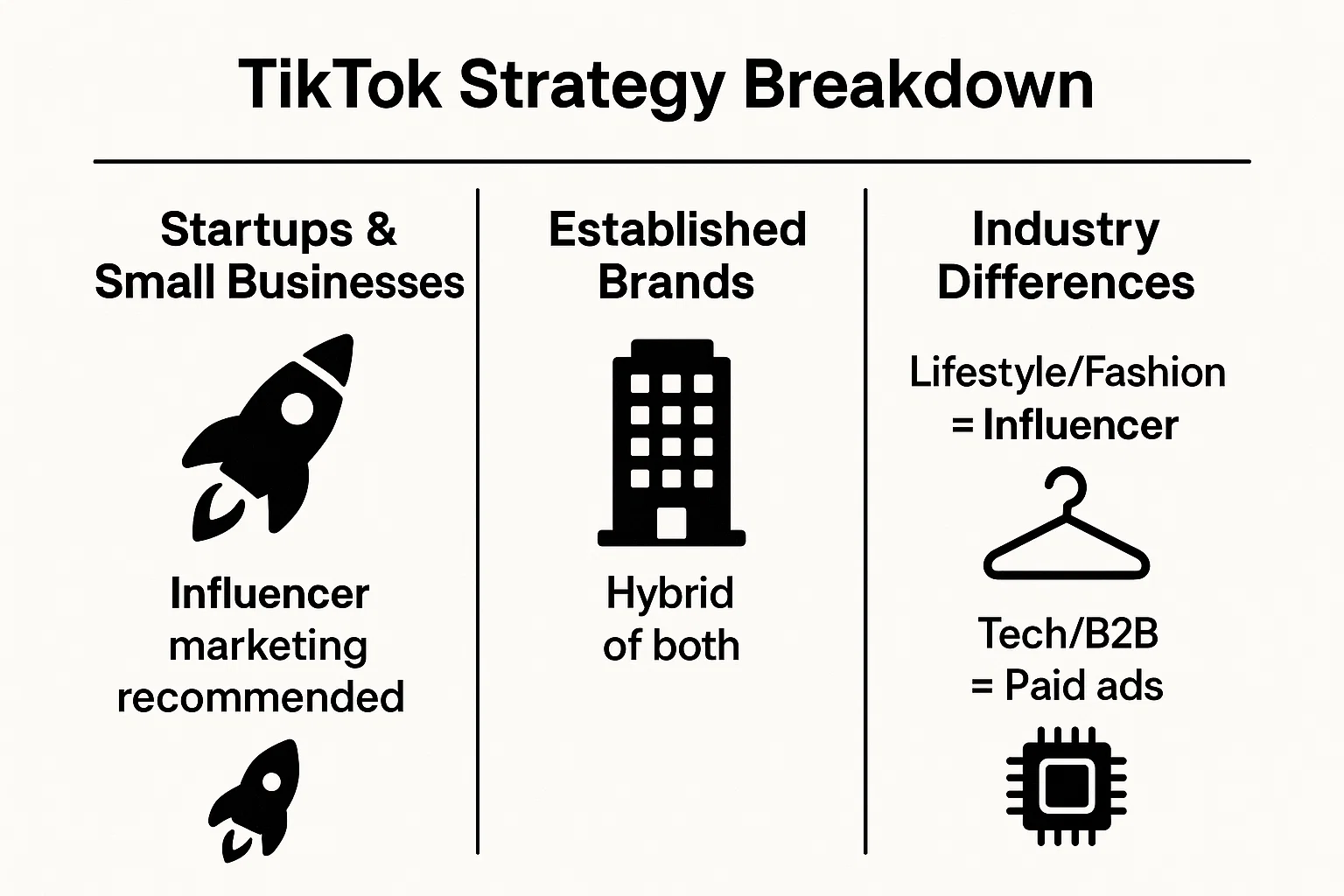
For startups and smaller businesses with limited resources, TikTok influencer marketing often delivers more value. Partnering with micro-influencers offers access to smaller, yet highly engaged, communities at a manageable cost. These partnerships not only introduce your brand to new audiences but also help shape your visual identity. They help build your overall brand voice through authentic collaborations with creators.
Paid advertising can be riskier at this stage. Without strong campaign management and proper optimization, budgets can disappear quickly with little return. For early-stage businesses, TikTok influencer marketing campaigns typically offer a safer entry point. They enable businesses to test product messaging while building credibility in a more organic manner.
Established Brand Optimization
Larger companies with experienced marketing teams are usually better positioned to benefit from a combination of both strategies. TikTok influencer marketing partnerships bring brand credibility and create authentic content that resonates with audiences. Meanwhile, TikTok ads enable these brands to scale, control targeting, and achieve specific conversion goals.
The most innovative approach for established brands is not choosing one over the other but blending both. For example, influencer videos that perform well can be boosted with paid promotion, extending their reach. Likewise, ad campaigns can benefit from influencer-style content that feels more relatable and less like traditional advertising.
Industry-Specific Performance Patterns
Not every industry experiences the same results. Visual categories such as fashion, beauty, and lifestyle often yield stronger performance from TikTok influencer marketing. Audiences trust recommendations in these spaces and value authenticity. On the other hand, tech brands and B2B services typically perform better with paid campaigns. These enable precise targeting and the opportunity to explain more complex product details systematically.
That said, there are always exceptions. Even in B2B, the right influencer can drive surprising results. Paid ads in lifestyle niches can still generate consistent conversions. Testing and measuring both approaches remains the most reliable way to find the balance that works best for your business.
 Best Practices for Implementation Success
TikTok Influencer Marketing Partnership Optimization
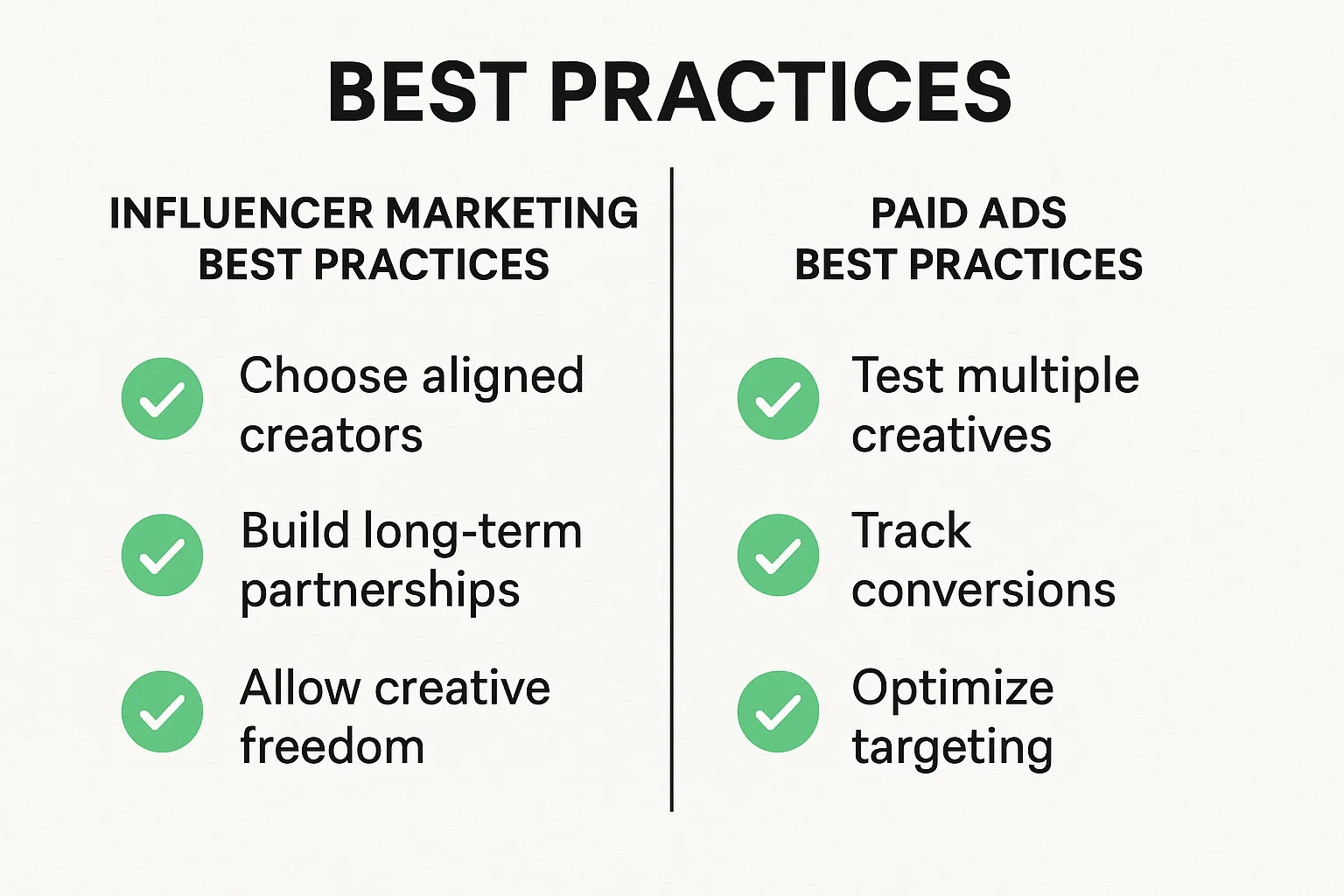
Successful TikTok influencer marketing campaigns require carefully selecting creators based on audience alignment, not just follower counts. Engagement rates, audience demographics, and content style compatibility matter more than raw reach numbers.
Effective collaboration practices include:
- Providing creative freedom while maintaining brand guidelines
- Establishing clear performance expectations and measurement criteria
- Building long-term relationships rather than one-off transactions
- Leveraging user-generated content permissions for additional marketing uses
Paid Campaign Excellence
TikTok advertising success depends on the quality of creative content and continuous optimization. The platform’s algorithm rewards engaging content. This makes creative development as crucial as targeting precision.
Key optimization strategies include:
- Testing multiple creative variations to identify top performers
- Using TikTok’s native video editing features to match platform aesthetics
- Implementing proper conversion tracking for accurate performance measurement
- Adjusting targeting based on performance data and audience insights
Ready to implement a comprehensive TikTok marketing strategy that combines the best of both worlds? Discover our specialized TikTok marketing services designed to maximize your platform performance.
Making the Right Choice for Your Business
Assessment Framework for TikTok Influencer Marketing
Choosing between TikTok influencer marketing and paid ads requires evaluating multiple factors specific to your business situation. Consider your budget constraints, timeline requirements, team expertise, and primary marketing objectives when making this decision.
Budget considerations extend beyond initial investment to include ongoing management requirements. TikTok influencer marketing campaigns need relationship management and creative coordination. Paid advertising requires technical optimization and performance analysis expertise.
Hybrid Approach Benefits
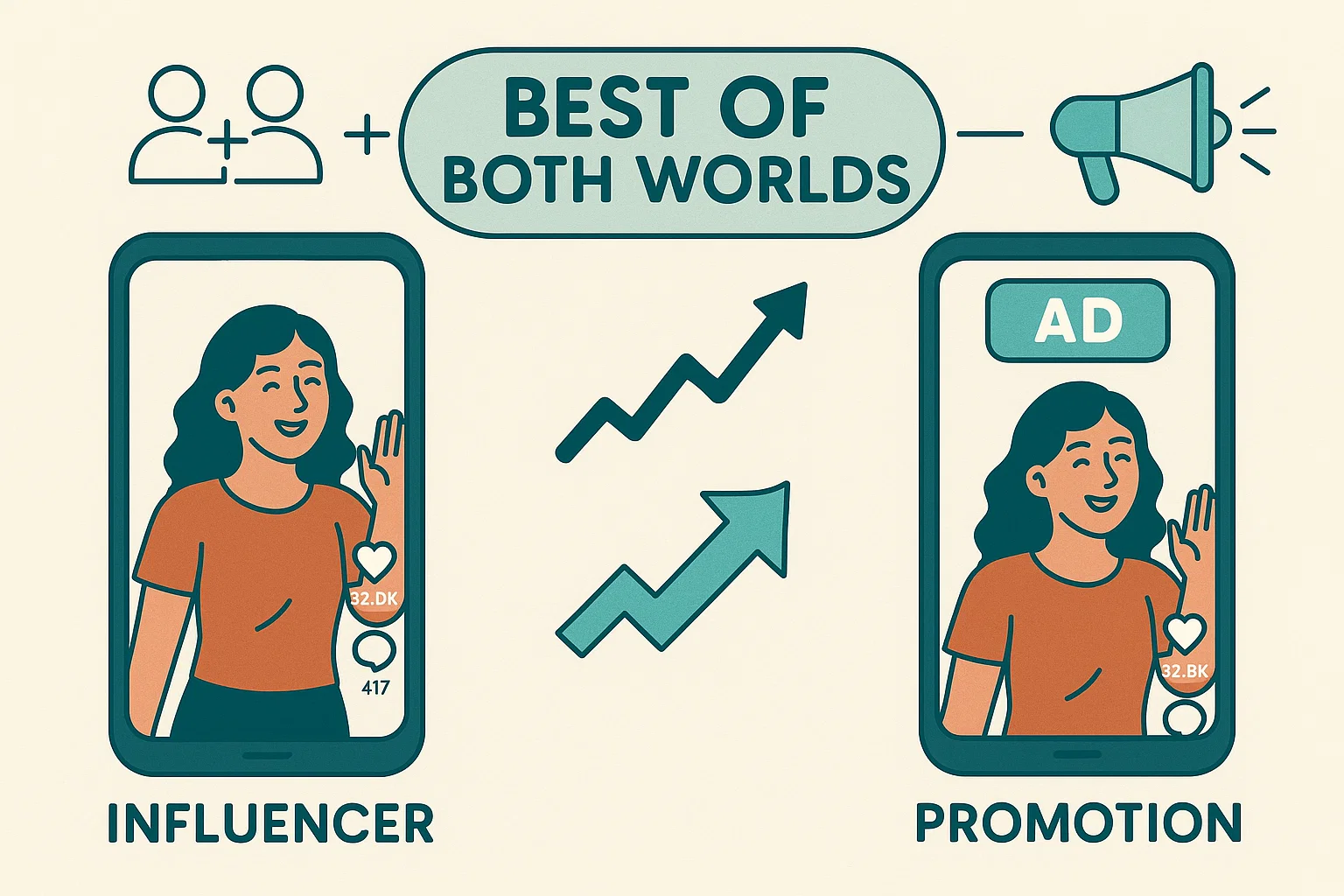
Many successful businesses discover that combining TikTok influencer marketing partnerships with paid advertising creates synergistic effects. Influencer content offers authentic, creative assets that can be leveraged in paid campaigns. Meanwhile, paid promotion can amplify successful influencer content to broader audiences.
This integrated approach allows you to leverage the authenticity benefits of TikTok influencer marketing while maintaining the control and scalability advantages of paid advertising.
Testing and Optimization Strategy
Regardless of your initial approach, systematic testing remains crucial for long-term success. Start with smaller investments to validate performance before scaling successful strategies. Document what works, what doesn’t, and why to build institutional knowledge for future campaigns.
Regular performance analysis helps identify optimization opportunities. It ensures that your marketing investments continue to deliver positive returns as platform dynamics and audience preferences evolve.
Conclusion
The choice between TikTok influencer marketing and paid advertising isn’t necessarily an either-or decision. Each strategy offers distinct advantages that can complement your overall marketing objectives and business growth goals.
TikTok influencer marketing excels at building authentic brand connections, creating engaging content, and achieving cost-effective reach through trusted relationships with creators. With brands earning $5.78 for every $1 spent, the ROI potential makes influencer partnerships particularly attractive for businesses focused on long-term brand building.
Paid advertising offers immediate results, precise targeting control, and predictable scaling opportunities. These can drive direct conversions and facilitate rapid market penetration. The key lies in understanding your specific business needs, available resources, and performance objectives.
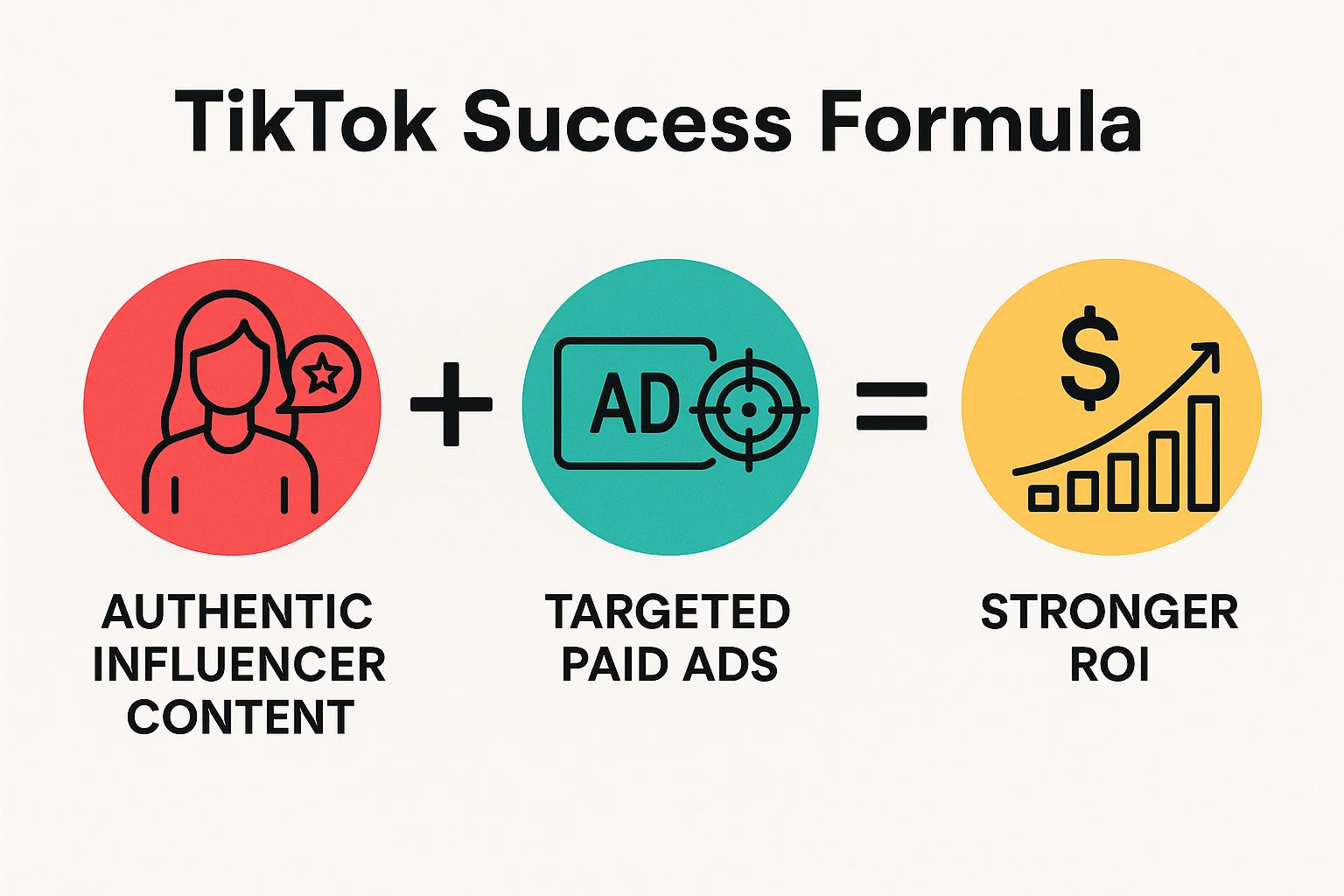
For most e-commerce businesses, the optimal approach combines elements of both strategies. Start by testing smaller campaigns in each area to understand what resonates with your target audience. Then scale successful tactics while maintaining the flexibility to adapt as platform dynamics evolve.
Success on TikTok requires ongoing optimization, creative excellence, and a profound understanding of the platform’s culture and user behavior. Whether you opt for TikTok influencer marketing partnerships, paid advertising, or a hybrid approach, consistent testing and performance measurement will ultimately determine your long-term marketing success.
The TikTok influencer marketing landscape continues to evolve rapidly. This makes professional guidance valuable for businesses serious about achieving platform success. Expert strategy development, campaign management, and performance optimization can significantly improve your results. They help you avoid costly mistakes that drain budgets without delivering returns.
Frequently Asked Questions
Q. How much does TikTok influencer marketing cost compared to paid ads?
TikTok influencer marketing costs vary widely from $10-100 for nano-influencers to thousands for macro-influencers. Paid ads typically cost $0.50-$3.00 per click or $5-$15 per thousand impressions. The total investment depends on campaign scope, duration, and performance objectives.
Q. What type of businesses see better results from TikTok influencer marketing partnerships?
Consumer-facing brands in the fashion, beauty, food, and lifestyle categories typically achieve stronger TikTok influencer marketing results. This is due to the visual appeal of their products and the significant role personal recommendations play in these purchasing decisions.
Q. Can small businesses compete with paid TikTok advertising?
Yes, small businesses can succeed with TikTok paid advertising by focusing on niche targeting, creating compelling content, and managing their budget carefully. Starting with smaller daily budgets allows for testing and optimization without significant financial risk.
Q. How quickly can I see results from each strategy?
Paid TikTok ads can generate immediate traffic and conversions within hours of campaign launch. TikTok influencer marketing typically takes longer to show results. It often requires several days to weeks as content gains organic traction and engagement builds over time.
Q. Should I use both TikTok influencer marketing and paid ads together?
Combining both strategies often produces superior results by leveraging the authenticity of TikTok influencer marketing content and the scalability of paid promotion. This hybrid approach enables you to amplify successful influencer content through paid campaigns while maintaining authentic relationships with creators.
Take the next step in your TikTok influencer marketing journey and transform your social media presence into a powerful revenue driver for your e-commerce business. Get started today with expert guidance.
