
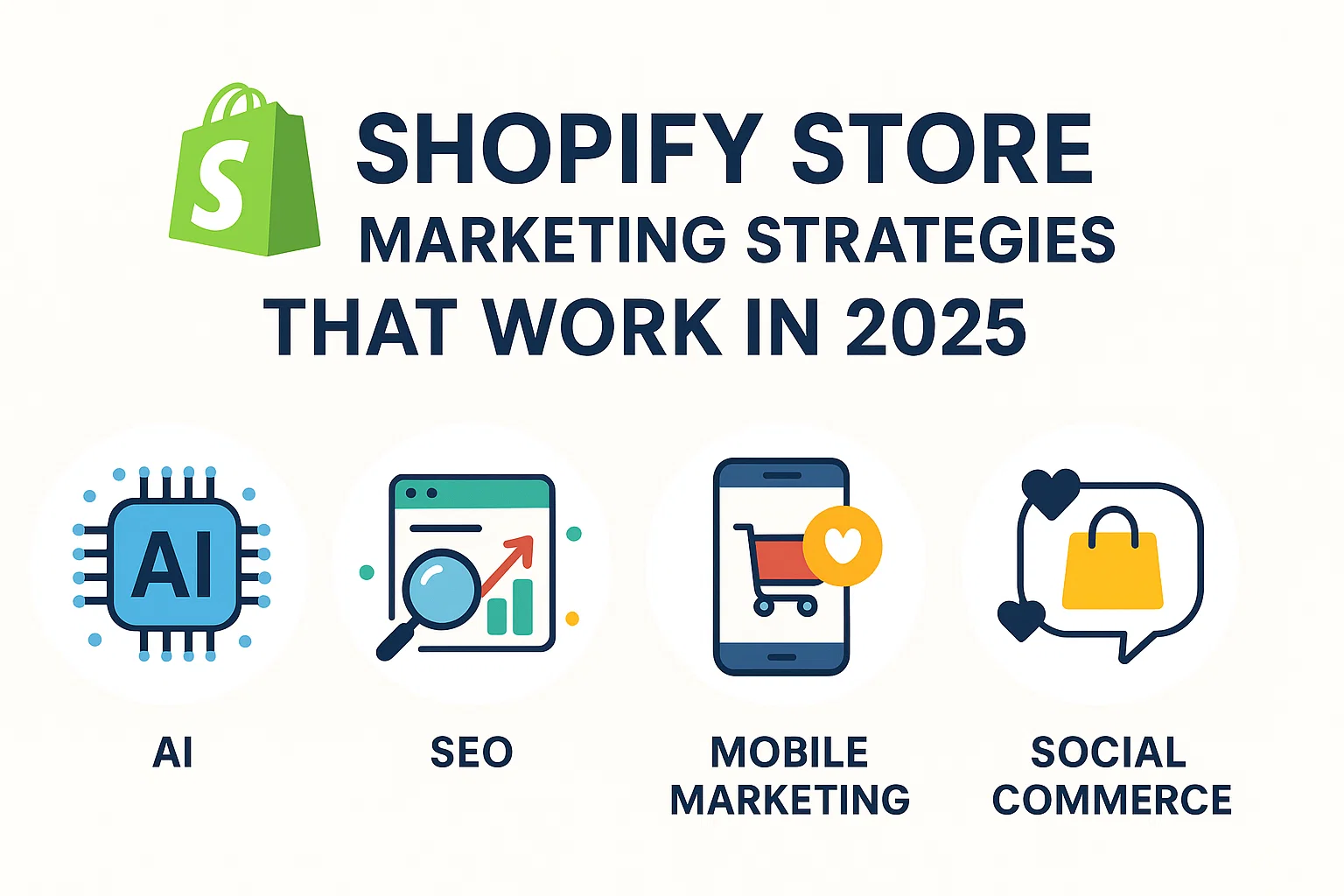
Best Shopify Marketing Strategies for 2025 to Grow Sales Faster
The most effective Shopify marketing strategies are changing how online stores connect with customers in 2025. In fact, implementing the right Shopify marketing strategies can boost your sales significantly. Additionally, the global e-commerce sector will exceed $6 trillion by 2029, according to Statista. As a result, this creates huge opportunities for merchants. However, competition is also getting tougher.
Therefore, brands must focus on smart Shopify marketing strategies. Moreover, these strategies drive real growth and deliver clear results. Furthermore, knowing which Shopify marketing strategies work is vital for success. Whether you’re new or experienced, success depends on good execution. Specifically, the difference lies in how you use AI, personalized experiences, and multi-channel marketing.
Are you ready to boost your store’s performance? Then, let’s explore proven Shopify marketing strategies that work today. Additionally, visit our comprehensive e-commerce services to get expert guidance for your goals.
Understanding the Shopify Marketing Strategies Landscape in 2025
First, Shopify has become a powerful platform for millions of businesses worldwide. Currently, millions of active Shopify stores operate globally. In fact, store numbers increased by 9% last year. Consequently, you need smart strategies to market your store well.
Importantly, what makes Shopify marketing strategies different in 2025 is how things are changing. Today, people want personalized experiences and quick responses. Meanwhile, marketing technology has become easier to use. As a result, small businesses now access tools that big companies once monopolized.
Therefore, modern merchants must balance privacy rules with targeted marketing. Thus, finding this balance requires a careful approach. Ultimately, understanding these factors is key to building effective Shopify marketing strategies.
AI-Driven Shopify Marketing Strategies for Automation and Growth
First of all, AI has become essential for effective Shopify marketing strategies. Specifically, the technology’s power lies in delivering personal touches at scale. Now, businesses can send targeted messages to thousands of customers at once. Nevertheless, each message feels relevant and personal.
Furthermore, machine learning helps stores analyze customer behavior and predict purchases. Additionally, campaigns adjust in real-time based on data. As a result, this leads to better email marketing and stronger product suggestions. Also, smarter targeting improves results across all channels.
Moreover, Shopify AI tools play a direct role in the shopping journey. For instance, smart chatbots answer customer questions instantly. Besides saving time, these AI solutions create smoother experiences. Therefore, they build trust and turn interest into sales. Importantly, the key is choosing AI that truly helps customers.
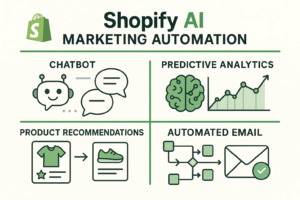
Similarly, predictive analytics identifies your best customers. Consequently, businesses can run targeted campaigns to keep them. Thus, this maintains steady growth in customer value over time.
Social Commerce Focused Shopify Marketing Strategies
Notably, social commerce has become a game-changer for Shopify marketing strategies. In particular, merchants expand their reach by meeting shoppers where they are. Currently, social platforms feature built-in shopping tools. Therefore, customers can browse and buy without leaving their favorite apps.
For example, Instagram and Facebook Shopping make product discovery seamless. As a result, casual browsing turns into actual sales. Meanwhile, TikTok Shop has exploded in reaching younger shoppers. Similarly, Pinterest’s shopping features work great for lifestyle and fashion brands.
Importantly, the secret to social commerce success is creating the right content. Additionally, user-generated content and social proof build trust effectively. Thus, these elements create authenticity that traditional ads can’t match.
Furthermore, cross-platform consistency matters for strong Shopify marketing strategies. Consequently, when your brand feels cohesive across channels, you maximize results. Therefore, this creates stronger connections with your audience everywhere.
SEO Focused Shopify Marketing Strategies for Long-Term Traffic
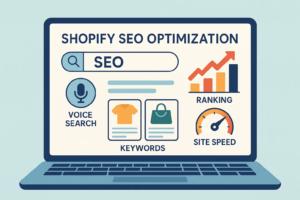
Clearly, SEO remains one of the best Shopify marketing strategies available. Specifically, it attracts quality traffic without big advertising costs. However, success in 2025 requires more than just keywords. Instead, today’s approach must be smart and layered.
First, technical SEO forms the foundation of your efforts. Therefore, ensure your site loads quickly and works well. According to Google’s research, mobile optimization greatly impacts sales. Thus, practical steps include compressing images and improving speed. Also, clean URLs help performance too.
Moreover, pairing content marketing with SEO boosts results further. For instance, blog posts answering customer questions build authority. Additionally, buying guides and tutorials improve your search visibility. Consequently, these resources position your store as a trusted expert.
Furthermore, for businesses with physical locations, local SEO is crucial. Specifically, optimizing for “near me” searches drives local traffic. Also, keeping Google Business listings updated attracts ready buyers immediately.
Finally, voice search optimization is increasingly important in Shopify marketing strategies. Currently, more shoppers use smart speakers daily. Therefore, structure content to answer natural questions. As a result, this makes product discovery quicker and easier.
Email Automation Shopify Marketing Strategies That Convert
Undoubtedly, email marketing delivers excellent results for Shopify marketing strategies. However, success requires more than basic emails. Instead, modern approaches use behavioral triggers and dynamic content. Additionally, advanced targeting creates personal experiences for each customer.
First, welcome series emails should tell your brand’s story effectively. Also, showcase best-selling products and offer immediate value. Therefore, this first impression sets the tone for the relationship.
Similarly, abandoned cart emails remain highly effective. Importantly, the best sequences do more than remind people. Instead, they address concerns and provide social proof. Also, they offer limited-time deals to encourage completion.
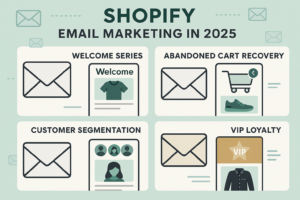
Furthermore, post-purchase emails turn one-time buyers into loyal customers. Specifically, these campaigns request reviews and provide product tips. Additionally, they suggest related items that customers might like. Thus, the goal is to keep engagement strong after the sale.
Moreover, targeting based on purchase history enables smart messaging. For example, VIP customers get early sale access. Meanwhile, newer customers receive helpful educational content. Consequently, this builds confidence in your brand over time.
Content Marketing That Converts
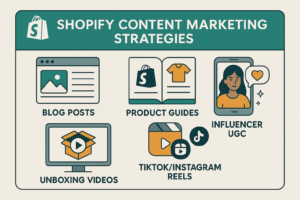
Importantly, when creating content marketing, balance being helpful with driving sales. Specifically, strong content solves real customer problems while showing product solutions. Therefore, if focusing on products, go deeper than basic facts.
For instance, detailed buying guides help shoppers make smart decisions. Additionally, these formats naturally include keywords for SEO. According to HubSpot’s research, valuable content drives big engagement increases. Thus, quality content is worth the investment.
Moreover, video content has become essential for online success. Clearly, shoppers want to see products in action first. Therefore, product demos and customer reviews carry real weight. In particular, short videos on TikTok and Instagram Reels are highly effective.
Furthermore, user-generated content adds trust to Shopify marketing strategies. Specifically, when customers share experiences, it builds community. Consequently, this content feels more real than polished ads. As a result, it convinces potential buyers more effectively than traditional marketing.
Ready to boost your marketing? Then contact our team to discuss how we can optimize your store and drive more sales.
Influencer Partnerships and Collaborations
Notably, influencer marketing has changed significantly for modern Shopify marketing strategies. Today, real impact comes from partnering with creators who match your values. Specifically, micro and nano-influencers generate stronger engagement with focused audiences. Often, they outperform mega-influencers with huge but less engaged followers.
Therefore, choose influencers whose followers match your target customers. Clearly, quality matters far more than quantity. In fact, smaller, authentic followings typically convert better. Additionally, long-term partnerships often outperform short-term campaigns significantly.
Furthermore, sending products to relevant influencers works effectively. Particularly, when brands offer unique products, creators share them organically. Thus, this provides exposure at low cost with real endorsements.
Similarly, affiliate partnerships create models that benefit everyone. Specifically, payment ties to actual sales, motivating success. Consequently, this alignment encourages influencers to promote more actively. Therefore, it helps businesses build stronger relationships and steady growth.
Mobile First Shopify Marketing Strategies for 2025
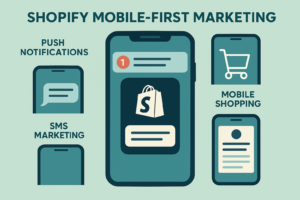
Clearly, mobile commerce is growing fast, making mobile-first Shopify marketing strategies essential. Statista reports that mobile commerce will hit 59% of all e-commerce sales in 2025. Specifically, this reaches over $4 trillion globally.
Therefore, build marketing specifically for mobile shoppers. Importantly, don’t just adapt desktop strategies for small screens. Instead, mobile users interact differently and need smooth experiences.
For example, mobile email campaigns require attention to detail. Specifically, subject lines should grab attention quickly. Also, layouts should be clean and single-column. Therefore, calls-to-action should be large enough for easy tapping.
Moreover, SMS marketing has made a big comeback recently. In fact, people almost always open text messages immediately. However, balance is key to avoiding annoying customers. Thus, well-timed updates like welcome offers create a connection without overwhelming.
Furthermore, developing mobile apps transforms shopping experiences. Specifically, push notifications provide direct communication with customers. Consequently, this makes engagement easier and encourages repeat purchases. Ultimately, good mobile Shopify marketing strategies drive sales and build loyalty.
Customer Retention and Loyalty Programs
Clearly, customer retention costs less than getting new buyers. Therefore, it’s a cornerstone of successful Shopify marketing strategies for long-term growth. Specifically, loyalty programs reward repeat purchases. Additionally, they build trust and increase customer lifetime value.
First, point-based systems remain popular and easy to understand. However, many modern programs go further with experience rewards. For instance, exclusive access creates deeper emotional connections. Thus, these extras transform transactions into lasting relationships.
Moreover, subscription models have gained momentum for suitable products. Specifically, shoppers like convenience, and merchants get predictable revenue. However, ensure subscriptions deliver real value rather than feeling forced.
Similarly, referral programs drive growth by using satisfied customers. Particularly, when rewards are meaningful for both sides, it feels genuine. Consequently, this approach strengthens loyalty while attracting fresh customers naturally.

Data-Driven Shopify Marketing Strategies and Performance Tracking
Importantly, marketing needs real performance data and constant improvement. First, Shopify offers built-in analytics covering the basics. However, as merchants grow, many add tools for deeper insights.
Specifically, optimization centers on testing different elements with Shopify marketing strategies. Therefore, experiment with store elements and campaign variations systematically. Consequently, uncover what resonates most with your specific audience.
For example, test product pages, email subjects, and checkout flows. Thus, determine which variations reduce drop-offs and increase sales. According to Forbes, data-driven decisions greatly outperform gut feelings. Therefore, let data guide your choices.
Moreover, calculate customer lifetime value to identify the best channels. Specifically, this metric shows which customer groups bring the strongest returns. Consequently, allocate marketing budgets more confidently with this knowledge. Thus, know exactly how much you can spend to get customers.
Finally, attribution modeling ties all efforts together for Shopify marketing strategies. Typically, buyers interact with multiple touchpoints before buying. Therefore, understanding which efforts drive sales is essential. Consequently, clear visibility helps distribute budgets for maximum results.
Emerging Technologies and Future Trends
Notably, merchants staying current with technology gain clear competitive edges. For instance, AR and VR features now let customers see products in their spaces. As a result, this reduces uncertainty and lowers returns significantly. Therefore, additional confidence can greatly impact sales.
Similarly, voice commerce keeps growing as shoppers use smart speakers. Thus, prepare for this shift by optimizing for voice search. Additionally, build shopping experiences that work with voice commands naturally.
Furthermore, some shoppers are opening up to cryptocurrency payments. Specifically, these options can differentiate your store from competitors. However, evaluate whether your customers actually want them first.
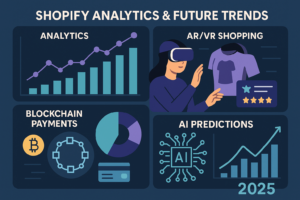
Moreover, AI will continue evolving, bringing more powerful personalization. Specifically, smarter customer service and stronger predictions are coming. Therefore, merchants staying updated can adopt tools that truly matter. Consequently, this ensures stores grow with technology instead of falling behind.
Conclusion
Clearly, success with the best Shopify marketing strategies requires combining techniques well. Specifically, promote your brand message across all customer touchpoints consistently. Importantly, the best merchants don’t rely on a single strategy. Instead, they assemble campaigns that work together powerfully.
Therefore, use data analysis, surveys, and feedback to understand customers deeply. Consequently, this foundation guides every marketing decision you make. Additionally, regular testing helps methods improve over time.
Furthermore, remember that marketing is an investment in future growth. Certainly, it’s easy to focus only on short-term gains. However, building brand awareness and relationships provides long-term value. Thus, this value grows substantially over time with consistent effort.
Notably, these proven Shopify marketing strategies work for successful retailers now. However, ideal strategies for your store depend on specific factors. Specifically, consider the products you sell and your target audience. Therefore, start with strong basics and adjust based on market changes.
Are you ready to use these Shopify marketing strategies in your store? Then, professional help can speed your success and avoid costly mistakes. Whether you need setup help or ongoing management, explore our Shopify dropshipping services today. Navigate e-commerce with expert guidance.
Frequently Asked Questions
Q. What is the cost of effectively starting to market a Shopify store?
You can start marketing for as little as $300–$500 monthly. This covers basic email marketing, social ads, and SEO tools. However, most successful stores invest 10–20% of revenue in marketing. Therefore, scale your budgets as sales grow for the best results.
Q. What’s the most important marketing channel for new Shopify stores?
Email marketing typically provides the highest return for new stores. Additionally, SEO follows for long-term sustainable growth. Meanwhile, social media advertising can provide quick results but needs ongoing optimization.
Q. How long does it take to see results from Shopify marketing strategies?
Email marketing and paid ads can show results within days or weeks. However, SEO and content marketing typically need 3-6 months to gain traction. Therefore, the key is using multiple Shopify marketing strategies at once for compound effects.
Q. Should I focus on organic or paid marketing for my Shopify store?
The most successful stores use both approaches together. Specifically, organic methods like SEO provide sustainable, long-term growth. Meanwhile, paid advertising generates immediate traffic and sales when needed.
Q. What marketing automation tools work best with Shopify?
Popular automation tools that integrate well include email platforms and multi-channel campaign tools. Additionally, various chatbot solutions work effectively for customer service. Therefore, the best choice depends on your specific needs and budget.
Transform Your Shopify Store Today
Let our experts handle the complexity while you focus on growing your business. Then, discover our services and see how we can help you build a profitable store. Our Shopify marketing strategies work around the clock to deliver results.
