
AI-Powered Chatbots for Customer Service: Complete Guide for E-Commerce in 2025
AI-powered chatbots for customer service are transforming online retail. Furthermore, recent Shopify research reveals that over 67% of customers now prefer automated support for quick answers. Consequently, this trend grows stronger as AI customer service chatbots become more conversational and intelligent.
Today’s AI-powered chatbots for customer service understand intent clearly. Additionally, they guide shoppers through product selections effortlessly. Moreover, these AI chatbots for e-commerce handle multiple requests simultaneously with consistent accuracy. As a result, businesses enjoy faster responses and improved satisfaction scores.
However, many store owners still feel uncertain about implementation. Therefore, this guide breaks down the entire process clearly. Specifically, it covers how AI-powered chatbots for customer service work, platform selection, and workflow creation. For deeper technical insights, explore IBM Watson’s comprehensive resources.
Why AI-Powered Chatbots Matter for E-Commerce Customer Service
Customer expectations have changed dramatically. Nowadays, people demand instant answers around the clock. Unfortunately, traditional support teams struggle to meet this pressure consistently.
Therefore, AI-powered chatbots for customer service fill this critical gap. Instantly, they provide accurate responses whenever shoppers reach out. Furthermore, these AI customer service chatbots manage routine shipping, return, and product questions automatically. Consequently, no customer waits for human agents on simple issues.
Additionally, AI chatbot customer service improves interaction consistency significantly. Each shopper receives identical accurate information. As a result, confusion drops while trust grows stronger.
Moreover, AI customer support tools track behavior patterns effectively. This data helps owners refine products and adjust marketing strategies. For small e-commerce brands, chatbot customer service creates competitive advantages against larger retailers.
Essentially, you don’t need massive support teams anymore. Instead, automated customer support handles repetitive tasks efficiently. Meanwhile, human staff focuses on complex personal issues. Similarly, if you’re ready to streamline operations, explore automation solutions at Amzart Solutions for proven e-commerce tools.
Benefits of AI-Powered Chatbots for Customer Service
Primarily, AI-powered chatbots reduce operational costs significantly. Hiring and training agents requires substantial time and money. Conversely, customer service automation tools handle large question volumes simultaneously.
Importantly, this doesn’t eliminate human staff entirely. Rather, it enhances team efficiency dramatically. Specifically, agents focus on complex, high-value conversations instead. Additionally, AI customer service chatbots boost satisfaction rates considerably.
According to Statista research, 73% of customers appreciate quick chatbot responses. Consequently, fast answers increase purchase completion and repeat visits. Therefore, speed directly improves conversion rates and customer loyalty.
Furthermore, AI-powered chatbots for customer service scale effortlessly. During peak shopping periods like Black Friday, message volumes surge dramatically. Typically, traditional teams fall behind quickly. However, automated customer support workflows maintain consistent service whether handling ten or ten thousand inquiries.
Additionally, modern conversational AI for customer service delivers personalization effectively. These AI customer service platforms study past chats and browsing behavior. For instance, running shoe buyers receive athletic product recommendations automatically. Ultimately, this AI-powered customer experience increases sales while making customers feel valued.
Step-by-Step Guide to Setting Up AI Chatbots for Customer Service
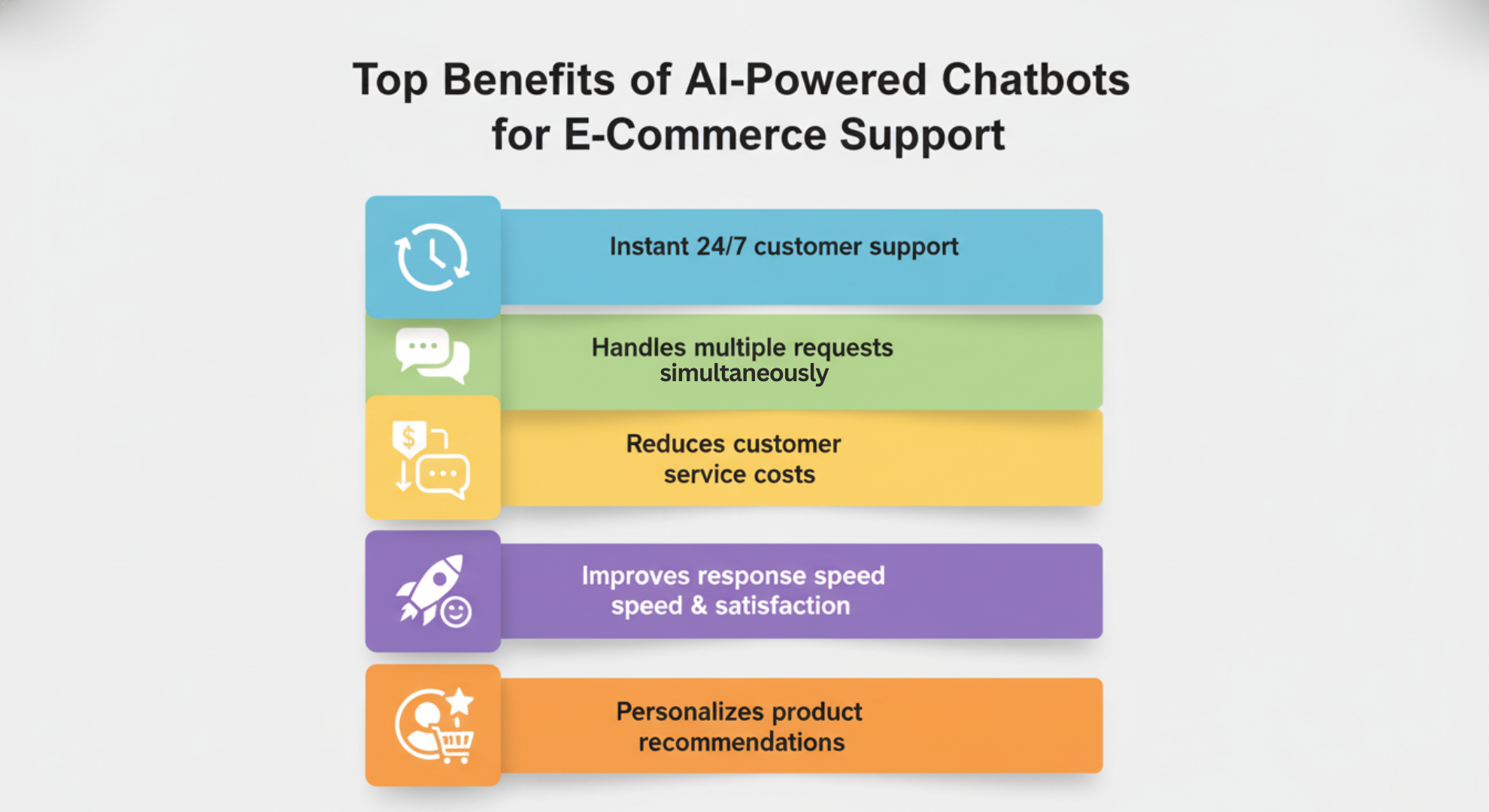
Setting up AI-powered chatbots for customer service is surprisingly straightforward. Generally, most platforms provide beginner-friendly dashboards. Therefore, this section offers a clear implementation roadmap.
Step 1: Choose the Best AI Chatbot for E-Commerce
Initially, compare different AI customer service software based on your needs. Popular AI customer service platforms like Tidio, Drift, Zendesk, and Intercom offer excellent features. Specifically, they include live chat integration, automated responses, and detailed analytics.
Moreover, some AI chatbot tools for online stores include prebuilt e-commerce templates. Consequently, tasks like order tracking become incredibly simple. Additionally, consider your budget carefully and plan for growth.
Fortunately, many chatbot tools for ecommerce offer free trials. Therefore, testing becomes risk-free and straightforward. Furthermore, read reviews from other store owners for guidance. Importantly, prioritize smooth integration with Shopify, WooCommerce, or Amazon systems.
For startups specifically, affordable AI chatbots for small businesses help launch without heavy investment. Similarly, if you’re exploring broader automation strategies, check out YouTube automation services for additional growth opportunities beyond customer service.
Step 2: Define Your AI Chatbot’s Purpose and Scope
Before building anything, clarify your objectives clearly. Specifically, will your AI-powered chatbots for customer service handle FAQs, process orders, or provide recommendations? Clearly, defining goals helps design effective conversations.
First, map common customer inquiries your team receives. Then, group them into categories like shipping, returns, and product information. Next, focus on automating repetitive tasks first through support ticket automation.
Consequently, human agents handle complex or sensitive issues exclusively. Understanding natural language understanding helps build smarter AI customer support chatbots. These capabilities allow your AI chatbot customer service to grasp customer intent accurately, even with varied phrasing.
Step 3: Build Natural Conversation Flows for Customer Service
Many businesses struggle with conversation design initially. Therefore, your AI customer service chatbots should feel friendly, not robotic. Use simple language reflecting your brand tone consistently.
Additionally, avoid jargon and formal phrases completely. Instead, create decision paths guiding customers through each situation smoothly. For example, return inquiries should trigger follow-up questions about order numbers.
After that, AI chatbots for e-commerce customer support offer clear next steps. However, this chatbot customer service workflow needs thorough testing. Include helpful fallback options when understanding fails.
Instead of leaving customers stuck, move conversations to human agents seamlessly. This small step prevents frustration and builds trust. Following best AI customer service practices means always providing easy escalation options.
Step 4: Integrate AI Chatbots with Your CRM and Business Systems
Customers interact with brands across multiple channels today. Therefore, your AI-powered chatbots for customer service should appear everywhere. Deploy them on websites, social media, and messaging apps like WhatsApp.
Furthermore, omnichannel chatbot support delivers consistent service across touchpoints. Integration must also include internal systems comprehensively. For instance, connect chatbots to inventory software for real-time stock updates.
Similarly, link them to your CRM through AI chatbot integration with CRM systems. This displays past orders and personalizes responses automatically. Essentially, more accessible data makes AI customer support tools more useful.
Moreover, if you need implementation assistance, contact experts at Amzart Solutions for dedicated e-commerce support. Their team ensures smooth automation workflows from day one.
Step 5: Train Your Chatbot with Real Customer Data
Generative AI chatbots improve continuously through experience. Therefore, feed historical customer service data regularly. Consequently, AI-powered chatbots for customer service recognize common questions accurately.
This chatbot onboarding process involves uploading previous conversations and FAQs. Notably, next-generation AI chatbots analyze thousands of interactions quickly. Regular monitoring helps identify knowledge gaps effectively.
If AI customer service chatbots struggle with questions, update databases immediately. Continuous training ensures AI customer support systems remain accurate. Additionally, modern AI chatbots for e-commerce use sentiment analysis to detect emotions. Consequently, they adjust tone or escalate frustrated users automatically.
Step 6: Test and Optimize Your AI Customer Service Chatbot
Roll out AI-powered chatbots gradually instead of immediately. Start with small customer groups first. Then, collect feedback and make improvements before full launch.
Track important metrics like response time and resolution rates. Use these to refine conversation flows continuously. Measuring AI chatbot ROI for customer service demonstrates value clearly.
Regular adjustments keep your AI customer service chatbots performing efficiently. Ultimately, you benefit from cost-effective AI support solutions consistently.
Common Challenges When Using AI-Powered Chatbots for Customer Service
Despite many advantages, AI chatbots for customer service present challenges. Understanding these issues helps avoid common mistakes.
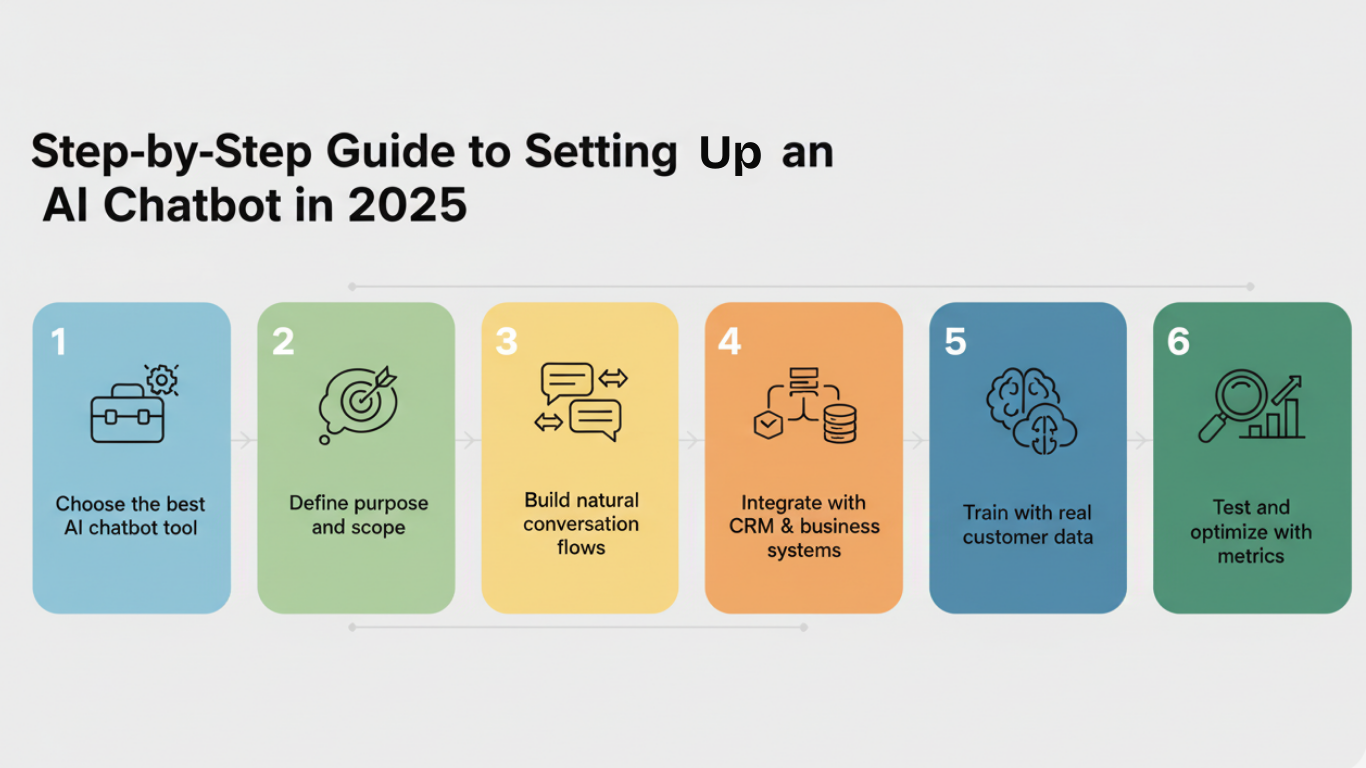
Challenge 1: Handling Complex or Emotional Customer Inquiries
AI-powered chatbots excel with simple questions initially. However, they struggle with emotional or nuanced situations. For instance, frustrated shoppers with damaged products need empathy immediately.
Therefore, AI customer service chatbots should identify urgency signals quickly. Train them to detect keywords like “disappointed” or “broken.” Consequently, these trigger escalation protocols through AI helpdesk automation immediately.
Challenge 2: Maintaining Brand Voice and Personality
Your AI chatbot customer service reflects your brand identity. If responses sound impersonal, customers feel disconnected. Therefore, take time crafting responses matching your tone.
Consistency matters across all automated customer support workflows. Every interaction should reinforce brand values consistently. This approach builds trust and makes AI-powered chatbots feel authentic.
Challenge 3: Balancing Automation with Human Touch
Self-service automation shouldn’t replace human interaction entirely. Some customers prefer real people for complex issues. Therefore, provide easy human agent access always.
Use AI customer support chatbots as first-line assistance. However, avoid relying on them exclusively. Combining automation with human expertise delivers efficiency without compromising quality.
AI Chatbot Security and Data Privacy for Customer Service
As businesses adopt AI customer service trends 2025, security becomes critical. Customers share sensitive payment details and personal information. Therefore, protecting this data isn’t optional anymore.
Choose platforms prioritizing encryption for all conversations. Look for GDPR compliant chatbots when serving European customers. Similarly, ensure compliance meets all regional standards.
Secure AI customer service platforms should include data anonymization and regular audits. According to Gartner research, security remains the top concern for AI adoption. Therefore, safe AI-powered customer experience builds trust and protects legally.
Enterprise AI chatbot solutions typically offer robust security features. However, even AI chatbots for small businesses should prioritize basic protection measures consistently.
Real Examples of AI-Powered Chatbots in E-Commerce Customer Service
Several leading retailers have implemented AI customer service chatbots successfully. For instance, Sephora’s chatbot helps customers find products based on preferences. Additionally, it provides personalized recommendations and books store appointments.
This AI-powered customer experience has boosted satisfaction and sales dramatically. Similarly, H&M uses chatbots helping shoppers build complete outfits. Customers describe style preferences, then receive matching suggestions.
This interactive AI-driven customer engagement makes shopping enjoyable and reduces returns. Smaller brands also benefit significantly from AI customer support tools. One boutique implemented simple order tracking automation.
Within three months, they reduced inquiries by 40%. The owner noted customers appreciated instant support, especially late-night. These examples show AI-powered chatbots for customer service work for all business sizes.
Future Trends in AI-Powered Chatbots for Customer Service
AI technology evolves rapidly each year. In 2025, multimodal chatbots are becoming increasingly sophisticated. These AI customer service platforms 2025 process text, images, and voice simultaneously.
Improvements in natural language understanding help AI chatbots for e-commerce grasp context better. They even detect sarcasm and humor now. Consequently, conversations feel more natural and engaging.
Voice-activated AI customer support chatbots are also gaining popularity. Shoppers speak questions instead of typing. Integration with Alexa or Google Assistant opens new omnichannel chatbot support opportunities.
Predictive analytics adds another intelligence layer too. AI customer service automation can anticipate needs before customers ask. For example, regular buyers receive proactive reminders automatically.
Forbes reports that AI-powered customer service automation could handle 80% of routine inquiries by 2026. Therefore, human agents focus on relationship building instead.
Companies adopting conversational AI platforms 2025 early gain competitive advantages. Additionally, McKinsey research shows AI customer support implementation increases efficiency by 45%.
Cost Savings and ROI of AI-Powered Chatbots for Customer Service
A primary reason for implementing AI-powered chatbots is financial benefit. Traditional customer service requires salaries, training, and infrastructure. Conversely, AI customer service automation lowers these costs significantly.
You can calculate ROI by comparing current expenses with projected savings. Many businesses see 30-50% cost reduction within year one. Additionally, faster responses from AI chatbots for e-commerce improve conversion rates.
Tracking efficiency metrics is essential for AI customer support tools. Monitor average handling time and first contact resolution consistently. These numbers show clear value and guide improvements.
Cost-effective AI chatbots for small businesses often pay for themselves quickly. Even the best AI chatbot for startups costs less than hiring one full-time agent. This makes AI-powered customer service automation accessible for all company sizes.
How to Choose the Right AI Customer Service Platform
Choosing the right partner is essential when implementing AI customer service software. Amzart provides automation and marketing solutions specifically for online sellers. Their team understands e-commerce challenges and creates strategies delivering real results.
Whether launching new stores or scaling existing ones, Amzart offers tools and guidance. From AI chatbot setup to advanced automated workflows, they manage technical details. Therefore, you focus on growth while they handle implementation.
Additionally, their expertise ensures your AI-powered chatbots for customer service run efficiently and profitably. For personalized assistance, visit Amzart Solutions today.
Final Thoughts on AI-Powered Chatbots for Customer Service in 2025
AI-powered chatbots for customer service represent e-commerce support’s future. These intelligent AI customer support tools reduce costs, improve satisfaction, and enable efficient scaling. As technology advances, AI chatbots for e-commerce will handle complex inquiries with human-like understanding.
Success lies in choosing the right AI customer service platforms and implementing thoughtful design. Additionally, balancing AI-powered customer service automation with human support remains crucial. Businesses investing in AI customer service chatbots today build stronger customer relationships.
Whether running small online stores or large operations, AI-powered chatbots offer practical solutions. Start with clear goals, test thoroughly, and optimize continuously. The result will be happier customers, lower costs, and sustainable growth throughout 2025 and beyond.
Frequently Asked Questions About AI-Powered Chatbots for Customer Service
Q. What is AI-powered chatbot customer service in e-commerce?
AI-powered chatbots for customer service use artificial intelligence and natural language understanding for automatic shopper interactions. These AI customer service chatbots answer questions, resolve issues, and provide support without human intervention. They’re available 24/7 and manage multiple conversations simultaneously. This makes AI chatbots for e-commerce ideal for stores wanting faster response times.
Q. How much does it cost to start using AI chatbots in 2025?
Costs depend on features and chosen platforms. Basic AI customer service tools usually start between $20-$50 monthly for affordable solutions. Advanced AI chatbot tools for online stores with custom integrations range from $200-$500 monthly. Many AI customer service platforms offer free trials for testing first.
Q. Are AI chatbots profitable for small e-commerce businesses?
Yes, AI-powered chatbots for customer service cut costs by reducing large support team needs. They also improve conversions by providing instant assistance. Most small businesses see positive AI chatbot ROI for customer service within 3-6 months. This happens through better customer experience and AI customer support integration.
Q. What tools automate customer service chatbots effectively?
Popular options include Tidio, Drift, Zendesk, Intercom, and ManyChat. These AI customer service platforms offer user-friendly dashboards and prebuilt templates. Additionally, they integrate with major e-commerce systems seamlessly. Look for natural language processing, sentiment analysis, and omnichannel chatbot support features. Choose AI customer service software fitting your budget and technical skills.
Q. How do AI chatbots help small business owners scale operations?
AI-powered chatbots for customer service manage higher inquiry volumes without extra costs through automated workflows. During peak seasons, they maintain fast response times consistently. This allows small owners to grow without hiring additional staff. Meanwhile, customers stay satisfied through effective AI-powered customer service automation.
Let us help you automate your customer service with AI-powered chatbots. Our expert team will set up smart and efficient AI customer support tools for your store to boost satisfaction and sales.
Get started today at Amzart Solutions.
