
YouTube Algorithm Secrets 2026: How to Boost Organic Reach
YouTube algorithm secrets 2026 are reshaping how creators and ecommerce brands build YouTube organic reach on the platform. According to recent data from Statista, YouTube reached more than 2.7 billion users in 2025, making it the second largest search engine worldwide. For online sellers and marketers, understanding how the YouTube algorithm works and how the YouTube algorithm update of 2026 prioritizes content creates major opportunities for product discovery, brand visibility, and customer engagement without relying on ads. This is why so many brands are now searching for how to increase YouTube impressions organically and how to build a scalable YouTube content strategy for e-commerce.
The YouTube algorithm is no longer unpredictable. The YouTube recommendation system works as a recommendation system focused on watch time optimization, viewer patterns, and engagement signals. When you understand the YouTube algorithm and these YouTube ranking factors for 2026, your content can rise naturally in search results and suggested videos. This guide breaks down the latest insights from the YouTube search and discovery system and offers practical YouTube organic reach strategies to strengthen your visibility.
How the YouTube Algorithm for E-Commerce Brands Works in 2026
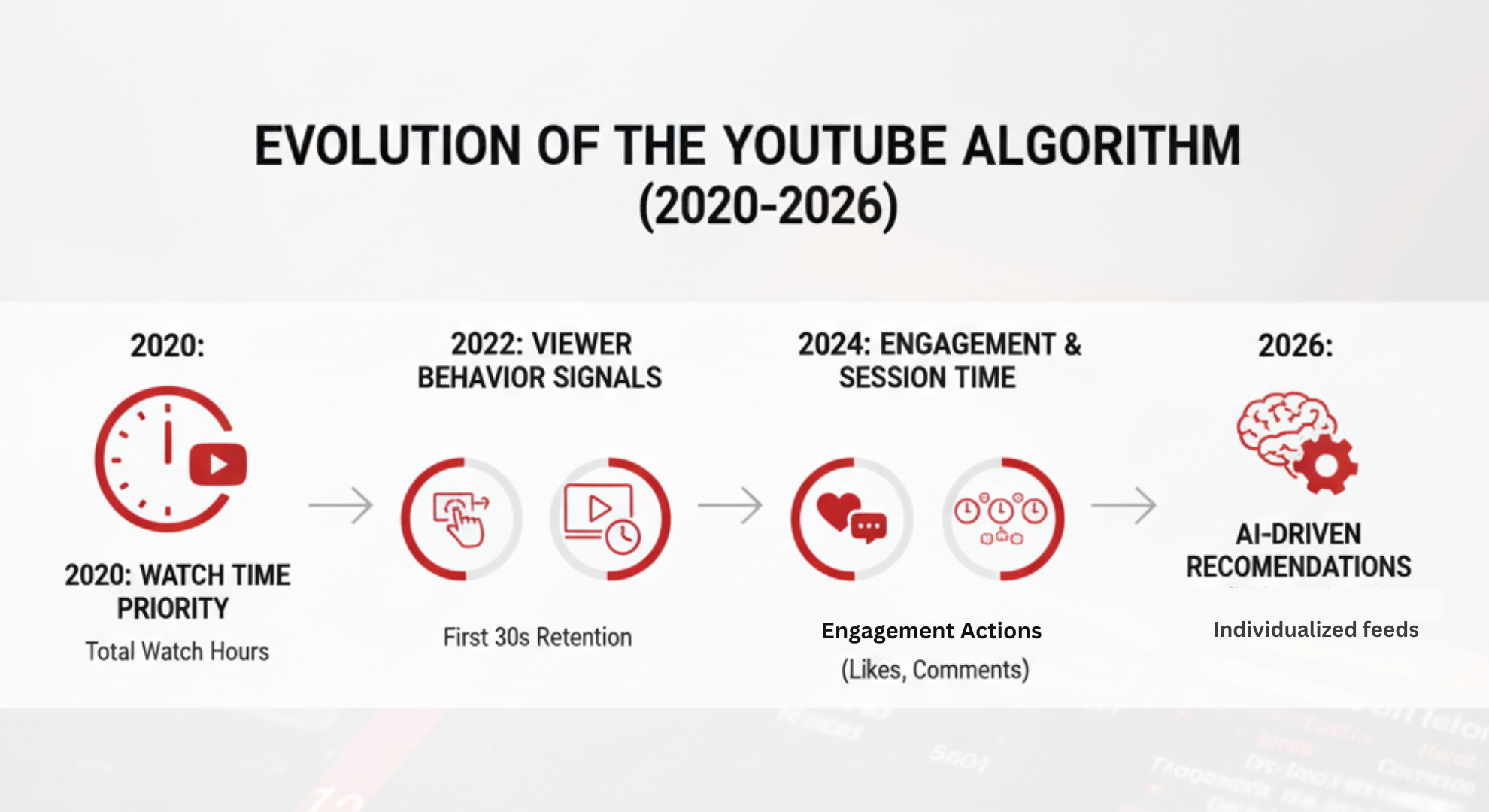
The YouTube algorithm 2026 works through two primary pathways that shape YouTube algorithm for organic reach: the homepage feed and the suggested videos section. Both rely heavily on viewer behavior signals such as YouTube click through rate, watch time, and overall engagement. According to YouTube’s official search and discovery guidelines, the YouTube algorithm uses billions of data points to identify which videos keep viewers interested for longer periods. These are the same metrics creators focus on when trying to understand why my YouTube videos are not getting impressions in 2026.
Understanding how the YouTube algorithm works begins with watch time optimization, which remains the strongest YouTube ranking factor. When viewers stay with your video instead of clicking away within a few seconds, the YouTube algorithm reads it as a strong match. Your visibility in search results and YouTube suggested videos increases if viewers finish your video and go on to watch another one from your channel.
YouTube session time adds another layer. This measures how long someone stays on the platform after watching your content. If your videos encourage viewers to continue exploring YouTube, whether it is your content or another creator’s, the YouTube algorithm sees your channel as valuable to the overall viewer journey.
Personalization within the YouTube algorithm has become far more advanced in 2026. The YouTube recommendation system studies niche interests, viewing history, and even the viewer’s active hours. This level of personalization helps smaller channels rank within their specific verticals, proving that relevance is more important than popularity when it comes to how the YouTube algorithm works.
Key YouTube SEO Tips for 2026 and YouTube Algorithm Watch Time
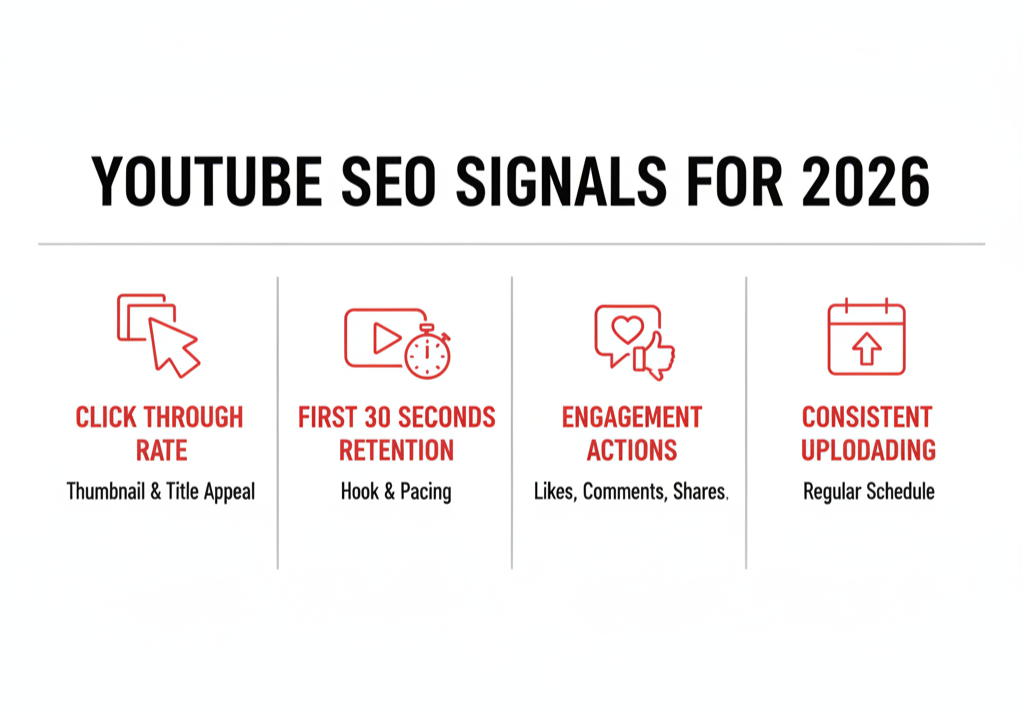
Understanding which YouTube ranking factors matter helps you optimize your YouTube SEO 2026 strategy more effectively. YouTube click through rate measures how often viewers click your video when it appears in search results or recommendations. Strong titles and thumbnails play a direct role in improving YouTube CTR and retention. According to YouTube Creator Academy, videos that maintain CTR levels above eight percent usually perform well in their category.
YouTube audience retention shows how many of your video viewers actually watch. The YouTube algorithm prioritizes videos that hold attention from the very beginning. The first thirty seconds are especially important for YouTube audience retention. Creators trying to learn how to improve YouTube retention in the first 30 seconds must focus on immediate value delivery and strong pacing to satisfy the YouTube algorithm.
Engagement metrics such as likes, comments, shares, and saves also carry significant weight within the YouTube algorithm. These actions tell the YouTube recommendation system that your video is meaningful to viewers. Comments help even more because they increase YouTube session time as users read and reply.
Consistency in uploading remains a major factor in the YouTube algorithm 2026. Channels that publish on a stable schedule build trust with both viewers and the system, which can lead to stronger initial distribution through the YouTube algorithm. If you need support managing content output across multiple platforms, you can explore Amzart’s automation and marketing services, which are designed for e-commerce sellers looking to streamline production and maintain steady growth.
If you need support managing content output across multiple platforms, you can explore Amzart’s automation and marketing services, which are designed for e-commerce sellers looking to streamline production and maintain steady growth.
YouTube Organic Growth Strategies for Maximum Algorithm Visibility
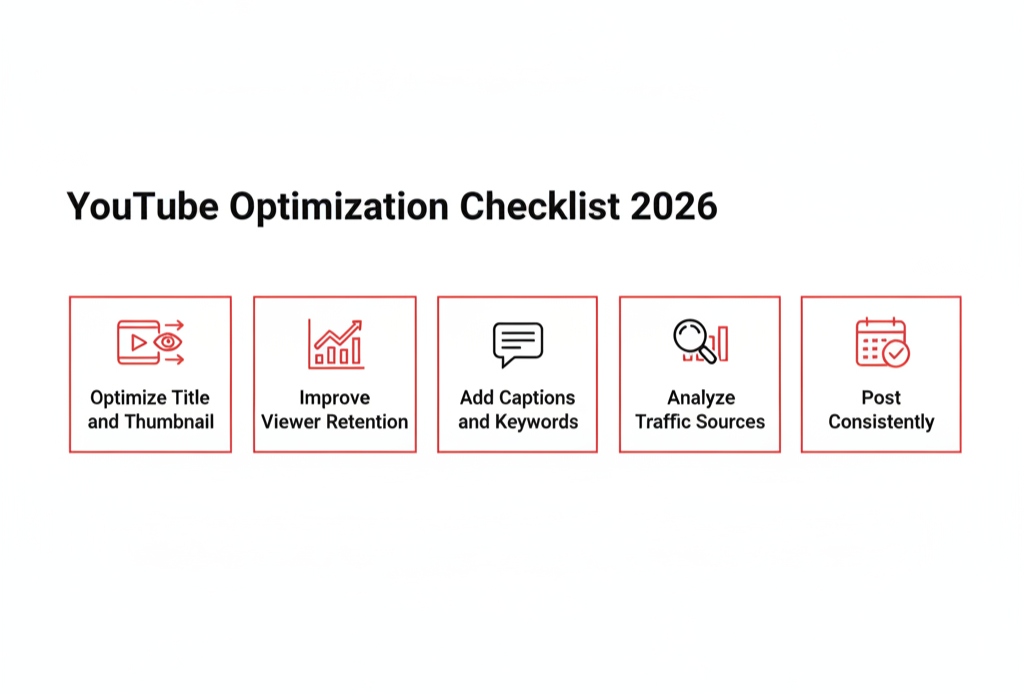
Your title should grab attention while staying honest. Place your primary keyword near the front because YouTube still leans heavily on text signals. A clear title like 5 Proven Strategies to Double Your Shopify Sales in 2026 instantly shows value and includes terms people actually search for.
Your thumbnail is the real hook. Bold text, clear contrast, and expressive reactions consistently outperform automated thumbnails. Try a few styles and track which one earns stronger click-through rates. Keep everything readable on mobile since most viewers discover videos on smaller screens.
Your description is a major SEO asset. Use your primary keyword in the opening lines, then expand with two hundred words that naturally weave in related and long-tail keywords. Add timestamps to help viewers jump to sections they care about and give YouTube a clearer context about your overall structure.
Tags still help, even though watchtime and engagement sit higher on the priority list now. Mix broad terms with niche long-tail phrases and include industry-relevant language so YouTube understands the topic accurately. Avoid irrelevant tags because they confuse the algorithm.
Captions and transcripts matter more today than ever. YouTube indexes spoken words, so accurate captions improve search visibility and accessibility. Upload your own instead of relying on the automatic version for the strongest performance.
The Power of Viewer Behavior Patterns
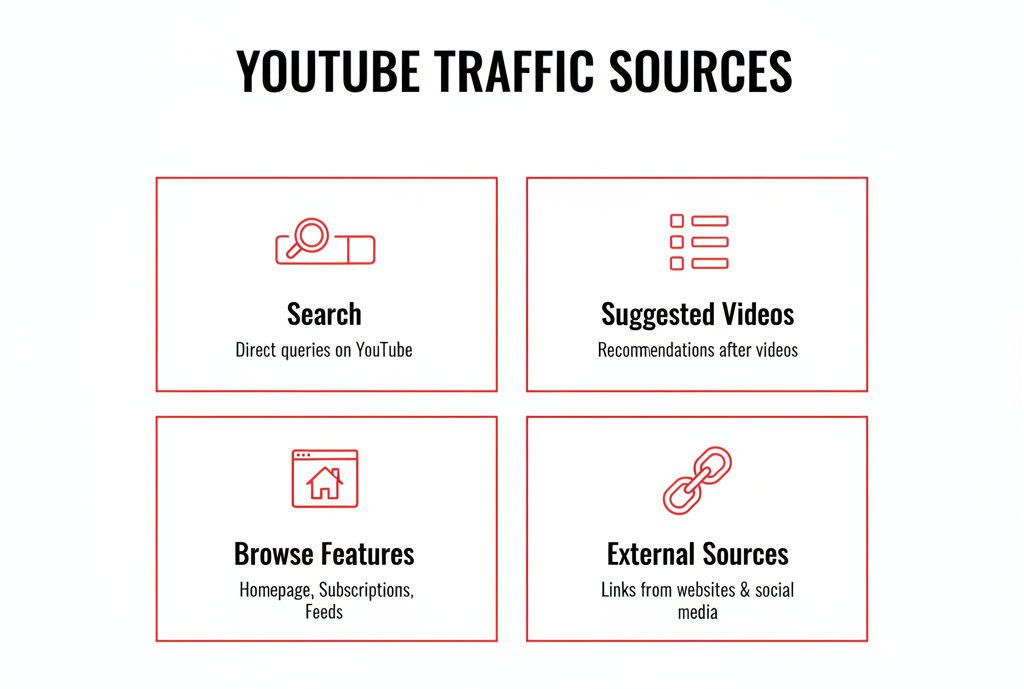
YouTube tracks how viewers find and interact with your content, and each traffic source shapes how the algorithm decides whether to push your video further. Traffic sources reveal whether people discover your videos through search, suggested videos, browse features, or external sources.
Search traffic is highly intentional. These viewers already know what they want, which is why optimizing for search brings steady organic views. Use tools like Google Trends and YouTube’s autocomplete suggestions to identify keywords your audience actively searches for. This helps you create videos that match real demand instead of guessing.
Suggested video traffic represents YouTube actively promoting your content across the platform. This is where channels experience the fastest growth. To increase suggested placements, create videos that complement top-performing content in your niche. Use similar keywords, themes, and viewer intent, but present a fresh angle so the algorithm recognizes high relevance.
Browse features include the YouTube homepage, subscription feed, and trending section. Appearing here requires strong overall channel health. Steady upload frequency, high audience retention, and strong engagement help YouTube place your content in these premium positions.
External traffic shows YouTube that your video has an impact outside of the platform. Sharing your content on social platforms, blogs, and email lists can boost algorithmic trust. According to Forbes, creators using multi-platform promotion strategies see up to three hundred percent higher reach compared to publishing on a single platform. This added momentum encourages YouTube to distribute your content more widely.
Content Strategy Secrets for Algorithm Success
Create content in series instead of isolated videos because series naturally encourage binge-watching. When viewers move from one video to the next, session time increases, and the algorithm recognizes your channel as highly satisfying. Build each episode so it delivers value on its own while still connecting to a bigger theme that encourages viewers to continue watching.
Leverage trending topics inside your niche to capture active search demand. YouTube favors timely content that matches what people are currently searching for. Use Google Trends to spot rising topics early. When you create videos around trends while they are still climbing, you position yourself for faster visibility.
Need guidance on identifying trends and creating a content calendar? Reach out through Amzart’s contact page for personalized support.
Collaborations help you reach entirely new audiences. When viewers jump between two channels because of a collaboration, the algorithm pays attention. This movement signals shared viewer interest, which can lead YouTube to start recommending your videos to your collaborator’s audience even after the collab ends.
Front-load value the moment the video starts. The first fifteen seconds decide whether viewers stay or drop off. Start with a clear hook that tells viewers exactly what they will gain. Skip long intros and get to the point quickly so the algorithm sees strong early retention.n
Pattern interrupts help maintain attention. Use subtle changes like switching angles, adding b-roll clips, introducing short graphics, or adjusting pacing. These shifts keep the viewer mentally engaged and reduce the chances of them clicking away before the video ends.
Advanced Tactics for E-Commerce Brands
Product demonstrations and tutorials continue to outperform most formats for e-commerce channels because they attract viewers who already have strong buying intent. These viewers are actively researching solutions, so create tutorials that walk through real problems and show your product in action. According to the Wyzowl State of Video Marketing report, 96% of consumers watch explainer videos to learn more about products, which makes this format one of the most reliable ways to drive conversions.
Customer testimonials and case studies build trust while delivering valuable storytelling content. Share real experiences from customers who achieved meaningful results with your products or services. These videos typically generate strong engagement because they feature relatable people rather than scripted marketing language.
Behind-the-scenes content strengthens brand connection by showing the human side of your business. Give viewers a look into your production process, introduce team members, or share pieces of your journey as a growing brand. This type of content often performs better than expected because it feels genuine and unscripted.
Live streams receive a noticeable boost from the algorithm both during the broadcast and after it ends. YouTube promotes live sessions to subscribers and sometimes to viewers who have shown interest in the topic. Host Q&A sessions, product launches, trainings, or live workshops to maximize visibility. Live streams also tend to generate higher engagement than prerecorded videos because viewers interact in real time.
Shopping features built directly into YouTube help shorten the buying journey. You can tag products, include shoppable cards, and add links inside your descriptions. Eligible channels can even enable direct checkout. These features increase conversion rates while keeping viewers inside the YouTube ecosystem, which the algorithm strongly favors.
Common Mistakes That Hurt Organic Reach
Inconsistent posting confuses both your audience and the algorithm. Disappearing for weeks and then uploading multiple videos at once makes it harder for YouTube to prioritize your content. Establish a sustainable schedule you can maintain long-term, even if that means posting just once a week.
Buying views or engagement can severely damage your channel’s credibility. YouTube’s systems detect artificial manipulation and may penalize or terminate accounts. Focus on earning genuine engagement from real viewers who are interested in your content.
Ignoring analytics leaves you guessing about what works. YouTube Studio provides detailed insights to identify top-performing videos, popular topics, and formats that resonate most. Misleading titles or thumbnails may drive clicks initially, but will hurt watch time when viewers feel tricked. Deliver on your title and thumbnail promises.
Mobile optimization is essential since over seventy percent of YouTube watch time comes from mobile devices. Ensure thumbnails are clear on small screens, videos are properly formatted, and text is readable to maximize engagement and algorithmic performance.
Measuring Success and Iterating Strategy
Track your average view duration rather than just total views. A video with 1,000 views but 80% retention outperforms a video with 10,000 views but 20% retention in algorithmic eyes. Higher retention signals better content quality.
Monitor your click-through rate across different traffic sources. Your CTR from a search might differ significantly from your CTR for suggested videos. This helps you understand where your titles and thumbnails perform best and where they need improvement.
Analyze audience retention graphs to identify drop-off points. If viewers consistently leave at specific timestamps, something isn’t working. Maybe your pacing drags, the content doesn’t match expectations, or you need better transitions. Please consider addressing these areas for improvement in future videos.
Compare performance across different content types. Do your tutorial videos outperform your vlogs? Do product reviews generate more engagement than industry news? Let data guide your content calendar rather than personal preferences.
If you are ready to scale your YouTube channel without the daily workload, explore Amzart’s YouTube Automation services built to handle content creation, optimization, and growth for e-commerce brands.
YouTube AI Recommendations for 2026 and Emerging Algorithm Trends
Short-form content through YouTube Shorts continues to gain traction. While Shorts operate on a separate algorithm, they drive traffic to your long-form content. Use Shorts as teasers or quick tips that lead viewers to your main channel.
AI-generated content assistance tools are becoming more common, but authenticity still wins. Viewers can sense when content feels too polished or robotic. Use AI tools for research, scripting assistance, or thumbnail generation, but maintain your unique voice and perspective.
Interactive features like polls, quizzes, and chapters enhance viewer experience. These elements increase engagement and give YouTube more signals about your content structure. Chapters especially help viewers navigate longer videos and improve satisfaction.
Sustainability and social responsibility content resonates with younger demographics. If your e-commerce brand has environmental initiatives or social impact programs, sharing these stories can differentiate your channel and attract value-aligned customers.
Community posts and the Stories feature keep your audience engaged between uploads. These tools don’t require video production but help maintain visibility and connection. Use them to share updates, polls, or quick thoughts that reinforce your channel’s presence.
Building a Sustainable YouTube Algorithm Strategy
Set achievable goals based on your resources and capacity when working with the YouTube algorithm. Solo entrepreneurs should focus on their strengths, whether that is expertise, personality, or a unique perspective, instead of trying to match brands with full production teams. Invest in simple quality improvements like clear audio and good lighting; modern smartphones and an affordable lavalier microphone can deliver excellent results that satisfy the YouTube algorithm. For more guidance, see YouTube Creator Academy.
Batch producing content helps maintain a consistent upload schedule without burning out, which the YouTube algorithm appreciates. Recording multiple videos in one session creates a buffer that keeps your channel active during busy periods. Consistency signals reliability to both viewers and the YouTube algorithm, improving long-term YouTube algorithm for organic reach and increasing the likelihood of broader content distribution.
Engage genuinely with your community by responding to comments, asking questions, and acknowledging loyal viewers. This engagement signals to the YouTube algorithm that your content builds community. Study competitors and industry leaders to identify what works with the YouTube algorithm, then adapt those lessons to your voice and style. The channels that stand out with the YouTube algorithm combine consistency, quality, engagement, and a distinctive perspective, turning casual viewers into loyal advocates.
FAQ: YouTube Algorithm and Organic Reach
Q. What is YouTube organic reach, and why is it important for e-commerce?
YouTube organic reach measures how many viewers discover and watch your content without paid ads through the YouTube algorithm. For e-commerce sellers, it is a cost-effective way to increase brand visibility, showcase products, and build trust with potential customers. Unlike paid promotions, YouTube algorithm for organic reach compounds over time as your content library grows and the YouTube recommendation system recognizes your channel as valuable.
Q. How often should I post on YouTube to improve YouTube algorithm ranking?
Consistency matters more than posting frequency with the YouTube algorithm. Most successful channels post at least once per week, while uploading three times weekly can accelerate growth if quality remains high. The YouTube algorithm rewards predictable schedules, so choose a rhythm you can maintain long-term rather than risking burnout with daily uploads you cannot sustain.
Q. Do YouTube Shorts help boost my main channel’s YouTube algorithm performance?
Yes. The YouTube Shorts algorithm can introduce new viewers to your long-form videos. Although the YouTube Shorts algorithm operates separately from the main YouTube algorithm, Shorts appear on your channel page and often drive traffic to your main content. Many creators use Shorts as teasers, quick tips, or highlights to funnel viewers toward full-length videos, but long-form content should remain your focus for sustainable YouTube algorithm watch time and revenue.
Q. What is the ideal video length for YouTube algorithm optimization in 2026?
There is no perfect duration for the YouTube algorithm, but YouTube audience retention is key. A five-minute video with 80% retention outperforms a twenty-minute video with low retention in the YouTube algorithm’s evaluation. Videos between seven and fifteen minutes often work best with the YouTube algorithm, giving enough time to deliver meaningful content without losing viewers’ attention.
Q. How long does it take for the YouTube algorithm to recognize new channels?
New channels usually need three to six months of consistent posting for the YouTube algorithm to gather enough data to recommend content effectively. Early videos may have limited reach while the YouTube recommendation system learns your audience and content style. Patience and consistent delivery of valuable content are essential, as early growth with the YouTube algorithm often compounds significantly over time.
